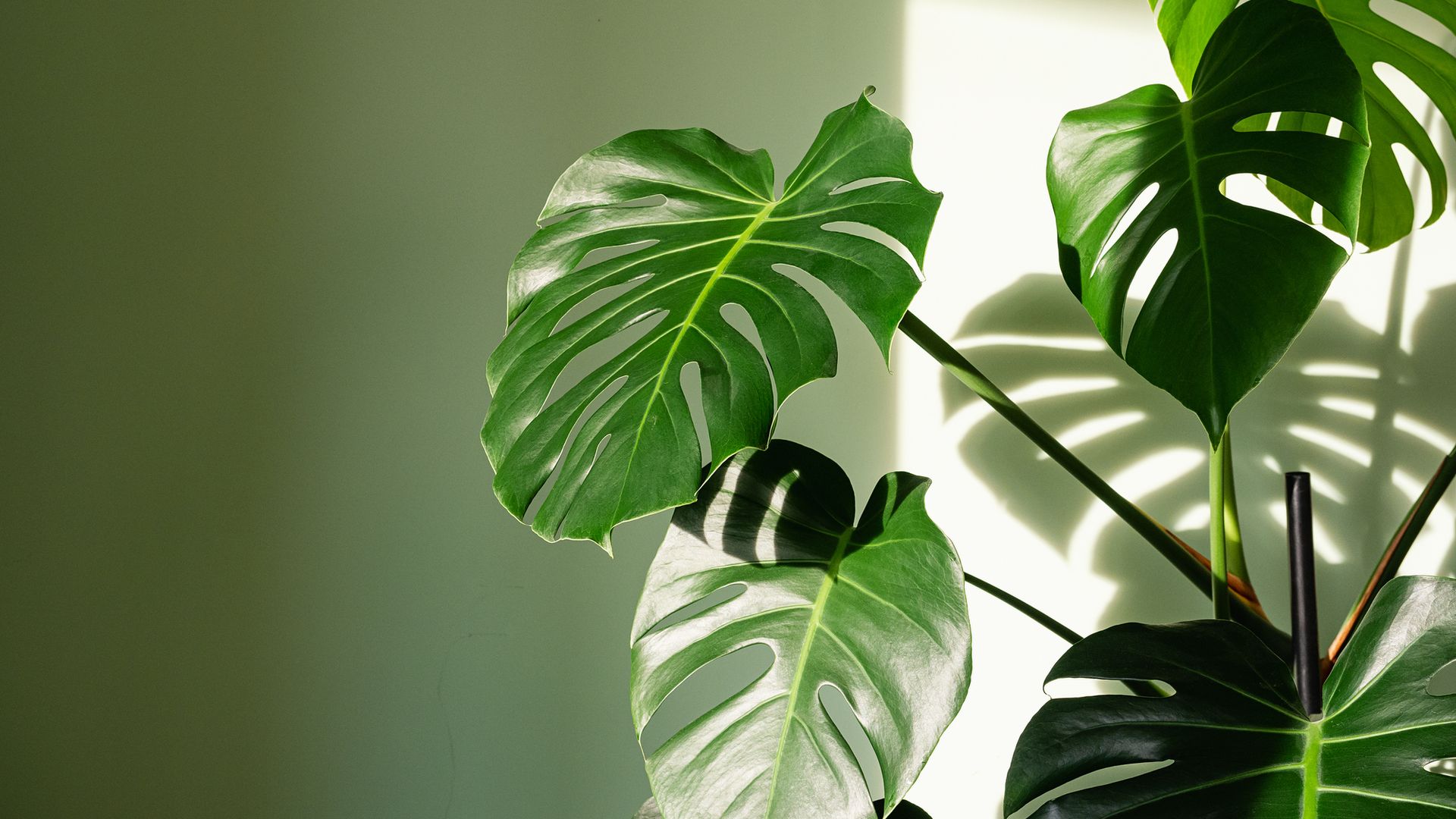
If you're a houseplant newbie, you might be looking for relatively low-maintenance plants that have a smaller chance of dying if, like me, you often forget to water them. It might also then intrigue you to know that plants such as the snake plant and the fiddle leaf fig tree are good ones to go for. However, if you're looking for your interiors to make a statement, then the Monstera deliciosa plant will certainly oblige.
The Monstera plant, also affectionately known as the Swiss cheese plant, is big, bold and beautiful. And bonus: it's pretty easy to look after. There are some handy tips worth knowing, however, so that your Monstera thrives in its new home.
How to care for a Monstera: watering, light and more
Watering and feeding
The cheese plant only needs watering every ten days or so, but they do not appreciate being submerged in water, so ensure you give it a pot that drains well. They are, however, quite forgiving and can last a bit longer if they need to. The best thing to do is to check the soil – if, after ten days, it still feels damp, you're good for another couple of days.
When it comes to how to water them, Gardeners' World says: "In terms of the amount of water to give your plant, simply pour lukewarm water equally around its soil until it drains from the drainage hole below. This will give the plant a thorough soak and will also help wash out any excess nutrient salts leftover from previous feeding."
Regarding fertilisation, Happy House Plants says: "The ideal period to fertilise these houseplants is during the spring and summer. This is because this period tends to be their growing season due to the length of sunlight each day, allowing our houseplants to obtain more sunlight energy."
Light
Interestingly, the cheese plant is one of the only plants that, when a seed, will grow towards the dark rather than the light, and this is because they're 'climber' plants, so are used to being drawn to the shaded parts of a tree. Essentially, this means that when you bring your fully grown or young cheese plant home, it will be able to grow nicely in any area of the home, but will grow a bit faster in brighter light.
They don't wish to be in blazing heat, but can cope with temperatures in most homes. Remember to wipe those big leaves with a damp cloth from time to time, as a build-up of dust can prevent them from photosynthesising properly.
Pruning
Gardeners' World recommends using a clean pair of scissors or secateurs to trim yellowed/browned leaves around 2.5 cm from the main stem. They add: "Some indoor gardeners opt to prune them fully off, whereas others leave them on. We recommend keeping them, as there isn't much information yet on whether or not it affects the overall health of the plant. We recommend pruning the plant's stem back by a third every three years to keep the plant looking bushy."
Propagating a cheese plant
You can either propagate your cheese plant in water or in soil. To propagate in water, follow these instructions.
- Take a clean, sharp pair of scissors and trim the stem just below a leaf node
- Place the cut stem in water and place it in light
- Keep an eye out for roots. Once they're there, place them into a new pot and water often
To propagate in soil, Gardeners' World advises starting by filling the bottom quarter of a 12cm pot with good drainage, and resting the cutting on top of the soil.
"The best potting mix is either a peat-free, 'monstera' or a 'houseplant' labelled potting mix. Pat the side of the pot in various spots to consolidate the soil into place. Keep the soil moist, ensuring only the top quarter dries out in between watering. Start feeding your monstera around six weeks after the initial repotting."
Common problems with Monstera houseplants
Pests
Pests are common among many houseplants, but a Monstera is particularly prone to pests in the spring or summer. Treatment needs to be done straight away so that the leaves and roots aren't harmed. The most common pests that a Monstera will get are thrips.
Yellowing leaves
Yellowing leaves are a common thing to see on your cheese plant, but if you're not seeing any growth, then the yellowing leaves could be a sign that the roots are a little stressed. If the roots are plump, it's time to size up the pot so they have space to grow, but if they are rotten, then chop them off with clean sheers and then place them back into the original pot to allow the plant to start regrowing again.
Brown spots
Brown spots could also be a sign of root rot, but it might also be a sign of pests (see above) or even that your plant needs some fertilising. Too much direct sunlight will also scorch the leaves and turn them brown.