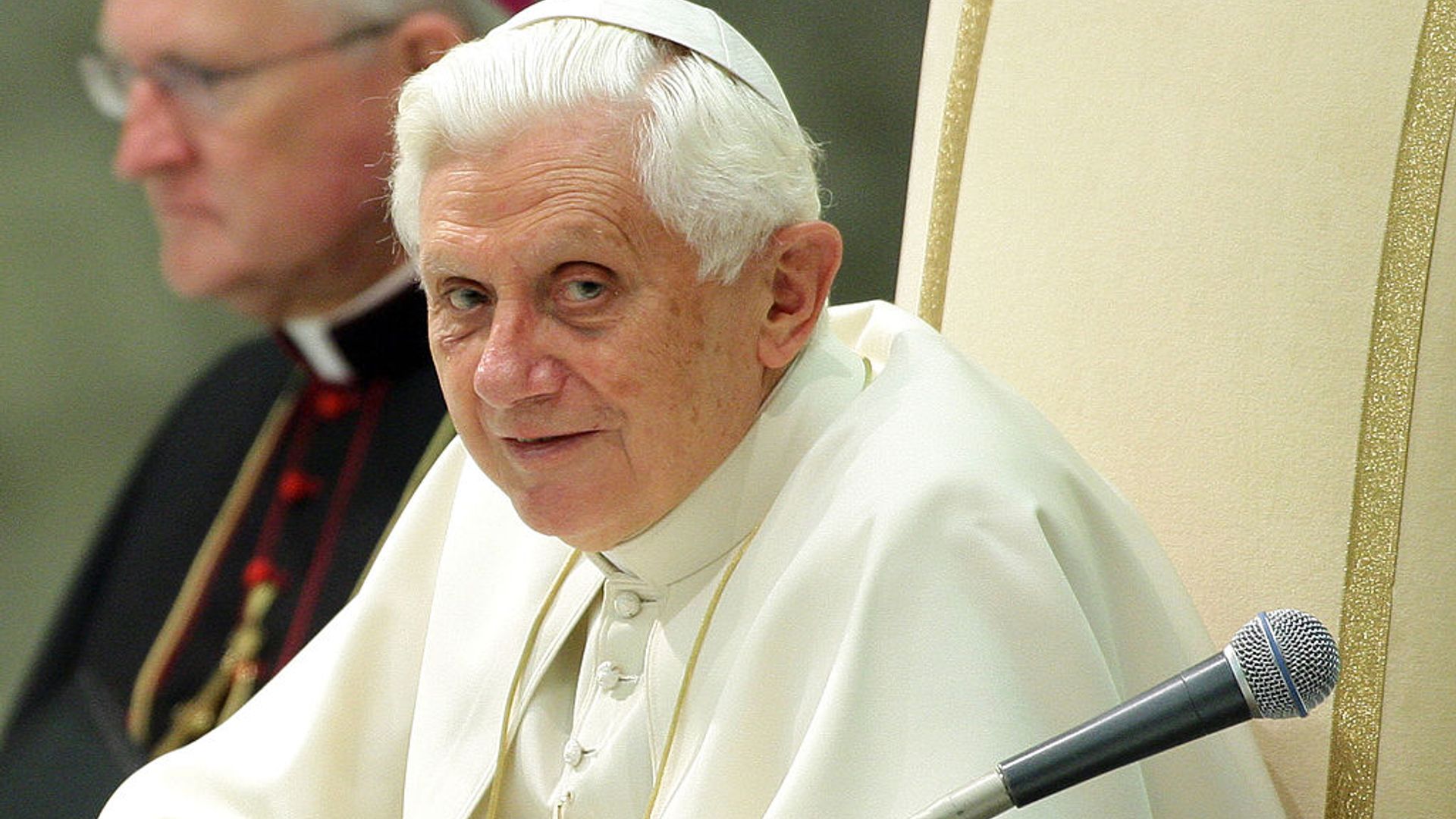

When Joseph Ratzinger, was elected pope at 78, he was the oldest person to be appointed to the role in over a century. A piano-playing former university professor, who said he'd been looking forward to retirement, he expressed doubts about his own suitability. His misgivings foreshadowed his resignation on February 11, 2013 on the grounds of failing strength.
Pope Benedict's early life
Born to a traditional Bavarian farming family in 1927, he learned about the cruelty of which men are capable from an early age. At 14, he was forced to join the Hitler Youth and some years later, while studying at a seminary he was drafted into an anti-aircraft unit of the Nazi army. The young soldier deserted his post and was taken prisoner by the advancing Allied Forces in 1945.
Witnessing the seismic changes that swept through Western society in the Sixties cemented the young theologian's conservative beliefs and in 1966 he took a chair in theology at Tuebingen. He went on to teach at Regensburg University, before being named Cardinal of Munich in 1977.
Pope Benedict's priesthood
Four years later Pope John Paul II called him to Rome to take over the Congregation for the Doctrine of the Faith, making him one of the Vatican's most influential figures. Formerly known as the Holy Inquisition, the office was responsible for Catholic Church doctrine.
But on April 19, 2005, when white smoke billowed out of the chimney of the Sistine Chapel in the traditional signal that a new leader has been chosen, the German priest set about his duty with determination. "I will listen to the world and the will of the Lord," said the new pontiff, who quickly became known for wearing natty clerical gear, re-introduced from previous centuries.
Before he became pope, he was "a major figure on the Vatican stage for a quarter of a century", acting as one of John Paul II's closest confidents. He was "second to none when it came to setting church priorities and directions".
Pope Benedict's papacy
"Let us do all we can to pursue the path toward the unity." His words were welcomed enthusiastically by the huge crowds gathered in St Peter's Square. He took the name Benedict, in honour of Benedict XV who worked tirelessly for an end to World War I, reflecting his desire to be an advocate for peace. "In his footsteps, I place my ministry in the service of reconciliation and harmony between peoples," he declared.
Pope Benedict XVI was more than just a champion of conservatism. Renowned for his powerful intellect and passionate commitment, he tried to continue his predecessor's legacy of promoting inter-faith dialogue and defending basic human rights. In keeping with this stance, the Catholic leader visited the Blue Mosque in Istanbul and prayed for peace at the Western Wall in Jerusalem. He also brought some modernising touches to the institution, joining Twitter in December 2012. But by then his health was failing, and shortly afterwards, in a surprise move, he announced his intention to step down, becoming the first pope since 1415 to do so. The Pope told his followers: "After having repeatedly examined my conscience before God, I have come to the certainty that my strengths, due to an advanced age, are no longer suited to an adequate exercise of the Petrine ministry."
His words were not only aimed at the world's 1.1 billion Catholics. He was also addressing those who feared he would widen divisions between traditional and progressive forces. As a cardinal he had become known for his staunch views on feminism, homosexuality, socialism and abortion. The papacy began amid the deepening controversy over the scandal of sex abuse by priests. The Pope insisted that the Church take responsibility, but for some the contrition was too little, too late. His tenure was also blighted by further scandals such as the leak of documents showing evidence of mismanagement in the Vatican and the subsequent conviction of his butler over the affair.
Pope Benedict XVI drew on the experiences of a remarkable life to guide his papacy.
Pope Benedict's resignation and death
In 2013, he became the first pope to resign since Gregory XII in 1415. The pope resigned because of his dwindling health. On 31 December 2022, Pope Benedict passed away. It's said his last words were "Signore ti amo", Italian for 'Lord, I love you'.