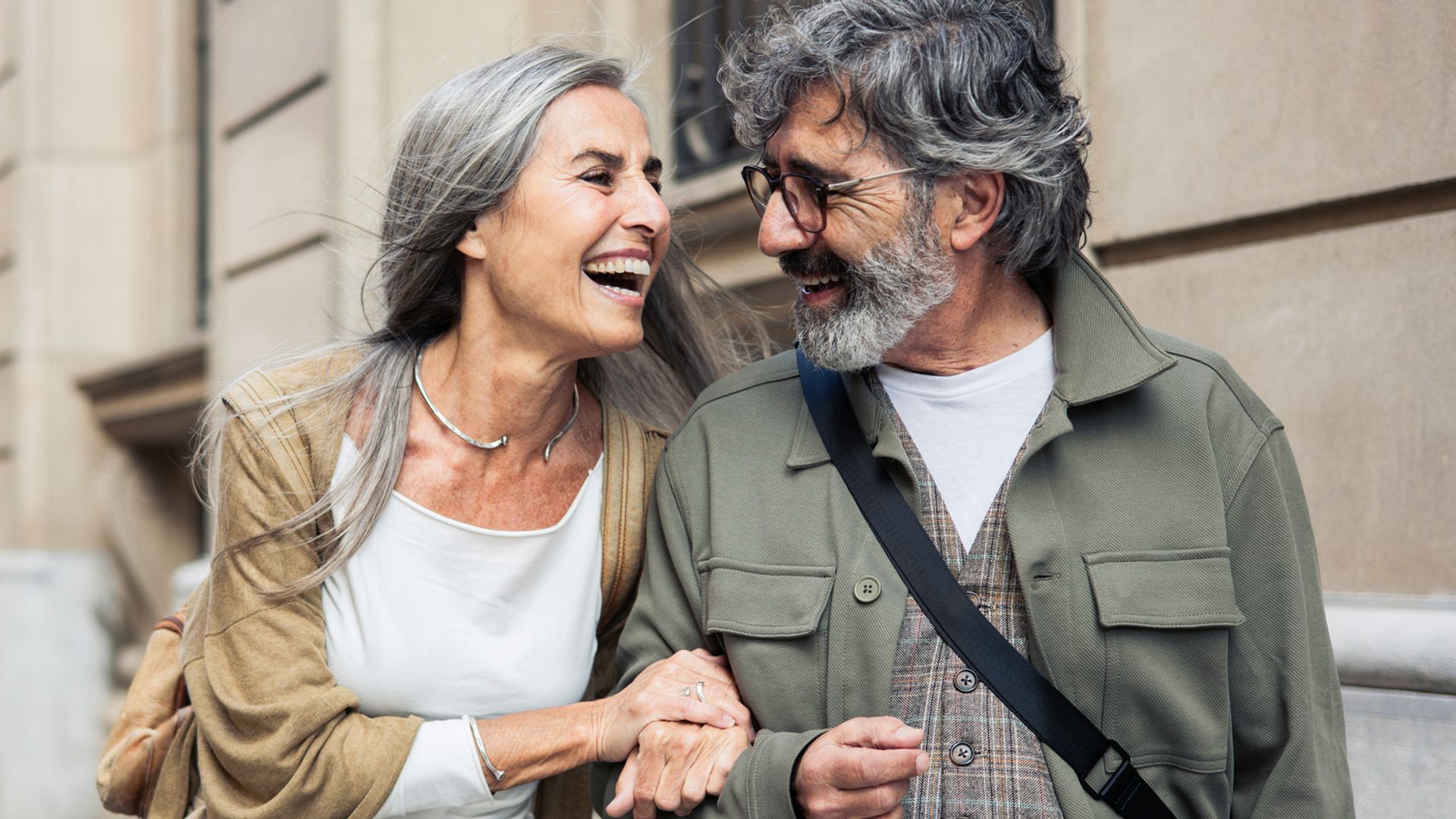

They say you never forget your first love, and if you're wondering how to find love again that is anywhere near as exciting and memorable later in life, all hope is not lost. "To be in love, no matter your age, is the strongest drug you can be on," says Sofie Roos, a licensed relationship therapist and author at Passionerad. But how does love change as we age, and what can prevent us from forging a deeper connection? We asked the expert to share how to get the lovestruck feeling again, no matter how old you are.
Why we romanticise first love
"The first love is so special since it’s the first time we experience all the feels - the excitement, butterflies and expectations - and as with most things, the first time is what stays with us," Sofie says. "Our brains are also extra receptive towards strong feelings when we are younger, and that, in combination with connecting the first love with a time where everything felt overall new, exciting and where everything is possible, makes it extra easy to remember the first love as something special.
 © Getty Images/iStockphoto
"So it’s not only the person and relationship we remember - we also connect it with a time of youth, freedom and a sense of everything being possible!"
How love changes as we age
With age and more life experience, it's only natural that we change, and the way we love others does too. "It becomes less dramatic, but also more grounded. We learn what we need and what we can give, and it becomes more 'logical' or purposeful. So instead of the strong butterflies, we seek safety and something grounded. While the passion doesn't go away, it gets deeper and calmer," the relationship therapist shares.
How new relationships can trigger brain chemistry
While new love later in life may not be as intense as your first love, it can still evoke a lot of the same feelings and alter your brain chemistry, as Sofie explains: "It releases a cocktail of the feel-good hormone dopamine and the love hormone oxytocin, which gives us a strong feeling of euphoria, happiness and safety. The big difference when falling in love when getting older is that we know ourselves better, which makes us less able to get lost in the feeling of love, but to instead stay more grounded and realistic."
 © Getty Images
What can get in the way of love?
This realistic approach may also sometimes become an obstacle to falling in love again, as past experiences stop you from opening up as much. Sofie says that some other things that can get in the way include: "The physical aspects of fear of being hurt again, and old experiences limiting us, in combination with physical realities such as family situation, your economy, where you live and what you work with, can make it difficult to just go all in for someone we’d like to have a relationship with. This easily leads to a mindset of 'it’s too late', while it actually never is too late."
How to build a healthy, exciting relationship later in life
Once you overcome any limiting beliefs, the relationship therapist encourages anyone looking for love to "throw yourself out there" to meet a partner. "The key is to not limit yourself and prioritise all other things over love. Throw yourself out there, and let go of the control, because to find love, you need to be open," Sofie says. "So start with yourself and don't be afraid of opening up, being curious and honest with what you want, as well as talk with your partner about what you’re looking for and what you’re afraid of. Lastly, try to leave old patterns behind, and try to refine how you look at love."


