A few years back, personal trainer Shakira Akabusi made it her mission to get her 92-year-old neighbour moving.
"He'd never been to the gym before, never lifted a weight, and was struggling with mobility and shoulder stiffness," Shakira says. "The first time we went out, we only walked 500 metres. Now we walk for two miles, and he can lift 3 kg weights," she beams.
"The beauty of mobility is that it can be improved at any age," Shakira says – reassuring news for anyone who thinks it's "too late" to work on their fitness. The same goes for strength and balance. Even if you've never been acquainted with a dumbbell or been able to stand on one leg, there are simple ways to improve.
 © Will Ireland
Without mobility, balance and strength, we may struggle to stand upright as we age – which is why we often see the older generation stooped over. For them, it's not constantly scrolling on their phones or hunching over a desk that has left them bent over, but a combination of stiff shoulders, a weak core and a decline in muscle mass.
Why do we stoop as we get older?
"There are so many different systems in the body that often we take for granted when we're young, and many of these impact our ability to stay upright, from hearing to eyesight and muscle strength," Shakira explains. "Our muscle mass declines as we age, and this impacts our posture because our core will begin to switch off or become weaker."
Shakira adds that a weaker core pulls our centre of gravity forward, hence the bent-over appearance. In addition, our joints often become stiffer, and inflammation becomes more common.
 © Getty Images
Eyesight decline is a major factor in becoming unable to stay upright, too. "As our eyesight declines, we tend to be more conservative with our movements. Often our eyesight will drop down to look where we're going, and this again then brings us further forwards," Shakira says, adding: "When you shift your eyesight, all of a sudden your chest becomes tighter and your shoulders and upper back become weaker."
Proprioception
Shakira introduces the concept of proprioception, which is your body's ability to sense itself within any situation. Proprioception helps us to judge distances and the amount of strength you need for daily tasks.
How does this relate to being unable to stand upright? Again, it links to becoming more cautious as we move through life. Without proprioception, we might struggle to assess how high a curb or step is, causing us once again to look down, pulling us forward.
"We look down to try and give ourselves more confidence to see where we're going because our balance is off kilter, as opposed to trusting our body to move like that."
Leaning forward switches off the front of the anterior core (the front of our body) because our muscle mass is declining, but also as we become more sedentary, we're not challenging those muscle groups in the same way.
 © Getty Images
Staying upright
Shakira says the four pillars of staying upright are strength, mobility, balance, and cognitive health.
Movement
To give our bodies a fighting chance of staying upright, we need to strengthen the front of the core and the upper back as well as working on shoulder mobility, as this can help reestablish our posture.
"Activating the glutes is important too, because your glutes are one of the key core stabilisers," says Shakira.
Glute activation exercises are designed to "wake up" your glute muscles, and include simple moves such as squats. These moves stabilise the pelvis and help with overall core function, according to Shakira.
Balance
Simple balance exercises, such as standing on one leg while you brush your teeth, are helpful too. "It sounds silly and simple but is actually an important part because it supports balance and coordination."
Another option is stacking two or three toilet rolls and trying to step up and over them to work balance and proprioception.
Strength
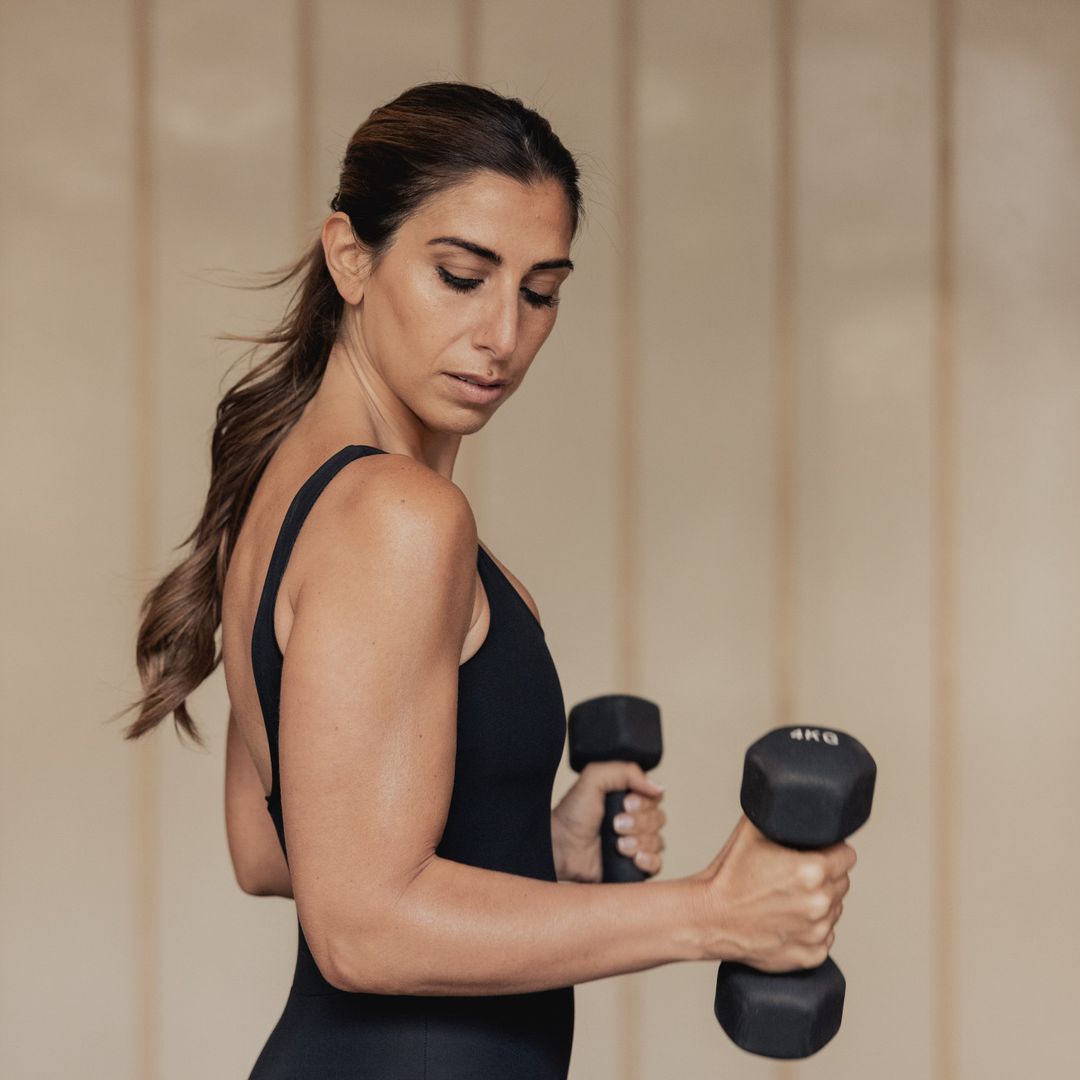
The idea of lifting weights can be intimidating, but strength training doesn't have to mean deadlifts in the gym.
Watch our video below for easy-to-follow moves to support your muscles.
Mobility
"Arm swings and sitting and standing are the easiest way to work on our mobility," says Shakira, who adds that Pilates-based exercises such as the bird dog or glute bridges are great if you're able. "But if you are slightly older, or if you feel like you're more of a beginner a wall push-up, or a wall plank is great."
As well as those four pillars, Shakira explains that sleep and recovery are crucial for staying upright, because during sleep is when you build muscles and strength.
Nutrition is notable too. "People tend to not eat as much when they age, but having adequate levels of glycogen (carbohydrates) in your body and staying hydrated are important to how the brain and our muscles function."
Shakira's final word? "It might sound overwhelming, but the encouraging thing is that really simple changes can have a big impact."