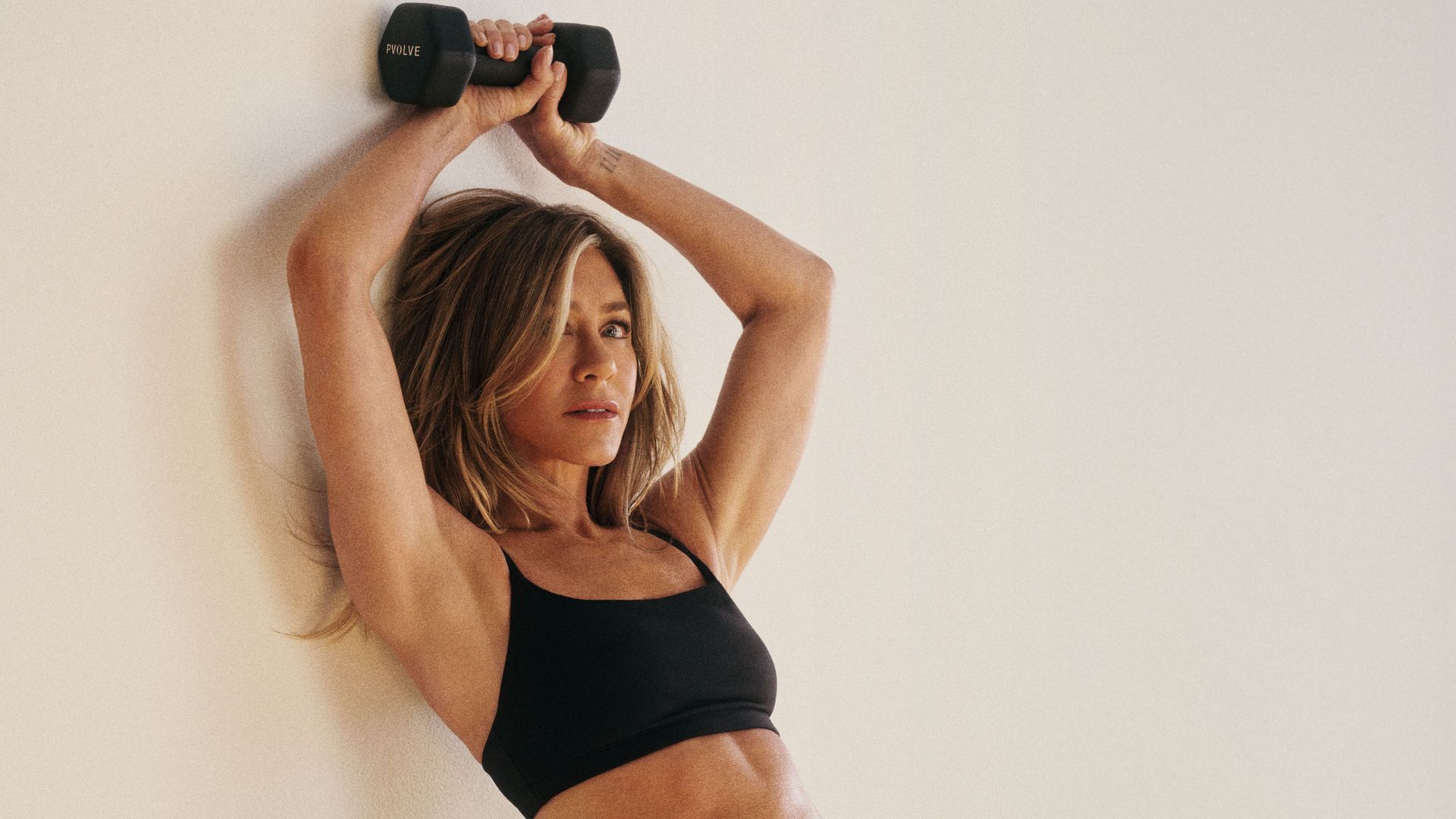

While many celebrities are known for downplaying their workout routines, claiming they 'hate the gym', while having the most sculpted physique ever, Jennifer Aniston is refreshingly honest.
The 57-year-old is open about the fact she works out - hard - for her toned figure, with her trainer, Dani Coleman, often sharing insights into their routine on Instagram.
The latest video of the duo sees Jen performing a plank-to-pike move on gliders (the little pads under her feet), with alternating reaches. Watch the video below to see the move in action.
Speaking exclusively to HELLO!, Dani, who is VP of training at PVOLVE, the exercise regimen Jennifer famously follows, revealed: "Jen and I love to play with different plank variations. Instead of rushing through reps, we focus on the muscles doing the work, which creates deeper activation and helps build strength without unnecessary strain on the joints."
 © Instagram
Even as a committed exerciser myself, the move looks daunting, but the good news is you don't have to do it for hours on end, according to Dani. "Even in 10 to 15 minutes, that kind of focused training can be incredibly effective and help build consistency in your movement practice, which is crucial."
Fancy giving it a go? We spoke to fellow fitness professionals about why Jen's plank to pike move is so effective, how to add it to your routine, and what to do if it looks impossible to you.
 © Instagram
Plank to pike: how to
"The movement starts in a high plank with your feet on gliders, then uses your core to glide your feet toward your hands before returning to a strong plank position," explains Dani's PVOLVE colleague, Antonietta Vicario, who is Chief Training Officer at the company.
"The alternating reach adds another layer of challenge because your body has to resist rotating or shifting as you remove one hand from the floor. It combines strength, stability, and coordination into one exercise. It may look playful in the video, but it actually requires your entire body to work together in a very controlled way."
Why it works
Fitness professional Tara Riley explains: "Plank to pike is incredibly challenging as it recruits multiple muscle groups at once and requires strength and control. Unsurprisingly, the abdominals play a key part - both Rectus abdominis (six-pack) and transverse abdominis (deep core) as well as obliques (side)."
 © @yogaandphoto
She adds that the shoulders, upper back and arms are just as key in the move. "Deltoids, triceps, upper back and chest muscles work to stabilise the upper body through the transition. And finally, you'll even get a hamstring and calf stretch at the top of the pike. Performing this move is impressive at any age!"
Antoinette agrees. "This is truly a full-body exercise. Your deep core is driving the movement, while your shoulders, chest, upper back, glutes, hip flexors, hamstrings, and even your feet are all working together to create and control the movement."
On the addition of the gliders, she adds: "The gliders increase the demand on your stabilising muscles because nothing is fixed. Your body has to constantly adjust and control the movement rather than relying on momentum, making it a very functional way to build strength."

How long do I have to do it for?
If you think the move looks intimidating and wonder how long you'll have to do it for, Antoinette reassures that it's quality, not quantity.
"I'd rather see someone complete fewer sets of eight to 12 slow, controlled repetitions with great form than rush through dozens of reps."
She does emphasise that it's commitment that is important, though.
"As with any fitness routine, consistency is what ultimately drives results. Incorporating thoughtful, progressive core work two to three times per week as part of a balanced strength program is far more effective than trying to cram all of your core training into one session.
"Over time, you'll not only notice improvements in strength, but also in balance, posture, body control, and how you move throughout everyday life."
 © Getty Images
Alternative options for beginners
If the plank to pike feels inconceivable (for now!) Tara has suggestions for a more accessible version for beginners
"It's a really challenging move and a lot of people can't quite do it for a number of reasons - either their hamstrings are too tight, or they don't have the shoulder stability or strength. A modification of the exercise for beginners sees you start in the plank position and then instead of piking, you drag your legs and bend your knees into a hover, bringing the knees underneath your hips with your feet still on the sliders.
"So rather than tipping your bum and taking your hips to the ceiling to end up in a pike you would drag your knees inward, ending up in a hover."
She explains that the 'plank to hover' move is a good alternative or modification to start with before moving into the more advanced move.


