Friday 25 July is a hugely important day for families in the UK. From this date, the new children’s online safety codes are enforceable by law.
That means social media platforms and search services will legally have to protect children from harmful material online, or face a fine of up to 10 per cent of global earnings.
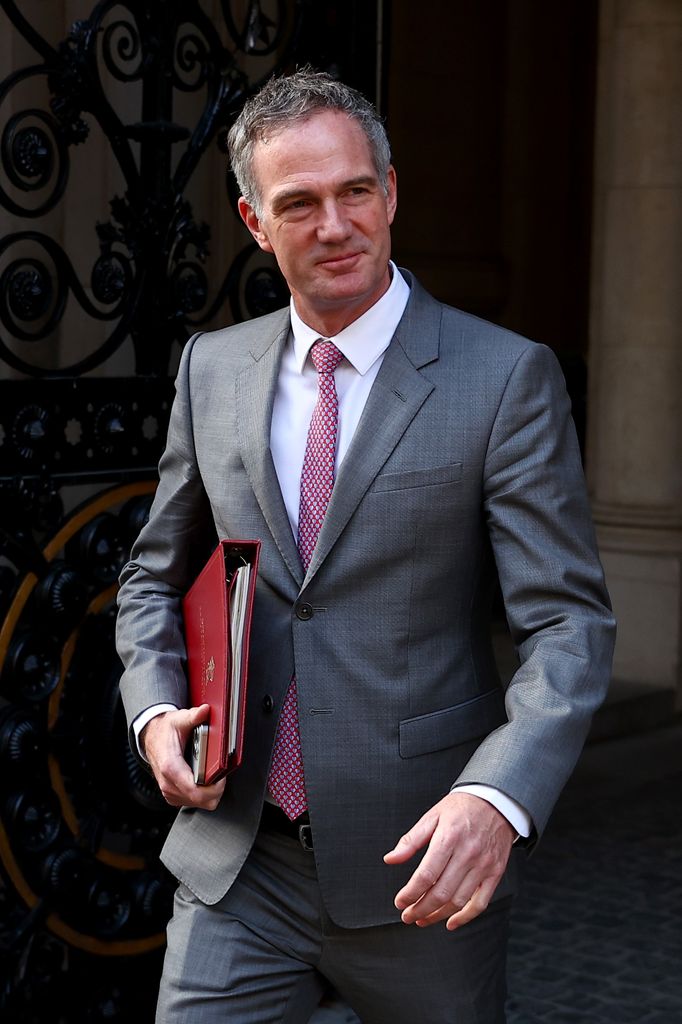
"I'm really excited because it's going to be a big moment for our country," says Peter Kyle, the Secretary of State for Science, Innovation and Technology, in this exclusive interview with HELLO!.
"It will be the safest internet that children have experienced since the internet was created."
 © Getty Images
The Online Safety Act was passed in October 2023, with Ofcom working to bring its protections into place since then.
The UK will now have some of the most extensive online safety protections in the world.
Our children will be more protected from content that promotes, encourages or provides instructions for suicide, self-harm or eating disorders, as well as pornography, bullying and violent material.
Any content that encourages dangerous stunts and challenges will also be illegal, as will encouraging the ingestion, inhalation or exposure to harmful substances.
Here, HELLO! asks Peter Kyle MP what parents want to know about children's online safety in 2025…
The new children's codes come into effect on 25 July. It's a landmark occasion…
"I think this will be the biggest step forward in the way the internet feels for children since the internet was created.
I reflect on how good this is going to be in terms of parents and children feeling safe online and being protected from harmful content.
But I think we also owe a huge apology to children who are over the age of 13, who have lived in a world where vile content really makes its way into their feeds, where they don't go looking for it.
They have endured, been subject to, and suffered the most appalling images and behaviours online for which they never wanted to see in the first place, but just simply couldn't avoid.
I think we all owe them a huge apology for what they have been through, and that certainly has made me double down on this moment, in time for those children who are currently 13, who will enjoy these protections for the rest of their childhood."
 © Getty
Could you explain to our parent readers how the new codes will change social media for their children?
"Each platform uses different technology, including algorithms, in different ways.
Each of them now needs to use their technology and their algorithms in order to find appropriate ways to gauge the age of those people using their services, and make sure that the content they provide is appropriate for the age of the person who's accessing it.
Children under 13 should have no access to social media. Children from the age of 13 to 18 must have content which is appropriate for their age.
Porn should not feature in somebody under 18's life anymore.
Violent content has already been outlawed, but now other forms of inappropriate content will join illegal content in being banned from young people's experiences online.
The latest in technology needs to be deployed - not just to engage young people, but to protect young people. That means that the internet will feel very, very different for young people and for their parents going forward."
Up until this point, it's been simple for young people to pretend to be older than they are to access social media. Is that going to be stopped now?
"Yes, it will not meet the threshold set by the law if a company just says, 'What is your age?' and asks for a tick box. They must use appropriate means to verify the person's age.
So sometimes that would be biometric tools, voice or face recognition, or face ID. It could mean using an established ID card, such as a passport or driving license.
These things must become the norm.
Ofcom has the power to judge whether a tech company or a platform is using the appropriate means for their technology, and if they believe there is a better system, they can force that company to adopt a better system. There's nowhere to hide on this.
Tech companies must use technology to the maximum to ensure that content is appropriate for children.
What I'm not saying here is that this will be a categorical end to all inappropriate content finding its way into children's feeds, but what I am guaranteeing and expecting is a big step change.
Technology moves on. Behaviours move on and adapt. But this is going to be the biggest step change since the creation of the internet when it comes to children's ability to be accessed by harmful content, and I'm grabbing it with both hands.
Yes, some children do go looking for various content, but the majority of children who have experienced harmful content coming into their feed haven't gone looking for it. It has gone looking for them, and that will stop."
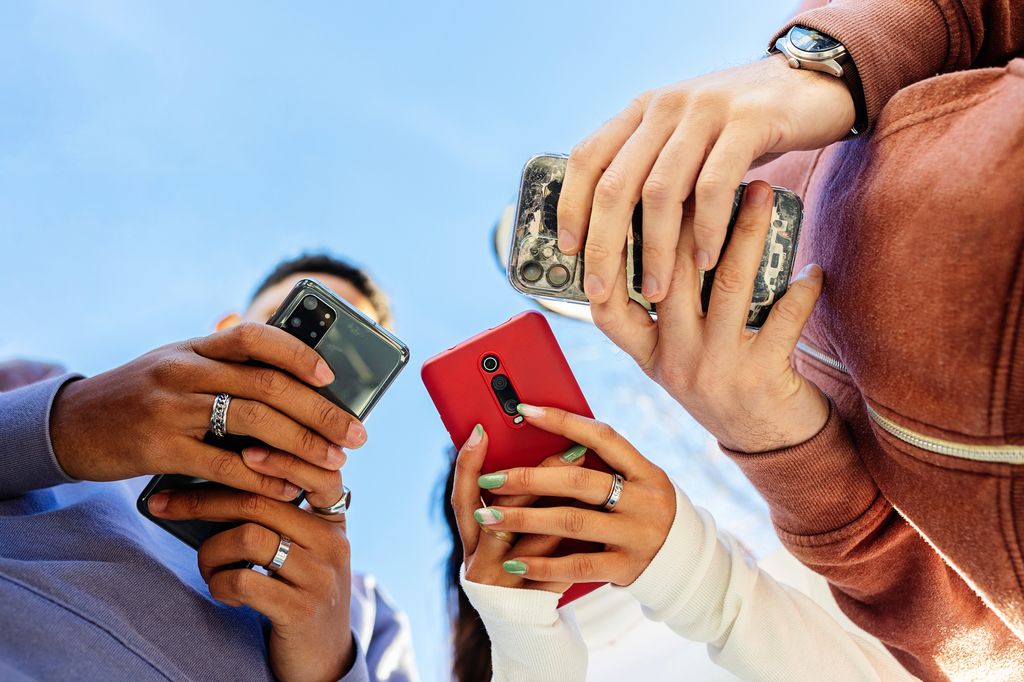
Will these new online codes also prevent toxic masculinity content from reaching our children?
"Extreme misogyny is covered by these codes and must be prevented from getting into kids' hands.
There will always be language which is offensive to some but is within the bounds of free speech. But I hope we can tame this beast and give more power and influence to parents and schools to help young men understand that the vulnerabilities that are being exploited by misogynists are only one part of their character.
Misogyny has always been part of society, but social media has given a direct path to extreme misogynists, directly to everyday young men who are just growing up in loving great families up and down the country.
We have a great Secretary of State for Education in Bridget Phillipson, who's doing a review of the curriculum, and we're all looking very carefully at how we can come together and protect young people, young men from this exploitation.
Misogyny in its extreme form will now be removed from platforms, and that is something we should be grateful for."
What will be the penalty for social media companies and apps that break these codes?
"If you break these codes, you face a fine of up to 10 per cent of global earnings, which is considerable. In the most extreme circumstances, an individual within a tech company could be held criminally liable.
This is the first time anywhere in the world that these sorts of measures have been enacted, so we have a lot of power.
There are a variety of sanctions at the disposal of Ofcom, and Ofcom has shown every willingness to be assertive in its pursuit of keeping children safe online and free of harmful content."
What has been the response of the social media companies to these new codes? Are they working with you on this?
"Well, they are, but they have no choice. This isn't a shall we, or shan't we? The law's coming in, and they must obey it.
But this is no surprise to any tech company.
This law has been one of the longest laws to get onto a statute of any other. It took five years from conception to getting it through parliament.
So the tech companies have seen this coming for a long time, and I've got to say, most I speak to have been putting a lot of resources into preparing for it.
Some social media companies have taken action already with parental accounts and giving other powers to parents.
These are all steps in the right direction, but now the rubber hits the road.
When these powers go live, these tech companies need to be prepared for it. Most are, but if some have wilfully looked the other way, they can expect a knock on the door."
What are your thoughts on the addictive nature of algorithms, which leads to young people's endless scrolling? Is that going to be looked at?
"What we're seeing this week is a hop, skip and a jump of such proportions that we are actually leapfrogging several milestones to get to where we need to be.
But it's not the end of the road, and I'm looking very carefully at next steps.
Nailing down the safety and age appropriateness of content for children is very important to me, but so is the health of young people online.
We talk a lot about children's health and what is a healthy life offline.
I'm very interested in how we incentivise a much healthier life for children online, and giving more support to parents to set the boundaries and the values that are right for their family."
 © Getty
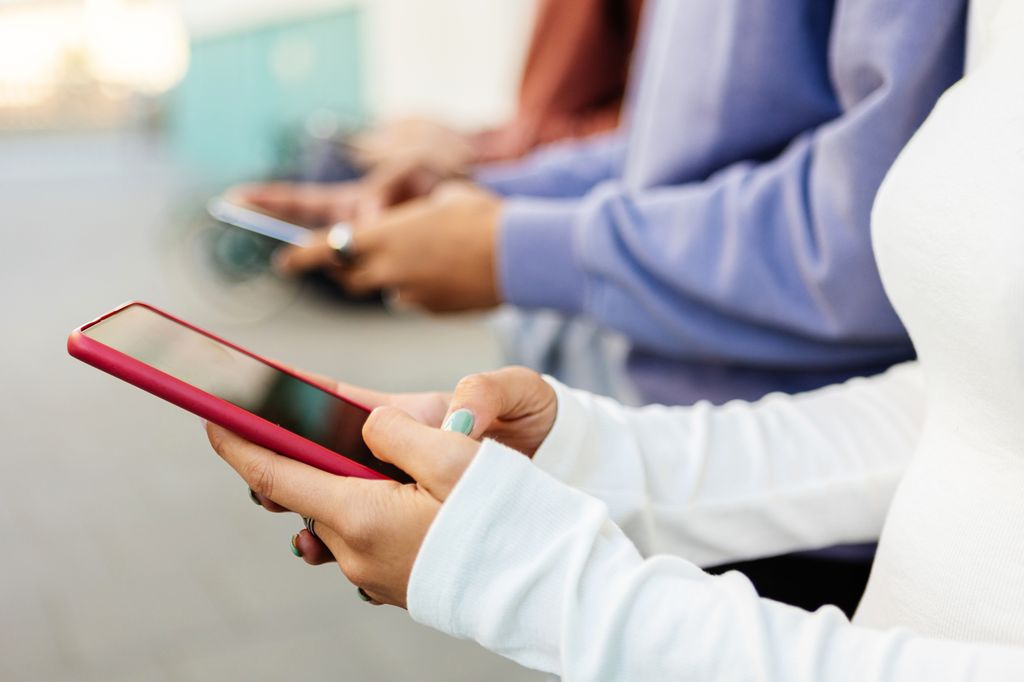
The Smartphone Free Childhood movement is growing in this country. Do you think smartphones should be banned for children and young teens?
"It's very complicated because parents want to know where their children are, and they want their children to be able to call them if there's a problem with anything. They want their kids to be able to use travel passes and gym passes, and sometimes the wallets to pay for things.
But they also want to ensure that the phones aren't becoming a distraction or posing a danger to them.
I think that a large part of the movement towards banning handsets is a consequence of exasperation and a sense of futility that anything else will make a difference or can be done.
I hope over the course of this week, when these codes go live and in the months that follow, I can demonstrate that this government is on the side of parents and can make the difference that parents are crying out for.
[That's] in the welfare of their children online, and their ability to have a great family life that isn't poisoned by constant rowing and acrimony when it comes to parents trying to take these phones out of kids' hands.
I think there's more that we, as a government and society, can do to be on the side of parents without dictating what family life should look like."
Another concern of parents is that end-to-end encryption on messaging services may stop predators who message our children from being detected. Is that an area you will look at?
"If pornographic, illegal, or any of the other areas now defined by law get into the hands of children, the platforms are held responsible for it. They must protect children from this content.
As we go forward, we will look at ways of strengthening it if we think there are vulnerabilities in this, because I accept, we can't solve every problem in one fell swoop.
But this will be a big step forward.
Don't forget that earlier this year, I outlawed intimate image abuse, which has become a feature of the messaging apps.
For young people or any person, receiving nude images from somebody without consent is now illegal.
There's going to be big noticeable changes from the laws that have been brought in and enacted in the last 12 months. From there, we will see where we need to adapt.
We're in a fast-changing [world] at the moment when it comes to online activity, and I'm determined that we are a government that keeps pace as much as we can."
Are any other countries introducing children's online safety laws like the UK?
"The First Lady in the US is a real advocate for keeping children safe online, and she's also spoken out a lot about image abuse.
The EU has legislated in a couple of different areas, but no other territory on earth has brought in the measures and the consequences that we are bringing in in this way.
It's all about protecting family values, the ability for parents to have control over their own family environment, and that we as a society hammer down hard when it comes to keeping children safe online and having a childhood that is free of harmful, toxic content, for which they should never have been exposed in the first place.
We are taking action too late, but we are taking action."