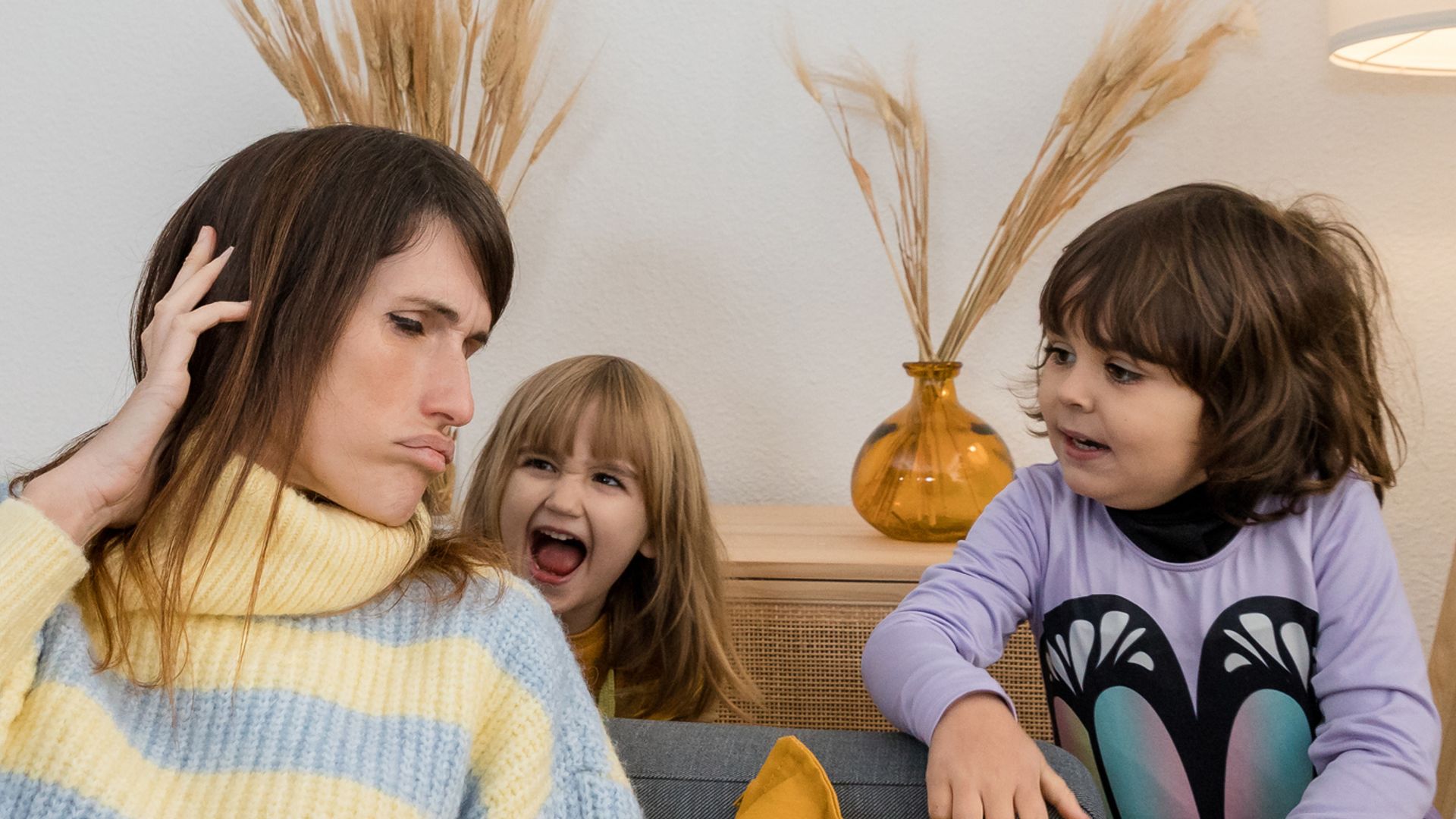

Six… seven? Skibidi toilet rizz? 'Choppelganger' is the newest trending slang, though that's more of a classic portmanteau. It feels like every week, our kids are coming up with a brand new phrase that just makes no sense at all. Millennials and Gen Z had their own crazy words, but it seems that the vocabulary that Generation Alpha is developing online is becoming increasingly nonsensical.
The question is: how do these words come about? And how, as parents, should you respond when your kids use them? Should you engage, or leave them be? We spoke to the parenting experts to find out.
Where does Gen Alpha slang come from?
Dr Ahmar Ferguson, an educational psychologist with over 17 years of experience in the sector, explained to HELLO! where the words come from. He began: "Each generation tends to develop its own slang because language is one of the quickest ways we can signal belonging. Online spaces accelerate this process.
"Young people take familiar ideas, exaggerate them, mispronounce them, or put them together in ways that feel distinctly theirs," he continued. "Slang helps young people mark identity, closeness, and generational boundaries, especially in online environments where culture typically tends to evolve at speed."
 © Getty Images
We also spoke to Dr Sasha Hall, a senior education and child psychologist who is the lead practitioner at Hall and Co Educational Psychology Services, who similarly labelled it as a key way that young people partake in "identity development" that often emerges from "online trends, memes, gaming culture and phrases used by people young people admire".
She also highlighted that it is another way that younger generations break away from those before. The child psychology expert added: "For adolescents and young people, language is a powerful way of signalling independence and difference from the previous generation. At this stage of development, there is a natural shift away from parents and towards peers.
"Having shared words that adults do not fully understand helps reinforce belonging within friendship groups and gives young people a sense of competence, control, and independence," she continued. "Slang becomes a way of saying we are new, we are different, and we know what we are doing."
How do we respond to Gen Alpha slang as parents?
It's difficult to know what to do: if you remain completely oblivious, that could build distance, but trying too hard to take on their new words could be what the kids call 'cringe'.
Dr Ferguson explained that "curiosity rather than correction" is the best way to approach responding to your kids. "You don't need to fully adopt the language to show connection, in fact, trying too hard can sometimes backfire," he said.
"Light-hearted acknowledgement, asking what a word means, or smiling at the generational difference communicates respect without intrusion," the expert added, a sentiment echoed by Dr Hall, who pointed out that it is "better than trying to incorporate the language yourself".
 © Getty Images
"When adults show interest without judgement, it reinforces a message that young people’s worlds are valid, even if we don’t fully inhabit them," Dr Ferguson concluded. "That stance builds connection far more effectively than either dismissal or over-identification."
The idea of showing interest without judging your children is equally vital to Dr Hall, who said: "As a parent, the most helpful response is not to shut slang down or shame children for using it. Language experimentation is a normal and healthy part of development. It can be useful to show curiosity and openness, especially if you do not understand a word. At the same time, it is important for parents to have a general awareness of current slang, as some terms can sometimes have hidden meanings or safeguarding implications."
She asserted that "when parents try too hard to adopt it, it can feel intrusive rather than connecting," elaborating: "Responding with humour, curiosity, and respect for their independence usually keeps communication open without blurring boundaries. This kind of language is one of the many age appropriate ways young people express autonomy, and allowing that space is an important part of supporting healthy development."