

While parents raise their children amidst the rush of routines, work, and daily rules, the figure of the grandparent emerges as an oasis of calm. This is what we might call the 'grandparent effect', a sanctuary where time stands still and listening becomes absolute.
With the help of child and adolescent psychologist Carmen Botello Fuenteseca, we delve into why their calming presence can soothe a child's nervous system, build long-term self-esteem and leave an indelible mark that will stay with them into adulthood.
How does the bond a child forms with grandparents differ from the one with parents?
"The bond a child builds with their parents and grandparents complements each other within the family dynamic. When working on attachment, I rely on the Circle of Security approach, which uses the metaphor of adults as 'the Hands on the Circle'. These hands offer the emotional support a child needs—acting as a secure base from which to explore the world and a safe haven to return to when in need of comfort.
"Parents represent the primary hands in everyday life. They hold direct responsibility for a child's upbringing, boundaries, and safety. Because of this, the child trusts that their parents will be available and will respond sensitively and appropriately to their needs. It's with their parents that a child shares their most intense emotions, safe in the knowledge that those hands won't let them down."
"It's completely natural to sometimes feel a pang of jealousy when you see your children open up more with their grandparents than with you"
"Grandparents, unlike parents, act as an extra pair of hands and an added layer of support, extending the child's safety net. Free from the daily pressures of parenting and enforcing boundaries, their 'hands' offer a much more relaxed base—one centred on enjoyment, play, and affection. So, while the bond with parents forms the core framework of a child's security and safety, the bond with grandparents enriches it.
"The child learns that the world is a safe place not just because Mum and Dad look after them, but because the wider family unit has other wise and caring hands ready to support them. This, in turn, helps ease parental stress and supports the overall well-being of the whole family."
 © Getty Images
How does the different pace of parents and grandparents affect a child's brain?
"An adult’s pace directly impacts a child's nervous system. When parents are raising children in a rush—juggling tight routines and constant pressure—the child's brain (specifically the amygdala, which acts as its threat radar) picks up on this frantic rhythm.
"A stressed adult unwittingly sends out an alert signal, leaving the child feeling that the 'Hands on the Circle' aren't entirely secure. This triggers the child's own stress response and makes it hard for them to settle. This becomes critical when the child steps away to explore; if they seek connection or turn back after a scare, only to find those hands unavailable or distracted, the circuit of security breaks down. As a result, the child's brain struggles to self-regulate.
"By contrast, when grandparents operate at a calmer pace, emotional co-regulation can take place. Without the need to hurry, a grandparent can be truly present, offering a safe, reliable haven whenever exploring gets overwhelming. That slower pace acts like a switch that turns off the brain's alarm system, allowing the prefrontal cortex—the area responsible for reasoning, self-soothing, and processing emotions—to flourish."
 © Getty Images/iStockphoto
Is the 'grandparent effect' an emotional refuge for children?
"The 'grandparent effect' is indeed a genuine emotional refuge for a child—one that is both remarkably powerful and unique. When things feel tense at home due to the demands of everyday life, grandparents bring a calming presence that transforms the whole dynamic, offering a space where the constant rush is put on pause. Grandparents can offer their undivided attention, whereas parents—in their role as primary carers—must constantly balance affection with firm boundaries.
"Grandparents provide 'hands' that are almost entirely focused on enjoyment, unconditional acceptance, and play. For a child's brain, this effect acts as a safe haven where they won't be judged for their feelings and where their need for connection is completely met."
What happens when grandparents are overprotective or undermine parental authority?
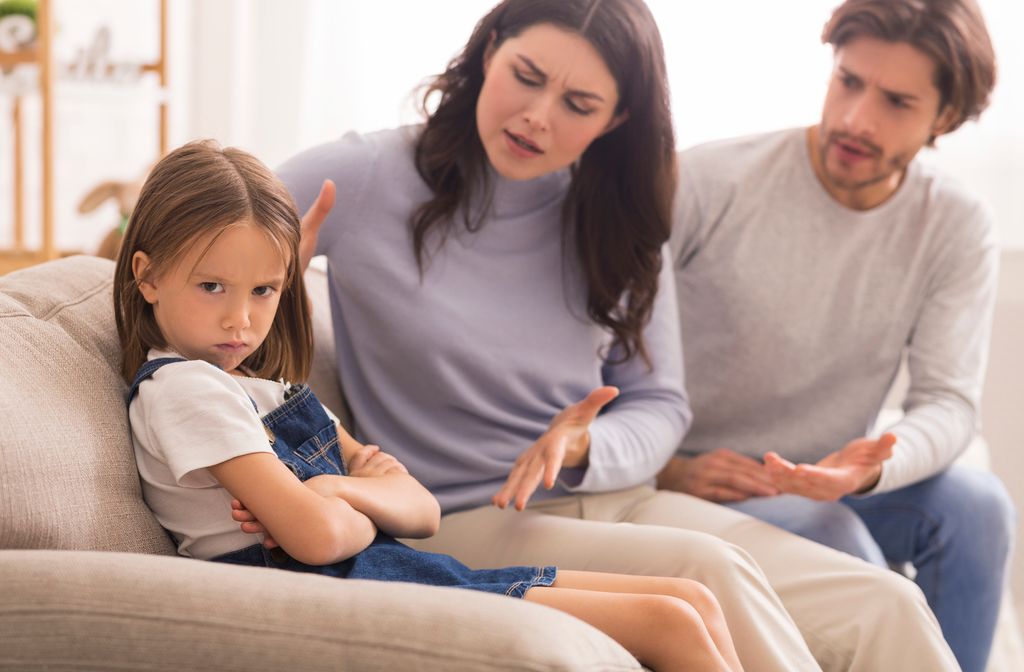
"When grandparents undermine the parents' rules or become overprotective, friction quickly builds within the family—and the child picks up on it straight away. A child's brain relies on consistency to build emotional security. Knowing what comes next and what’s expected of them allows their mind to feel settled. A clash over rules blurs boundaries and weakens parental authority, which ultimately destabilises those primary 'Hands on the Circle'.
"A child handles this contradiction in two distinct ways. First, they experience an initial wave of confusion that triggers their attachment system, as a lack of harmony between the adults creates uncertainty and insecurity. Second, thanks to cognitive plasticity, the child learns to compartmentalise different settings. Through this, they develop contextual flexibility—learning that the rules adapt depending on who is looking after them."
"When grandparents undermine the parents' rules or become overprotective, friction quickly builds within the family—and the child picks up on it straight away"
What is your advice for parents who feel jealous of their child's bond with grandparents?
"It's completely natural to sometimes feel a pang of jealousy or frustration when you see your children opening up more, or appearing more relaxed, with their grandparents than with you. The first and most important step is to acknowledge that feeling without judging yourself. Feeling jealous doesn't make you a bad parent; it simply makes you human. Even so, I’d encourage parents to look at what lies behind that discomfort—what we call 'Shark Music' (those underlying fears or past insecurities that resurface in the present and distort how we see things). In this case, it triggers the fear that your child prefers someone else or that you aren't doing a good enough job.
"Shifting your perspective goes a long way towards easing that frustration. Rather than competing with that relationship, try to celebrate it and lean on it. Those shared confidences with grandparents don't lessen their love for you; they expand it. Viewing grandparents as allies rather than rivals helps parents let go of the guilt, remember that their 'Hands on the Circle' remain the primary ones, and take comfort in knowing their child is surrounded by a protective network of love."
 © Getty Images
What boundaries are needed for a healthy relationship that avoids family tension?
"First and foremost, it's crucial to respect the new dynamic within the family, accepting that the parents hold primary responsibility for upbringing and decision-making. For parents to feel truly confident and capable in their role, they need grandparents to validate their judgment, even when they see things differently. A new mum or dad needs to know their own parents support them through their doubts and fears, rather than judging or correcting them at the first opportunity. Unconscious fears of not measuring up—or having authority undermined—are so often the true triggers for family conflict.
"From this perspective, the ideal role for grandparents shifts significantly. Rather than trying to direct how the children are raised, they find they can become a pillar of support for their own adult children—offering emotional backing and practical help that lightens the load at home. By stepping in when parents feel overwhelmed, grandparents help create a calm, predictable environment, passing on the steady reassurance of someone who has been through it all before. This only works through clear, coordinated support, where setting gentle but firm boundaries allows parents the space to build their own parental identity. When grandparents realise that taking a back seat on decisions doesn't mean being redundant, they can happily step into their role as 'secondary carers'—easing stress for the whole family while keeping the parents' leadership firmly at the centre."
 © Getty Images
How does the 'grandparent effect' evolve as a child becomes a teenager?
"When a child reaches adolescence, the 'grandparent effect' undergoes a vital transformation. It shifts from being the play space of early childhood to becoming an emotional anchor and a quiet witness to the young person's growing identity. At this stage, teenagers naturally need to step back from the 'Secure Base' provided by their parents in order to explore their independence.
"This is a necessary process of individual growth, but it often brings friction, tension, and a questioning of rules at home. It's during this transition that grandparents solidify their position as a safe haven—precisely because they aren't bogged down by daily parenting demands or responsible for enforcing boundaries. Their 'Hands' offer an acceptance that teenagers experience as a judgment-free zone, completely clear of expectations. It remains a deeply reassuring space, giving them a sanctuary where they can simply switch off."
What makes listening to grandparents an emotional refuge?
"A grandparent’s listening ear acts as a true emotional refuge, giving a child a calm, unhurried space far removed from the daily demands of parenting. Having raised children of their own, grandparents tend to hold a child's emotions with a steady, unconditional acceptance. This allows the child to feel completely safe to return, settle down, and process how they feel whenever they are dysregulated.
"This calm, affectionate presence doesn't just soothe the child's nervous system when they're feeling low—it also brings balance to the wider family dynamic. By offering a broader, more experienced perspective, grandparents help ease everyday tensions, strengthen a sense of belonging, and instil a deep sense of trust that healthily expands the child's safety net."
'The bond built with grandparents leaves a lasting mark that stays with a person throughout their life'
What lasting impact does this relationship have on a person in adulthood?
"The bond built with grandparents leaves a lasting mark that stays with a person throughout their life, becoming an internal anchor of security in their adult relationships. Having enjoyed that emotional backing in childhood helps an adult build resilience when facing life's challenges, as they learned early on that the world is a safe place to explore and that there is always a haven to return to. What’s more, this experience shapes how we navigate groups and family dynamics in later life. It gives us a strong sense of identity, a deep feeling of belonging, and the capacity to care for others in the very same way we were once cared for."
How can parents foster a healthy bond between grandparents and grandchildren?
"To foster a healthy relationship, the key thing parents can do is value and respect the unique role grandparents play—understanding that their job isn't to parent with strict routines, but to offer a more flexible, unhurried kind of affection. It's essential for adults to maintain open, clear communication about the core boundaries that keep the child safe, while leaving space for grandparents to create their own special routines and connections with their grandchildren.
"It's also vital to avoid bringing adult conflicts into the child's world, and to speak positively about grandparents at home. In doing so, parents build mutual trust. As a result, the child sees their family as a united, supportive team, allowing them to fully enjoy this precious bond."
About the expert:
Carmen Botello Fuenteseca is a child and adolescent psychologist and collaborator at Crea Sentido Psychology Centre in Spain.


