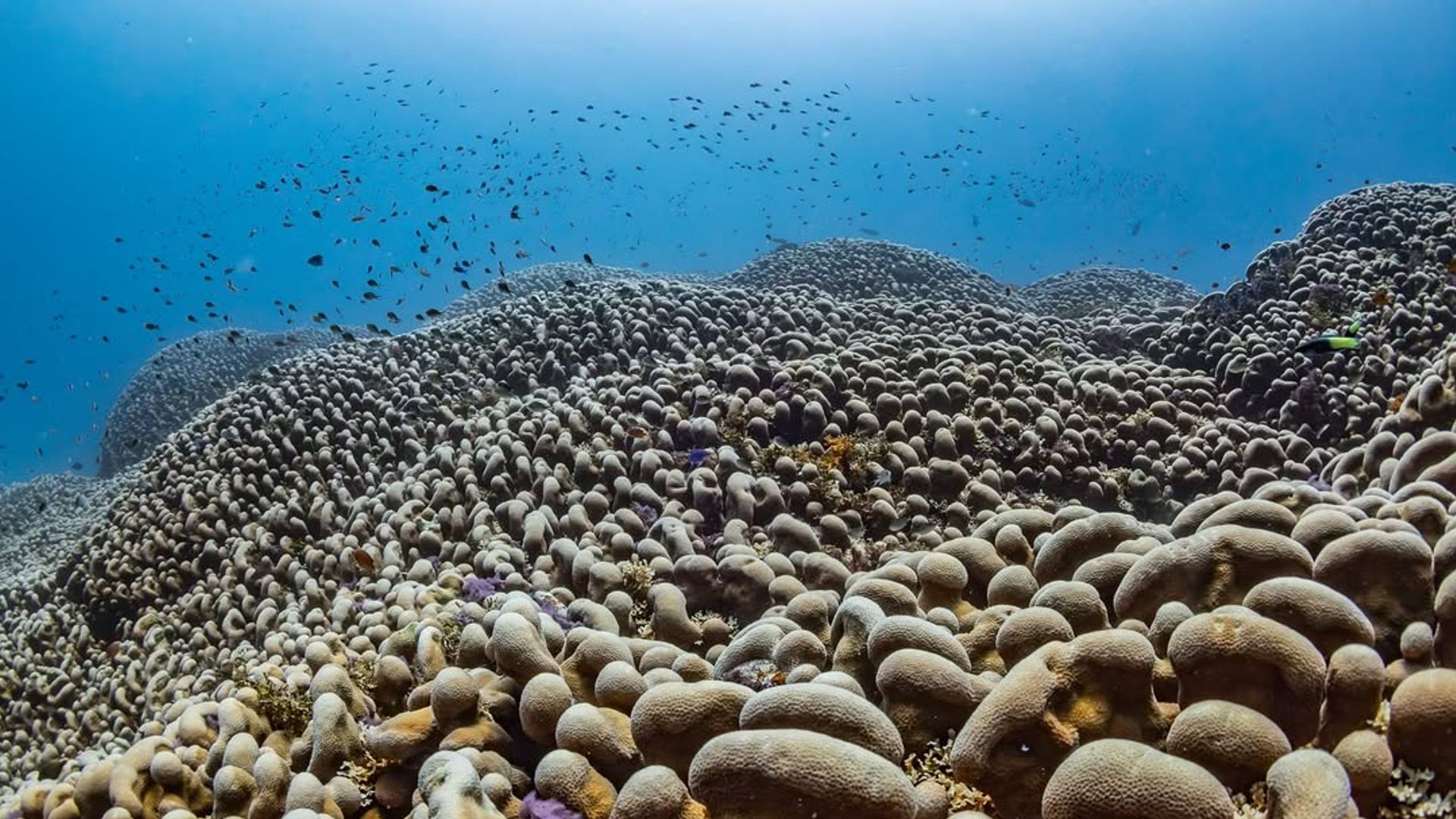

When marine biologist and photographer Manu San Félix went to take a closer look at what he thought was a large shipwreck while on an expedition, he never expected to make an incredible discovery that would advance our understanding of the ocean. "I saw something, called my partner, and we went down," he recalled. Manu and National Geographic's Pristine Seas team had stumbled upon the world's largest coral, after believing the giant shadowy mass was a large rock or a shipwreck.
Where was the coral discovered?
The coral was discovered off the coast of the Solomon Islands, just 43 feet below the surface, in October 2024.
How big – and how old – is the "megacoral"?
The "megacoral" measures 112 feet wide and 105 feet long, rising to almost 20 feet high, with Manu declaring it an "living cathedral". The coral is longer than a blue whale, measuring the same as half a football field and the height of a two-storey building. It is thought to be between 300-500 years old, and is from the Pavona clavus species.
Why scientists say it's a "living cathedral"
The discovery is unusual in the fact that it is not a coral reef, but rather a single organism made up of a network of polyps left to replicate and grow for hundreds of years, which is why scientists have dubbed it a "living cathedral".
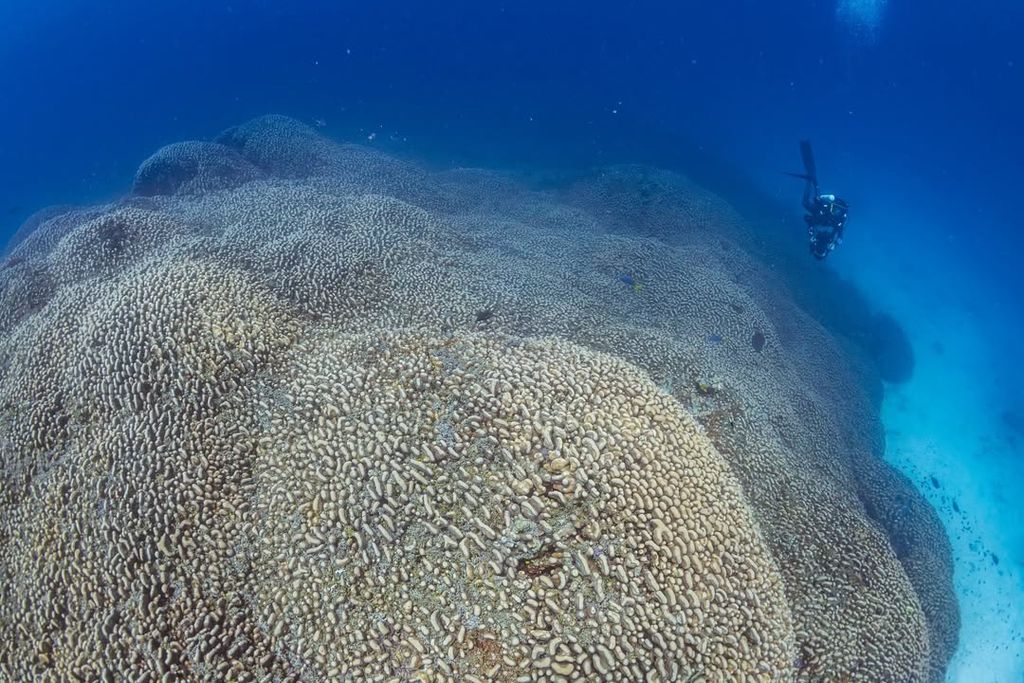 © Instagram/manusanfelix
How does this coral survive climate change?
According to the National Oceanic and Atmospheric Administration (NOAA), around 80% of the world's coral reefs have experienced bleaching since 2023, making this healthy specimen an extraordinary exception.
Manu shared that the discovery could help scientists understand how an organism can survive for so long, despite the immediate threat of climate change. "It is a natural monument that has seen the arrival of the first Europeans to these waters," he said.
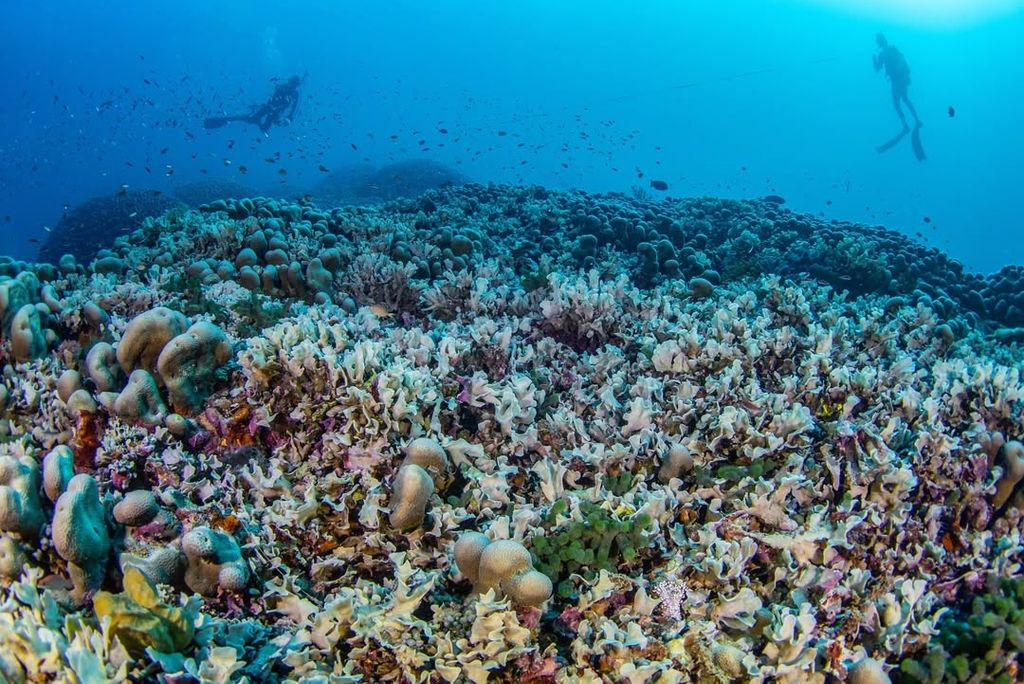 © Instagram/manusanfelix
"Illustrious figures of humanity have coexisted with this colony: Newton, Darwin, Curie, Gandhi, Einstein...and it has survived them. It now stores information on how to survive throughout the centuries. The genetic code of these simple polyps is an enormous encyclopedia that has written how to survive multiple climatic conditions, and until now it does so in the face of ocean warming."
"While the nearby shallow reefs were degraded due to warmer seas, witnessing this large healthy coral oasis in slightly deeper waters is a beacon of hope," added the founder of Pristine Seas, Enric Sala. "But there is cause for alarm. Despite its remote location, this coral is not safe from global warming and other human threats."
A symbol of hope and urgency
Solomon Islands officials, like Prime Minister Jeremiah Manele, were ecstatic about the incredible discovery. "The ocean provides for our livelihoods and has contributed so much to our national economy and communities," he explained. "Our survival depends on healthy coral reefs, so this exciting discovery underlines the importance of protecting and sustaining them for future generations."
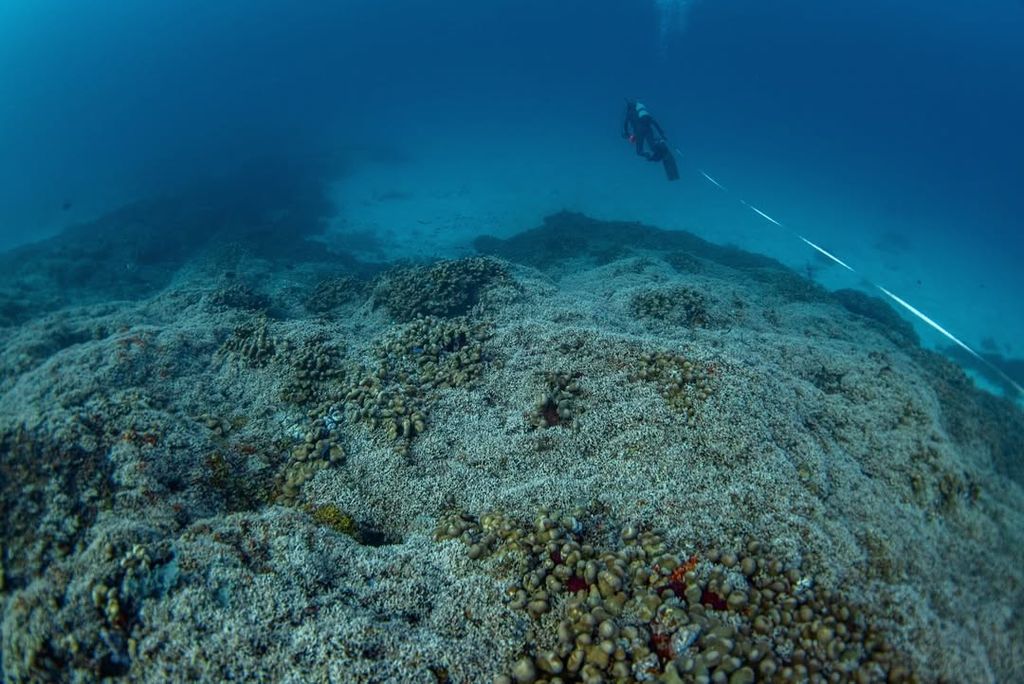 © Instagram/manusanfelix
"It's like discovering the tallest tree on the planet, but in the ocean," said Enric. "At a time where we can observe every square inch of the land with satellites and drones, the ocean below the surface continues to hold mysteries like this one." While the ocean is actively under threat from climate change, this megacoral proves that resilience is possible when paired with human action to prevent global warming.


