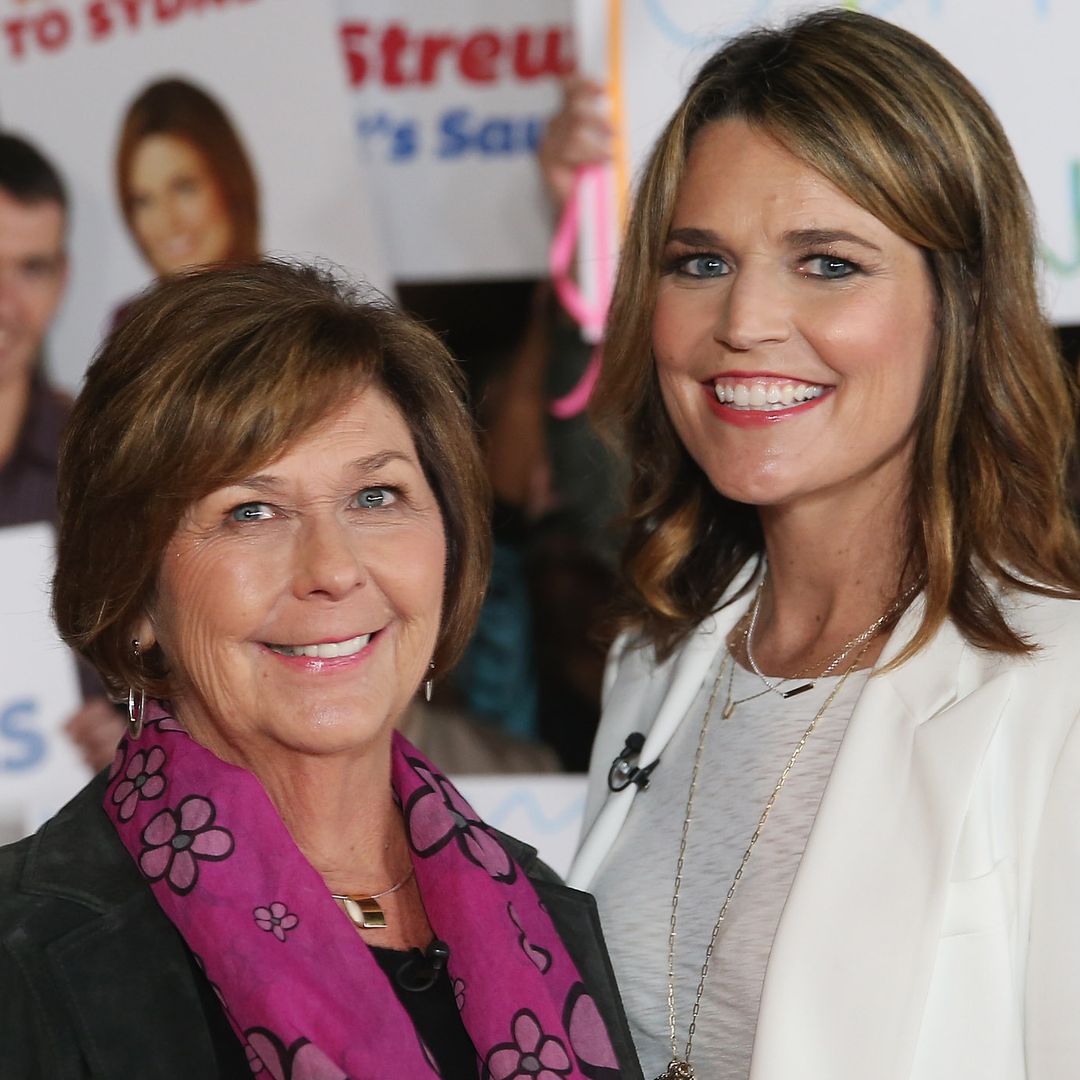
Almost four months in, the disappearance of TODAY anchor Savannah Guthrie's mother Nancy Guthrie remains a confounding mystery.
While more pieces of evidence keep showing up with each passing day, the lack of credible public information as well as any leads have thrown both investigators and concerned parties for a loop.
 © Instagram
In that time, many theories have emerged on the case, although former prosecutor-turned-criminal defense attorney RJ Dreiling tells HELLO! that he still believes the prevailing idea that the 84-year-old was kidnapped by someone familiar to her who planned it all out quite methodically.
"The lack of follow-through on any ransom demand makes it look like it was a distraction meant to throw off investigators," he opined. "This is someone intelligent enough to completely hide their tracks, including DNA, fingerprints, and electronic data, but also deranged enough to kidnap this woman out of her home and hold her hostage."
"What is worth considering are parallels to the Jodie Foster / John Hinckley Jr. case. Someone who is methodical in preparation but has a motive that makes no rational sense," he explained, referencing the infamous John Hinckley Jr., who professed an undying obsession with the two-time Oscar winner, going so far as to attempt to assassinate then-president Ronald Reagan in a bid to impress her.
The attorney also offered some hope, explaining that while it may seem difficult now to comprehend a scenario in which Nancy returns home safely, it can very much still happen. "It's important to remember that even though it has been a substantial amount of time since she went missing, hope is not lost."
 © Getty Images
"One of the most famous kidnappings in recent history – Elizabeth Smart – was solved several months after her disappearance when a family member remembered a key piece of evidence and disclosed it to the police," he explained. Elizabeth herself recently shared her own belief that Nancy was still alive.
"Technology has come a long way since then, particularly as it pertains to cell phone data and electronic tracking," Dreiling continued. "The best possible outcome here would be a DNA profile from the scene or another location matches someone with a clear motive, whether through prior contact, a personal grievance, or even a digital footprint on social media."
 © Getty Images
Pima County Sheriff Chris Nanos has previously also stated that his fear would be the current forensic and DNA analysis inadvertently leading to a cold case. To that, Dreiling added: "A cold case doesn't mean it's over, it means resources are pulled back and the case sits until a new lead emerges or new forensic results come in."
 © Getty Images
"With limited budgets, law enforcement sometimes has to prioritize," he explained. "The evidence gets preserved, the file stays open, and investigators wait for a tip, a witness, or new technology that can revisit the DNA samples."