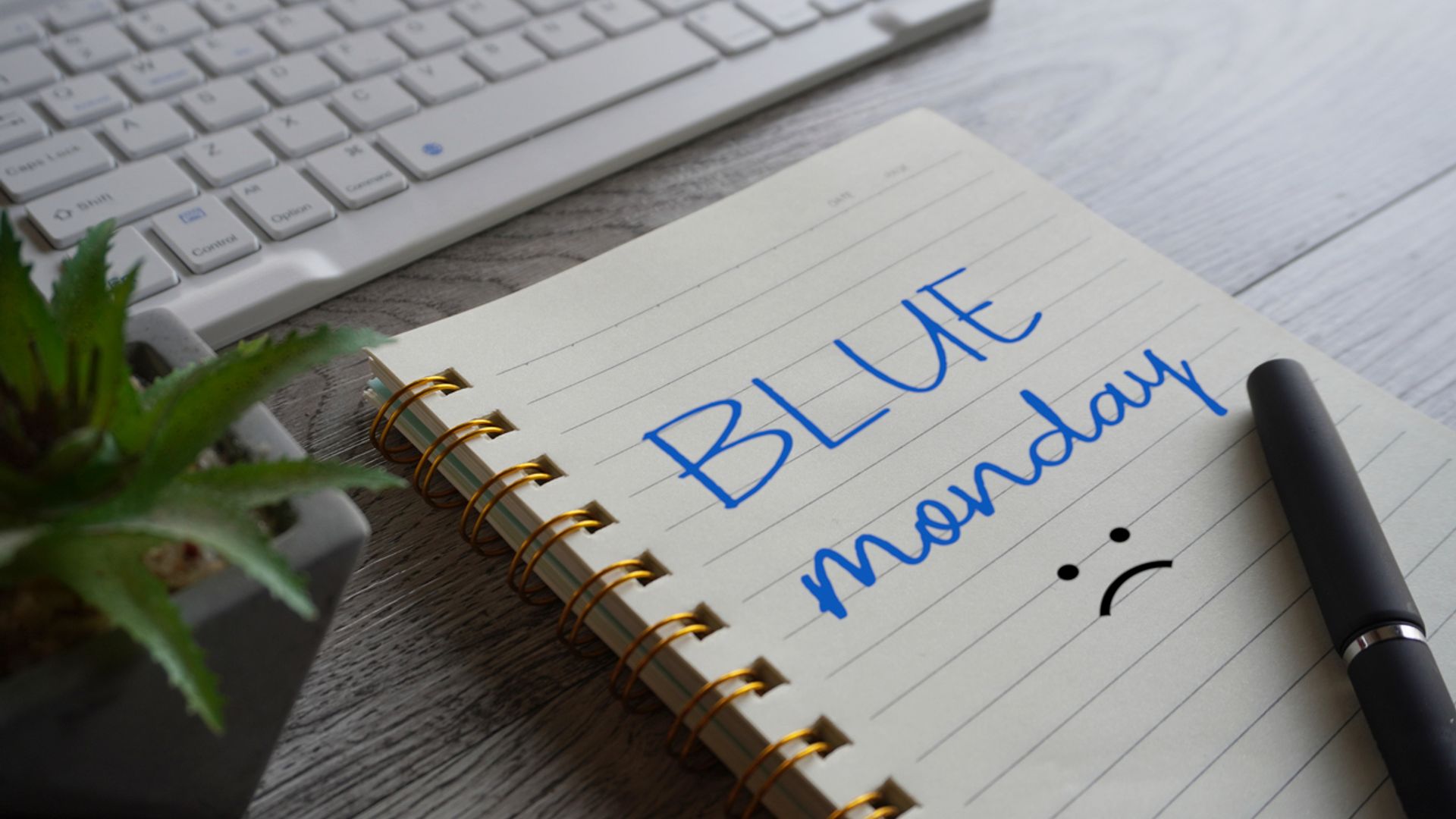

For many people, January is considered the most miserable month of the year, but according to headlines, there is one day that is the most depressing of all. Blue Monday, dubbed the saddest day of the year, makes headlines each year due to the so-called impact it can have on our mental well-being.
But what is the meaning of Blue Monday, and what are the best ways to boost your mood if you're feeling the effect of the January blues? We caught up with an expert to share what you need to know.
 © Getty Images/iStockphoto
When is Blue Monday?
Blue Monday is said to be the third Monday of January, which this year means it will fall on 19 January 2026.
What is the meaning of Blue Monday?
The idea of Blue Monday was first coined in 2005 as part of a marketing campaign by Sky Travel. They worked with psychologist Dr. Cliff Arnall, who created a scientific formula to identify the most depressing day of the year. The idea is that on this day you may be struggling with the post-Christmas blues - along with feeling the effects on your bank balance - while winter weather conditions and low motivation levels may also contribute to a low mood.
The idea of Blue Monday has since taken off and is regularly used as a marketing tool to sell everything from wellness products to holidays.
Why is Blue Monday the saddest day of the year?
"'Blue Monday' isn't scientifically real, but the experience people have around it absolutely is! We're meaning-making creatures and culturally we've learned the story that Mondays are dreadful, work is draining, and winter is something to push through. By the time Monday arrives, many people's nervous systems are already bracing for impact," says Chloë Bean, LMFT, a somatic trauma therapist for high-functioning adults experiencing burnout, anxiety and overwhelm.
"From a psychological and somatic perspective, the 'Monday Blues' are often a mix of learning beliefs and nervous system fatigue. Thoughts like 'Mondays always suck', 'I can't handle the week' or 'It's always going to be like this' can quietly build over the weekend and put the body into low-grade stress before the week even begins."
However, Chloë says that tuning into your emotions may help you to understand why you may be feeling this way and what may help you to feel better. "At the same time, feeling low on a Monday can be useful information. It may be a sign that you need to tune in rather than push through, try asking yourself questions like 'Am I feeling fulfilled outside of work? Did I actually rest over the weekend? Do I have anything I can look forward to this week?'" she says.
 © Getty Images
How to cope with Blue Monday
When you're feeling low, the last thing you need is pressure to make drastic or unrealistic changes in your life or routine. Instead, the therapist recommends some simple strategies to lift your spirits.
"Instead of trying to 'beat' Blue Monday, I often encourage people to approach it with curiosity. Small nervous system supportive practices like slowing the morning routine down, getting some light and movement before you go into work-mode, challenging any all-or-nothing thoughts, and intentionally planning something pleasant for Monday evenings, like the following:
- "A bath after work
- A cosy meal
- A call with a friend
- A nice walk
- A yoga class
- Some stretching or dancing for fun at home
- Drawing
- Journalling
- A good movie.
"These are just some ideas that can help the day feel less threatening and more supported," the expert says. "The blues can be both a story we've inherited and a signal from the body that something needs attention or support. Listen to that signal more often rather than trying to override it with positivity or avoidance. If it becomes unbearable and concerning, it can be helpful to speak with a licensed therapist for guidance and support."