A few years back, I encouraged my 60-something mother to do Couch to 5K with me. I was already a competent runner, but she'd never even laced up a trainer before.
Nonetheless, she took to it with enthusiasm, and our runs were a nice way to start the day. The only issue was pace.
Because I was used to going full pelt on my runs, I found myself frustrated at times with her slower pace, but it turns out that the very slow jogging she was doing – and I do mean slow, sometimes dog walkers overtook us – was just as helpful as the runs which left me gasping for breath.

You don't have to be breathless
Dr. Asiya Maula, private GP at medical service The Health Suite, sings the praises of a slow run.
Many people assume exercise only counts if they are breathless, sweating heavily or setting personal records, but that is simply not true. Very slow jogging can raise the heart rate and challenge the muscles while still allowing someone to speak in complete sentences. That can make it feel much more achievable."
Science backs it up, too. Research involving older adults with low muscle mass found that a 12-week programme of short, intermittent slow-jogging sessions improved aerobic capacity, muscle function and aspects of muscle composition.
A separate observational study following more than 55,000 adults found that running for as little as five to 10 minutes a day, including at slower speeds, was associated with lower risks of death from all causes and cardiovascular disease.
 © Getty Images
Why going slower helps with fitness
While some people like to feel pushed to their limits when working out, when someone is new to exercise, that's enough to put them off ever returning to the class, or from setting out on a run again.
The low-pressure pace of a slow jog means people are more likely to repeat it. "An extremely demanding workout that leaves someone sore, embarrassed, or exhausted is unlikely to become a lasting habit," Dr. Maula says.
 © Getty Images
"Slowing down allows beginners to concentrate on consistency. The heart and lungs are still working, the lower-body muscles are repeatedly contracting, and the body is spending less time completely sedentary."
Is it too good to be true?
Sort of, in that slowly jogging isn't enough to overhaul your health. Dr. Maula explains: "Ten minutes of gentle jogging does not cancel out an otherwise inactive lifestyle, but it can be an excellent starting point. It can also be divided into manageable intervals."
In addition, if you're entirely new to exercise, it's a brilliant entry point to improve health. For someone who runs a lot, suddenly only going for light jogs will probably decrease their fitness.
How to start your slow jogging routine
1. Start with a five-minute walk
Beginners could start with a five-minute walk, followed by 30 to 60 seconds of gentle jogging and one or two minutes of walking, says Dr. Maula. "This can be repeated several times before finishing with another easy walk."
 © Getty Images
2. Make your steps small – literally
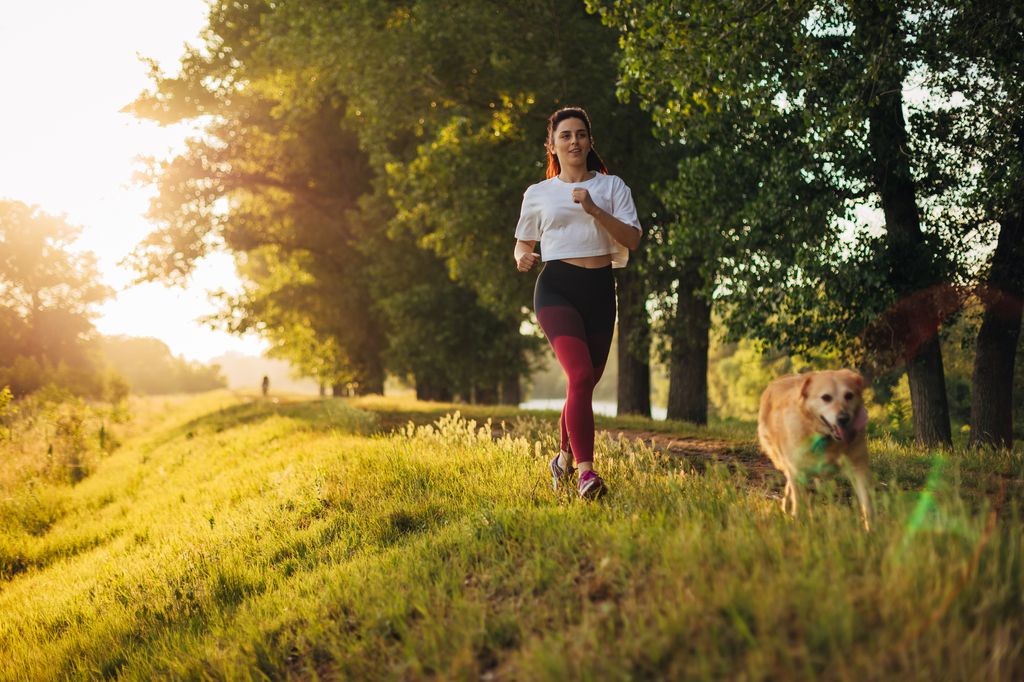
The aim is to take small steps, remain relaxed and maintain a pace at which conversation is possible. Speed should increase only when the current effort feels comfortable.
Dr Maula cautioned: "Slow does not automatically mean injury-proof. Running more slowly may reduce the force of each individual step, but taking more steps over the same distance can still create a considerable cumulative load.
“Do not deliberately force a forefoot landing or dramatically change your technique based on social-media advice. Wear comfortable footwear, increase gradually and stop if you develop persistent pain."
 © Getty Images
3. Do less than you can
When you hit your running stride, it's tempting to keep going and going, but Dr. Maula notes that you should finish feeling as though you could have continued for a little longer. "Very slow jogging is not about proving how fit you are, it is about making slightly more vigorous movement accessible enough to repeat."