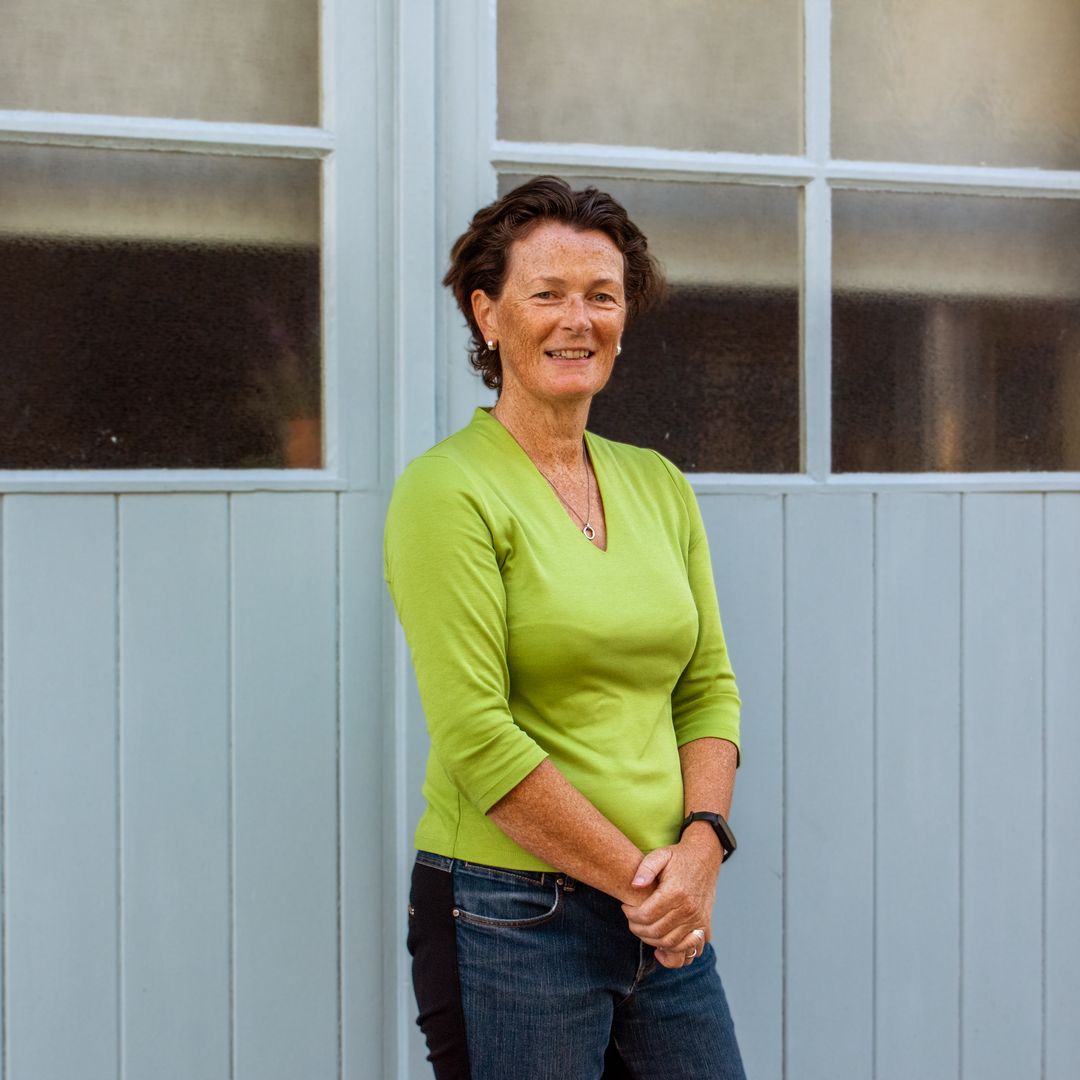
It’s 7.45 in the morning, I’m clinging onto a lamppost outside my office in central London trying not to vomit from the overwhelming panic and anxiety. Sweaty palmed, heart pounding, jaw clenched, I sneak in the side entrance, go up to HR and say: “I just can’t be here any more.”
I left and didn’t return for four months. After a decade of burning out every couple of years and changing jobs, thinking that would sort it, I’d hit clinical breakdown.
I’d felt like I had to fight to be seen and heard throughout my entire career. From my earliest days when I was told to wear structured jackets with shoulder pads and sit on the edge of my seat to appear bigger. Right through to the last days of my corporate career where it seemed that the CEO thought I was the note taker.
So fight I did.
 © Jo Hooper
I said yes to everything: walking my boss’s kids to school, working on Boxing Day, waking up in the middle of the night to answer my work phone.
Of course I got in early, stayed late, volunteered for extra projects, went above and beyond to support my boss.
That feeling of being overlooked, the fear of being ignored drove me to work myself past my limits for a decade. Until I went so far past my limits that my body and mind wouldn’t work any more.
It was literally like a switch had been flicked in my brain. I couldn’t read an email without panicking. I wasn’t able to make decisions, hold conversations. I hadn’t slept through the night for months, felt sick every time I brushed my teeth and had digestion issues that a river of Gaviscon couldn’t solve.
Now, seven years later, I know that this isn’t sustainable, isn’t healthy and isn’t necessary to have a successful career.
Eight months after clinging to that lamppost on the street outside my office I’d taken redundancy and set up my own business.
Now I get to decide when I work, who I work with, how I work and how much holiday I get (I am a very generous boss to myself). I’ve built a coaching business that helps women avoid my fate and reset their relationship with work, so they can have great careers and lovely little lives.
 © TCOLS Studio
If any of my experiences sound familiar, here’s what you need to know:
Rest alone doesn’t fix burnout
Taking a break can help, but it’s temporary relief. The only thing that really fixes burnout is changing the thing that burnt you out in the first place.
So ask yourself: what is it about my work that’s draining me? What’s driving that - the organisation? My team? My Boundaries? My own behaviour?
Those are the things we need to change to stop burnout coming back around again.
Leaving isn’t the only option
Often when we’re burnt out from work we think a new job will fix it. But I’m afraid it doesn’t always work.
Yes, if you’re in a toxic workplace where you’re not listened to, overworked and unhappy, ABSOLUTELY look for a better company to work for (they really do exist!).
Often the reason we’re overworking is because we feel we need to, to be noticed or recognised. Sometimes that is driven by an employer, but often it comes from within us. Something we believe about ourselves that drives us to work harder than everyone else.
Beliefs like: “If I’m not perfect people will think I’m rubbish at my job.” Or “If I’m not working hard, they’re not getting their money’s worth out of me.” Or even “Work is just meant to be hard.”
Those are the things we need to shift.
Start building some new brain muscles
The way we do that is by growing new neural pathways - like muscles. This is called neuroplasticity.
If you want to change a prevalent thought like: “I need to be perfect to be successful,” first identity an alternative thought, like: “I am great at what I do and my company is lucky to have me,” and then every time that first thought comes up, do three things:
- Pause and notice. You’ll be surprised how often that thought comes up!
- Tell yourself the alternative belief. Say it aloud if you can.
- Choose to take action from that new belief.
Over time, with repetition and action, your brain will start to automatically choose the new thought and the old one will become quieter.
Try it and let me know how you get on - it’s honestly amazing how our brains work!
 © Getty Images
Learn how to say no and make it easy to say it
I know this is going to feel HARD AS HECK, but to feel less overwhelmed by work, we have got to start working less.
It is not normal - or sustainable - to be expected to go above and beyond. It is not necessary to be available outside of work hours. It is not OK to feel like we have to take on more work and responsibility to get noticed.
So we’ve got to say no more often.
This is really hard, so I’m going to give you some words to use. I want you to copy and paste these into your phone notes or write them on a post it and stick it to your computer screen. Whatever you need to do to remind yourself that you are allowed to say no.
- “I can’t I’m afraid.” This one is great for those “Can you just…” questions.
- “I’m at capacity right now, could this wait? Or could X pick it up?” A great response when someone says “Could I get you to….”
- “Are you happy for me to drop X so I can prioritise this?” A favourite for when you get an ‘urgent’ request.
- And finally one for my self employed pals: “Absolutely we can do that, shall I send you a quote and realistic timeframe?” You do not have to do extra work for free, just because a client asks.
Remember why the heck you’re doing this
Finally, remember that you are working to live, not living to work.
I know this might sound very trite, but as someone who lost a parent at 16 and worked themselves into oblivion at 31, I know this in my bones.
Life is short and the world is wide. Don’t waste your years being burnt out by work when you want to be living.