Everything about Dolly Parton's iconography was unmistakable: the voluminous blonde hair, razor-sharp acrylics, coral lips, and glittering, rhinestone-encrusted outfits. It was a striking aesthetic, thoughtfully honed from the 1960s to the present day.
"I always laugh when I get called a fashion icon," the country star told Vogue. "I’m more of an eyesore! Only because I overdo it." However, a style muse she became with her legendary look that honed a playful edge with the highest heels for her 5ft stature and figure-hugging silhouettes. In 2022, she described her look to Allure as "gaudy, flamboyant, fun, comfortable – for me – noticeable."
In her 2023 book, Behind the Seams: My Life in Rhinestones, she wrote how her appearance caused controversy in the early years of her career. Fred Foster, the boss of Monument Records, wanted "to change my style into a 1960s pop look". "They wanted to flatten my hair. They wanted me to look more chic and wear more streamlined clothes. I hated everything about it. I felt naked," she wrote. "I’ve got great ideas and I’m a creative person. I think I’ve got something more to sell than just the way I look."
 © FilmMagic
In 1984, she told Andy Warhol that she never left "a rhinestone unturned". As a wig fanatic, she used them to conceal the damage beneath after years of bleach. "I can have a hairdo of any kind anytime I want it … they’ve just served me well through the years," she told Allure.
The country star passed away on August 25 at the age of 80 as she faced a "brief cancer battle". In tribute to her life, HELLO! takes a closer look at her transformation throughout the years from her budding youth on cable television to the icon she became known as today.
Dolly Parton's life in photos
 © Getty Images
Little Dolly Rebecca Parton: the '50s
Dolly was born on January 19, 1946 in a cabin on the banks of the Little Pigeon River in Tennessee, living in relative poverty. She often described her childhood growing up in her small home with 11 other siblings. But they were all happy, and often relied on music as an outlet, which Dolly later turned into a career.
 © Getty Images
The early days: the '60s
Dolly began songwriting for other artists and was signed at 19 to a record label, but as a bubblegum pop singer. She didn't begin experiencing any notable success, though, until she was invited by Porter Wagoner to join The Porter Wagoner Show, and started releasing duets with him that were commercially successful.
 © Getty Images
Becoming a star: the '70s
It was in the 1970s that Dolly first started achieving mainstream fame as a solo artist, with many of her signature songs coming from this era, including "Jolene," "Coat of Many Colors," and "Here You Come Again." She earned her first Grammy nomination in 1970, winning her first golden gramophone in 1979 for Best Country Vocal Performance, Female.
 © Getty Images
Branching out: the '80s
In the 1980s, "Dolly Parton" became a household name across the globe thanks to the release of her film debut, 9 to 5, to which she also contributed its Oscar-nominated title track. The project was a worldwide hit and remains one of her best remembered roles to date. In this decade, she continued to act in other projects like The Best Little Whorehouse in Texas (1982) and Steel Magnolias (1989). Of course, 1986 was also the year "Dollywood" was born.
 © Getty Images
Discovering her beauty muse
"There was this one woman, I thought she was beautiful and, you know, she had the peroxide hair and she had it all piled up on her head and had red fingernails and red lipstick and, you know, wore her powder. And I just thought she was the prettiest thing I’d ever seen. And Mama said, 'Oh, quit looking at her. She ain’t nothing but trash'. And I thought, 'Ooh, that’s what I want to be when I grow up – trash,'" Dolly once said about discovering her beauty muse.
 © Getty Images
An era of reinvention: the '90s
By the end of the 1980s, Dolly began experimenting with new genres of music, winning another Grammy for the album Trio, a bluegrass record with Emmylou Harris and Linda Ronstadt. She recorded several more bluegrass albums that decade, and even dipped into rock with 1998's Hungry Again.
Although her most notable moment that decade, of course, was when Whitney Houston's cover of "I Will Always Love You" for the soundtrack of The Bodyguard became a worldwide juggernaut, bringing renewed attention to the 1973 Dolly original.
 © NBCU Photo Bank/NBCUniversal via
Embellished stage outfits
Dolly experimented with her style during the 90s, with particular focus on embellished show outfits that stood out in an era dominated by minimalism.
 © Getty Images
A living legend: the 2000s
By the turn of the century, Dolly had done enough to cement her legacy as one of the most beloved figures in the entertainment world. In this decade alone, she was awarded the Living Legend Medal by the U.S. Library of Congress, the National Medal of Arts, the Kennedy Center Honors, and her first induction into the Grammy Hall of Fame.
 © Getty Images
The firsts keep coming: the 2010s
Well over five decades into her career, Dolly kept going! Her 2014 album, Blue Smoke, became her highest charting effort on the Billboard 200 as a solo act (to that point), and she performed at UK's Glastonbury Festival in 2014 for the first time as well. The release of Dolly Parton's Coat of Many Colors and Dolly Parton's Heartstrings made her a holiday icon as well.
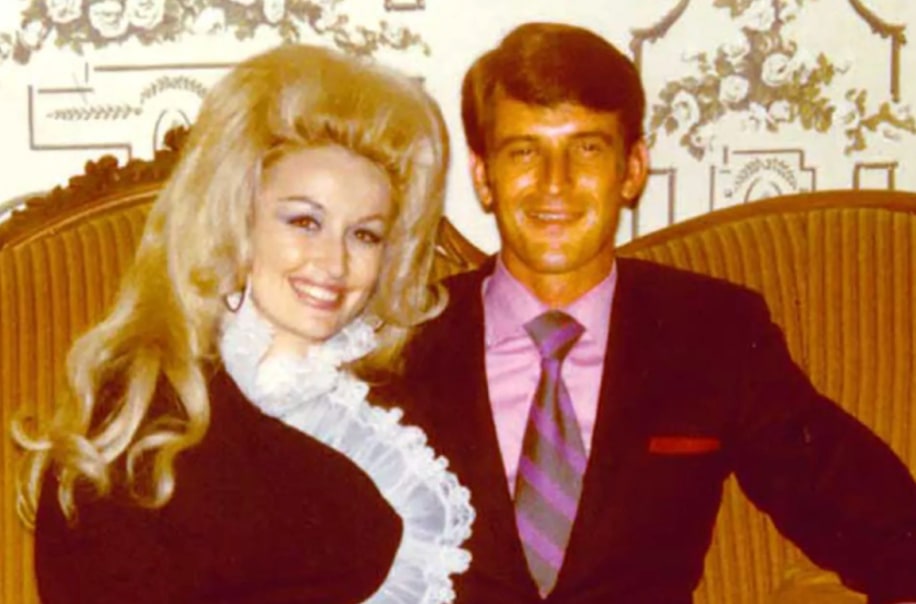
Married life
Dolly Parton and her husband, Carl Dean, were married for 58 years. While the late couple had a large extended family, including 19 nieces and nephews, they did not have children of their own.
"Early on, when my husband and I were dating, and then when we got married, we just assumed we would have kids," she told Billboard in 2014.
"We weren't doing anything to stop it. In fact, we thought maybe we would. We even had names if we did, but it didn't turn out that way.
"Now that Carl and I are older, we often say, 'Aren't you glad we didn't have kids? Now we don't have kids to worry about.'"
 © Getty
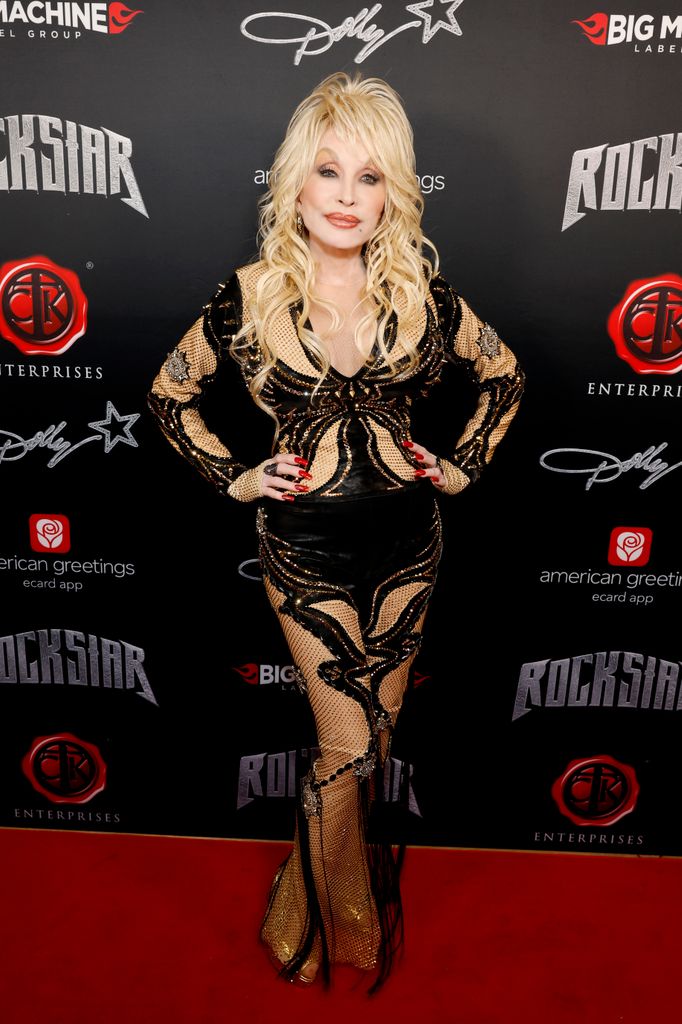
The present day: the 2020s
Through challenges with her health and the passing of her husband Carl Dean, the singer continued to go strong. In 2023, she released her very first rock album appropriately titled Rockstar, which is now her highest charting album in her career (and her first ever top-five record on the Billboard 200).
 © Getty Images
Dolly's death
Dolly died at the age of 80 on August 25 following a "brief cancer battle".
"After bravely facing a brief battle with cancer, Dolly departed her Earthly life today at the Vanderbilt-Ingram Cancer Center surrounded by loved ones," her publicist's statement read.
"Our beloved Dolly Parton spent her life and career bringing joy, laughter, hope and integrity into everything she touched. Her unmatched generosity reached the lives of countless people whom she would never meet, yet she was always there to offer a helping hand."
He continued: "Whether it be the hundreds of millions of books donated through her invaluable Imagination Library or funding research that helped create a lifesaving vaccine used around the world, Dolly's unconditional love for all people was the guiding force for her lasting impact."