

For as long as there have been billionaires in the United States — oil tycoon John D. Rockefeller was America's first in the early 20th century — there have been scions to squander said billions.
"Any fool can make a fortune; it takes a man of brains to hold onto it," Cornelius "the Commodore" Vanderbilt, another one of America's first billionaires, is said to have told his son William Henry "Billy" Vanderbilt. Three generations later, the Commodore's great-grandson, Anderson Cooper's grandfather Reginald Claypoole Vanderbilt (who spent much of his 45 years on Earth spending) wasted much of the famed Vanderbilt fortune, which once boasted more money than that held by the United States Treasury.
Reginald — whose journalist grandson has frequently chided the idea of inheritances — is only one of countless examples of a wealthy heir losing out on their inheritance, because of squandering the money they already had, or even more salacious reasons.
From Astor family descendants to the likes of Paris Hilton and Tori Spelling, see below for wealthy heirs who ultimately weren't given their designated fortunes.
1/5
 © Getty Images
Brooke Astor with her son Anthony Marshall at the Plaza Hotel in New York City in 2002
The Astors
With a family as dynastic and affluent as the Astors, it makes sense they would have not one but two inheritance scandals, at least. John Jacob Astor was the first Astor to have major money, rising from a poor German immigrant to becoming America's first multi-millionaire, thanks to his monopoly in the fur trade and New York City real estate dealings. In 1892, his great-granddaughter Charlotte Augusta Astor, daughter of William Backhouse Astor Jr. and Caroline Webster Schermerhorn Astor (the ultimate society doyenne of the Gilded Age), was caught in a high-profile extramarital affair in London, while married to J. Coleman Drayton, a lawyer, at a time when divorce carried a significant social stigma.
The social humiliation was such that her father disinherited her, instead leaving $850,000 to each of her four children (one of whom died age eight in 1898), before his death that year. Her brother John Jacob Astor IV privately gave her $1 million, as compensation.
Over one hundred years later, the Astors again found themselves in scandal, when Brooke Astor (1902-2007), who was known to donate much of her late husband Vincent Astor's fortune to civic causes, was the victim of elder abuse at the hands of her own son, Anthony Marshall (1924-2014). The former theatrical producer, taking advantage of his mother's Alzheimer's disease, fraudulently altered her wills and trusts to divert additional millions designated for charity to himself. In 2006, his own son Philip Marshall accused him of elder abuse and looting his mother's fortune, and he was subsequently found guilty of grand larceny and scheming to defraud. He was sentenced to more than three years in prison, but eventually granted medical parole.
2/5
 © WireImage
Tori Spelling, Aaron Spelling and Candy Spelling at a gala in Los Angeles in 2002
Tori Spelling
Fellow 2000s media darling and heiress Tori Spelling similarly had her inheritance drastically cut. Her father Aaron Spelling was one of Hollywood's most prolific producers, and amassed a fortune of up to $600 million. He and his wife Candy Spelling famously built and lived in a mansion dubbed "The Manor," which boasted 56,000 square feet, (the second largest house by official living space in the Los Angeles metropolitan area, bigger than both the White House and the Taj Mahal) and had over 123 rooms.
Upon his 2006 death, he left his entire estate to Candy, diminishing Tori's trust to approximately $800,000, reportedly fearing her long-standing spending habits would lead to financial ruin should she inherit a larger, direct influx of cash. In her 2013 memoir, Spelling It Like it Is, she wrote: "It's no mystery why I have money problems. I grew up rich beyond anyone's wildest dreams. I never knew anything else. Even when I try to embrace a simpler lifestyle, I can't seem to let go of my expensive tastes. Even when my tastes aren't fancy, they're still costly. I moved houses to simplify my life, but lost almost a million dollars along the way."
3/5
 © Getty Images
Johnson's six children (left to right): John Seward II, Elaine, Jennifer, Mary Lea, James, and Diana) at a New York City Surrogate Court in 1986
John Seward Johnson
J. Seward Johnson was the son of pharmaceutical giant Johnson & Johnson founder Robert Wood Johnson. In his lifetime, he amassed an over $400 million fortune, but he cut his six children out of his final will. Though the children, shared with his first two wives, had enjoyed living off of their trusts, in 1971, their father married the family's former chambermaid Barbara Piasecka, who received $402,824,971.59 upon his 1983 death in accordance with his final will.
Three highly publicized legal battles ensued, during which the heirs alleged their father wasn't mentally competent at the time he signed the will, and moreover claimed Barbara exerted undue influence over their ailing, elderly father, who died of cancer. They eventually settled out of court, with Barbara keeping most of the fortune, while the children received approximately $40 million to share, plus coverage of legal fees.
4/5
 © Getty Images
Joan Crawford with her daughter Christina (left), her son Christopher, and identical twin daughters Cindy and Cathy, circa 1949
Joan Crawford
Unable to have biological children, Joan Crawford (1906-1977) raised four adopted children, Christina, Christopher, and twin girls, Catherine (Cathy) and Cynthia (Cindy), but eventually became estranged from the older two. The actress died in 1977 with an estate valued at $2 million, reportedly leaving in her will a trust fund of $77,500 each to Cathy and Cynthia, $35,000 to her longtime friend and secretary Betty Barker, and other donations to other people and charities — excluding Christina and Christopher.
She famously indicated in her will: "It is my intention to make no provision herein for my son Christopher or my daughter Christina for reasons which are well known to them." One year later, her daughter Christina released her explosive memoir, Mommie Dearest, in which she accused her mother of being an alcoholic and inflicting years of abuse, the disinheritance being the final nail in the coffin.
5/5
 © Getty Images
Paris Hilton with Barron Hilton at Dan Tana's in Los Angeles in 2010
Paris Hilton
Paris Hilton's great-grandfather Conrad N. Hilton was the founder of Hilton Hotels, and died in 1979 with a net worth valued at over $1 billion when adjusted for inflation. His son Barron Hilton had an estimated net worth of roughly $4.5 billion at the time of his death in 2019, however just over a decade prior, he altered his will to leave 97% of his fortune to the Conrad N. Hilton Foundation. At the time, Paris' reputation as a tabloid darling was at its peak, and the younger Hilton generation's chaotic media coverage reportedly partly inspired the decision to disinherit them. Her father Richard Hilton was also overridden; he has a reported net worth of $350 million, from his work in luxury real estate.
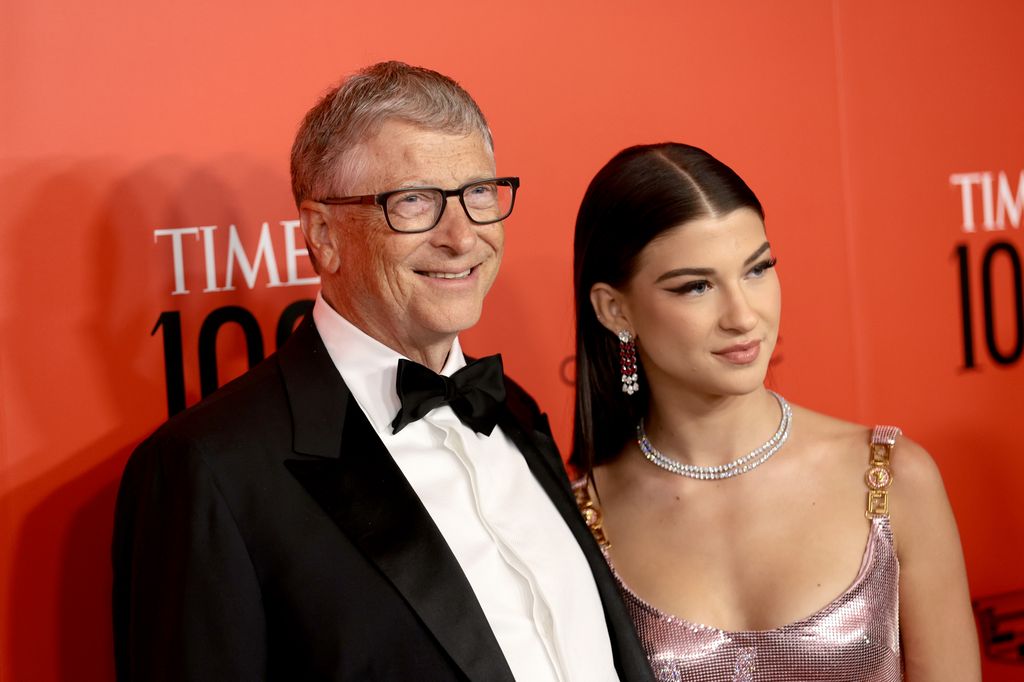
"I didn't want to be known as the 'Hilton Hotel granddaughter.' I wanted to be known as Paris. Because I have seen a lot of these kids who are just handed everything and they're not really happy with their lives because they never really worked for it themselves," Paris said on an episode of The Burnouts podcast, co-hosted fellow billionaire scion Phoebe Gates, daughter of Microsoft founder Bill Gates. She also confirmed that she stopped receiving an allowance from her family when she turned 18.
How do America's wealthiest families decide on these inheritances? An estates and trusts expert weighs in
Wills are, of course, a supremely common way of not only passing down money but safeguarding a fortune. And completely cutting off an heir isn't the only way to teach a lesson; modern wills give thousands of families the opportunity to preserve their wealth even when it's passed down, and can ensure their offspring are taking on an inheritance responsibly.
"Trusts have for centuries been an effective tool for keeping wealth in a family line," William LaPiana, Dean of Faculty at New York Law School and an expert on wills, trusts, and estates, tells HELLO!. "It is easy to create a trust that can last for hundreds of years."
"I didn't want to be known as the 'Hilton Hotel granddaughter.' I wanted to be known as Paris. Because I have seen a lot of these kids who are just handed everything and they're not really happy with their lives because they never really worked for it themselves"
"The wealthiest families today use a variety of structures, including trusts, LLCs, family partnerships, and other entities, to both accomplish tax planning and to preserve wealth," he adds.
 © Getty
Moreover, LaPiana notes that rather than stripping an heir of their inheritance, should a parent want to curtail the habits that led them to wanting to do so in the first place, wealthy families can easily "tie distributions from the trust to certain benchmarks." One can hinge access to millions (if not billions) on whether an heir graduates college, has a steady job, or even passes a drug test.
"Trusts including these sorts of requirements are often called 'incentive trusts.' While it is not possible to know how many such trusts exist, given the amount of discussion within the profession they are probably more common now than they were twenty years ago," he continues.


