

With our Instagram feeds filled with wealthy influencers showing off their jet-setting lifestyles, there's also another side to the coin — "stealth wealth"-style parenting among the super rich. For every young nepo baby showing off their lavish lifestyle on a private jet, there seems to be a billionaire enforcing a low-key lifestyle for their offspring.
You might find that billionaires indeed have household rules for their kids that are similar to yours and mine, with strategies ranging from Mark Zuckerberg having his children take part in daily chores to billionaire John Caudwell's kids using budget airlines for travel. As the British telecom founder said in a Business Insider interview: "We have to demonstrate to them what normal life is like."
So let's take a deep dive into the surprisingly frugal habits the super wealthy are teaching their children, and the psychological reasons behind it.
How Mark Zuckerberg enforces household chores and job shadowing for his kids
Some of the most remarkable billionaires are embracing "regular" home lives for their children. Self-made Meta founder Mark and his wife Priscilla Chan, who is the Massachusetts-born daughter of Chinese refugees from Vietnam, take a hands-on approach with their daughters Max, August and Aurelia.
 © Instagram/@priscillachan
Mark is teaching them how to type and code, and the kids are responsible for tasks around the home. They also go to work with mom and dad to show them what a working day is like.
During an interview with Gayle King on CBS Mornings, the couple revealed how they keep their children's feet on the ground. "Well, I think first of all, we don't give them everything. So I think that's an important piece. But also they just have responsibilities and chores," said Zuckerberg.
Chan noted: "We also take them to work. Mark and I take both of them to the office to see what we do, how we contribute.”
 © Instagram/@priscillachan
Bill and Melinda Gates imposed family shopping limits and allowance rules
Former power couple Bill Gates and Melinda French Gates have embraced a similar approach with their children, including daughter Dr. Jennifer Gates, who is now a pediatrician.
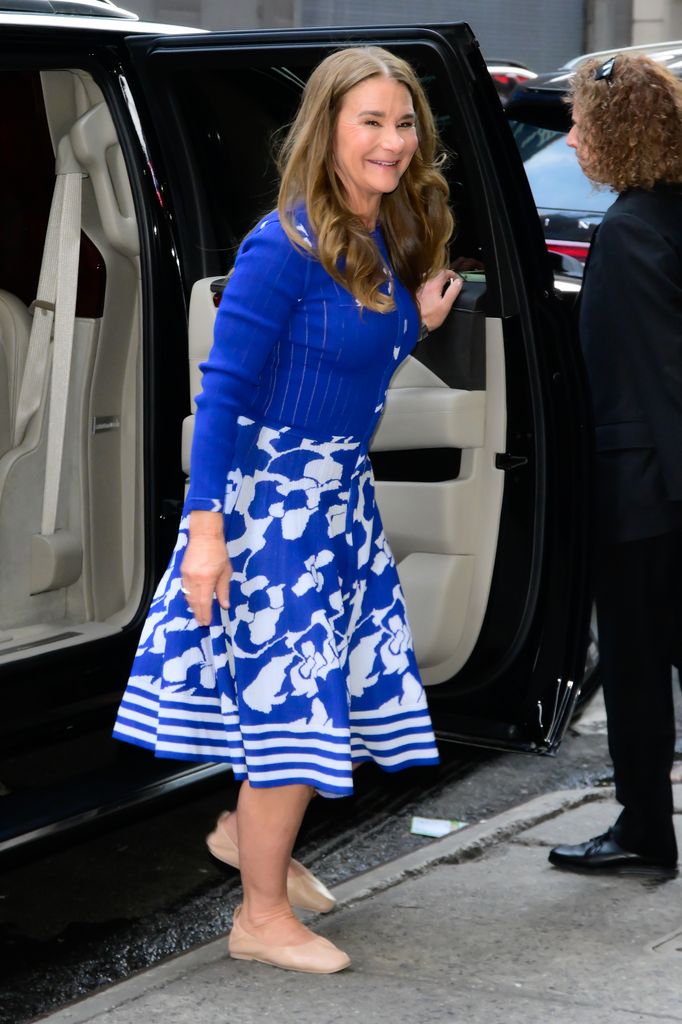
"I had this phrase in the house – 'Just because I can, or just because we can, doesn't mean we should,'" Melinda said during a Bloomberg podcast. "And so I had for my kids, each of them had an allowance. It went up as they got older, to help them manage money." The children had to save a third of their allowance for charity.
She remembers when her oldest daughter Jennifer, who is now a pediatrician, saw a designer purse and asked her to buy it for her. "Of course I could buy it for her. But I said, 'But if I did, what would that be saying to the other girls in your middle school? 'Wouldn't it separate you?'"
 © GC Images
Her humble philosophy is rooted in her own experience. "It's because I went through universities with some other peers who had come from great wealth. They threw their privilege around as if they were special just because they came from wealth. What I knew was that they weren't that special, right? And so I didn't want my three children to grow up thinking they were special because they had a father with a certain name or we had wealth."
'No Gucci and budget airlines only': Billionaire John Caudwell's strict financial rules
Billionaire Caudwell, who grew up with "next to nothing," has always wanted to make sure his eight children and stepchildren stay grounded. "I don't want my kids to have next to nothing, but I don't want to overcorrect the way that some rich people do," he told Business Insider.
He further explains: "Everybody wants to be spoiled, but it's very important that we keep our kids' feet on the ground, so we are very controlled about how we approach luxury."
How does he do it? Well, you won't see the children flying private (they fly budget airlines instead) and they also have a no buying designer clothes rule. "If you go to Gucci and pay a thousand pounds, are the kids any happier? No, they're not. Do they end up having a very spoiled attitude? Yeah, they probably do."
 © Dave Benett/Getty Images for BGC
"Everybody wants to be spoiled, but it's very important that we keep our kids' feet on the ground"
Gordon Ramsay's kids never flew first class with their parents
Frugal transportation seems to be a common thread among wealthy parents who want to teach their kids to learn about real life. For example, Gordon Ramsay is "just" a multimillionaire with a fortune widely reported to be around $220 million, but he's apparently one of the strictest wealthy dads in terms of his kids' indulgences.
The celebrity chef and his wife Tana Ramsey have kept the kids humble — including flying economy when mom and dad are in first class — because children haven't worked hard enough to afford the privilege.
He told British newspaper the Sun that his children use the subway to get around and volunteer "working and cleaning" at a local hospital. And on flights: "When they ask if they can pop up to us in First Class for some nice food, we say, 'No you [expletive] can't,' so now they take their own picnics on board, and they're absolutely fine in economy. I mean, what 14-year-old needs to sit in a reclining chair?"
The lesson? "It's so important to Tana and I that they stay seriously grounded and motivated," he adds.
Raising billionaire heirs: Why the world’s wealthiest impose financial restrictions
Expert in the psychology of wealth Dr. Jim Grubman, author of Strangers in Paradise: How Families Adapt to Wealth Across Generations, and Wealth 3.0: The Future of Family Wealth Advising, explains the "why" behind this strategy of ultra-high-net-worth (UHNW) families that goes beyond simply keeping kids grounded.
"It is not a sham process meant to avoid entitlement," says the family wealth consultant. "It is a reasonable, long-term, sustained process of preparing young people to handle not wealth but something more important: decision-making."
"Not every UHNW family does this, and when they don't, the consequences can be damaging," adds the expert. "But a lot has been learned over the past 40 years about how to do this and the benefits of preparation for decision-making for wealth. That's the goal, not preventing entitlement. What society sees as 'simulated scarcity' is really one part of a financial apprenticeship that teaches young people skills under age-appropriate constraints, just like any other learning process. It’s simply good education."


