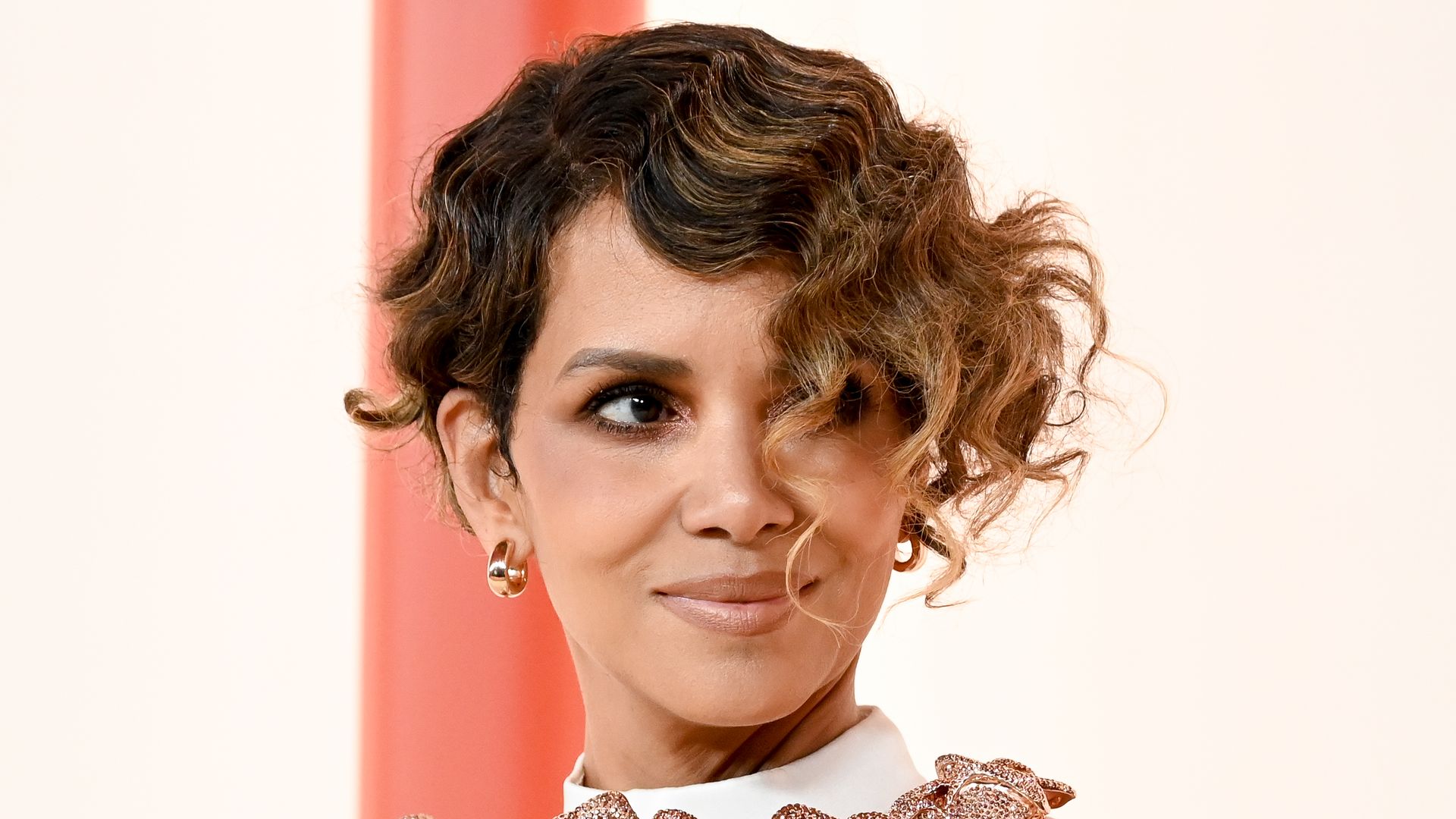

Actress Halle Berry is best-known for her roles in movies Die Another Day, X-Men and Monster's Ball, for which she won the Best Actress Oscar in 2002.
The 58-year-old star has had a tough road during her rise in Hollywood, breaking racial barriers while overcoming personal heartache. Read her story below…
 © RB/Bauer-Griffin
Halle Berry's early life
Halle Berry was born on August 14, 1968, in Cleveland, Ohio, to an African-American father, Jerome Berry, and a white mother, Judith. Halle's parents divorced when she was four, and her mum, a psychiatric nurse from Liverpool, raised her alone.
As a mixed-race teenager growing up in a predominantly white secondary school, Halle says she was painfully insecure. "It was sickening how much I craved being liked," she recalls.
"I was Miss Everything – cheerleader, student senator, on the newspaper, the honour roll, you name it."
By the time she was 18, she held real-life "Miss" titles, as a national beauty queen.
Halle Berry's start in acting
Halle began her showbiz career playing a model in the short-lived American TV programme Living Dolls in 1991.
The former beauty queen got her big break, however, in Spike Lee's Jungle Fever, persuading the director to cast her as a decidedly unglamorous crack addict. It turned out to be a wise career move. "With that movie, people realised I could act," she says.
Next she co-starred with Eddie Murphy in Boomerang, and went on to roles in more than a dozen films during the 1990s.
She also took on a number of TV endeavours, including the biopic Introducing Dorothy Dandridge, which she executive produced and for which she won a Golden Globe and an Emmy.
 © Getty Images
Halle Berry's present career
Halle has forged ahead in her career in the meantime, playing the famed X-Men superhero Storm in the film versions of the comic-book series and taking a lead role in 007 instalment Die Another Day.
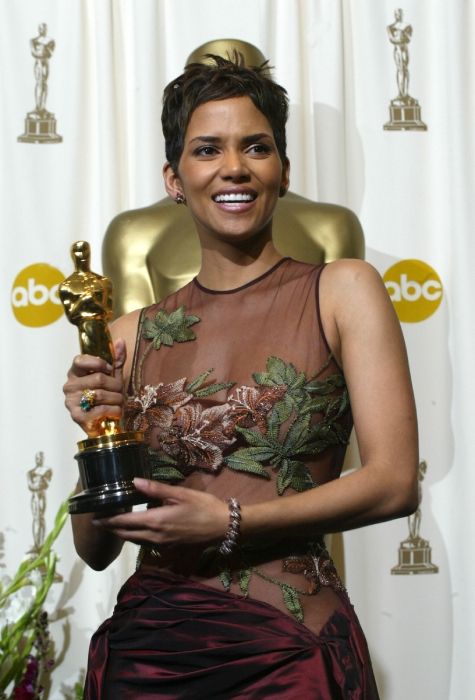
But the crowning glory of her career to date must surely be the Oscar she garnered for her gritty role alongside Billy Bob Thornton in Monster's Ball – a performance that also earned her a Golden Globe nomination.
Halle has also starred as Catwoman and in the movie Kingsman: The Golden Circle.
Halle Berry on racial discrimination in movies
Halle says she's missed a lot of opportunities as a result of discrimination.
"I never even got the chance to read for The Silence Of The Lambs or Indecent Proposal," she says. "The excuse is that a black woman would change what the movie was all about."
And for Halle, every part counts – she even considers her 1994 role as a prehistoric temptress in The Flintstones a coup. "They wanted a Sharon Stone type," she explains. "I really pushed for the part. It was important to me that a black woman be seen as the object of desire."
Halle Berry's private life
Just as her career hasn't always been rosy, Halle has also had hard times in her private life, and she admits she's been in "a few bad relationships" – some of them abusive. One unidentified boyfriend was so violent that he dealt Halle a blow to her ear that left her partially deaf.
The actress thought she'd found lasting love with baseball star David Justice, whom she married in 1994. But three years later a bitter divorce ensued – a struggle she says nearly drove her to suicide.
"I think that's the weakest I've been in my entire life," she confides. "That's what the break-up of my marriage reduced me to. It took away my self-esteem. It beat me down to the lowest of lows."
Halle bounced back, however, and developed a new strategy to find true love. "I just have to choose wisely – someone who can handle my neediness, someone who is willing and able to keep filling up my love cup."
Halle Berry's children
After a five-year marriage to R&B singer Eric Benet – which ended in divorce in 2004 – Halle met Canadian model Gabriel Aubry. The two fell in love and welcomed a daughter, Nahla, in 2008, but Halle vowed she wouldn't wed again.
"Gabriel and I don't look at our relationship in terms of forever, we look at it as right here today," she said in 2009. "It's wonderful, but neither one of us feels the need to attach ourselves to each other for life – because it may not be that."
However, in 2010, Gabriel issued a statement confirming the pair had gone their separate ways.
"She is, and will forever be, one of the most special and beautiful people I have ever known, and I am certain we will continue to have only love and respect for one another,” he said. “We have been blessed with the most amazing daughter in the world, and her happiness and wellbeing is the most important thing for both of us.”
It wasn't long before Halle found love again in the arms of French film star Olivier Martinez, who she met while filming Dark Tide together in South Africa. They married in France in 2013 and welcomed their son the same year. Two years later though, the couple announced they were parting ways, but the divorce was only finalised in 2023.
Halle has since dated Grammy-winning American musician Van Hunt.