
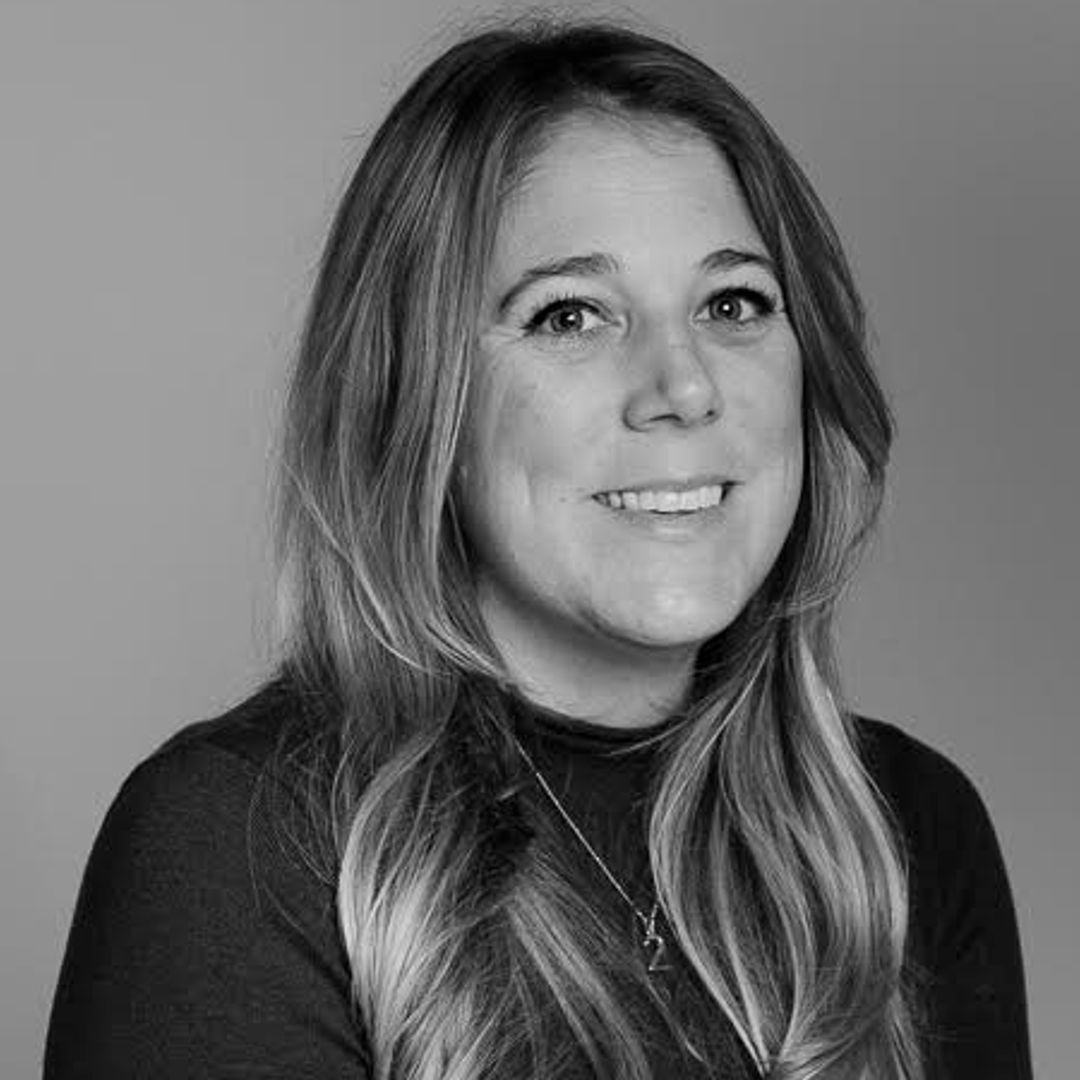
I distinctly remember being asked to write three words to describe myself at secondary school. The first one I scribbled down was 'blonde'. Not something about my personality, my strengths or my hobbies, but my hair colour.
Even earlier than that, I remember proudly talking about my 'yellow' hair at primary school. As a blonde child, I was praised for the golden hue of my hair – weird, given that I had no say in it, but I soaked up the praise.

Being blonde was my whole identity (further intensified after seeing Legally Blonde, which I felt proved the colour of my hair could indeed be central to who I was), and this seems to be a path Harper Beckham, 14, is walking down too.
'Your fav blonde'
The youngest child of Victoria and David Beckham looked blonder than ever this week, on holiday in Ibiza with her family – and she clearly sees her hair as a key part of who she is, with her Instagram bio reading: "Your fav blonde".
 © Gtres / BACKGRID
As someone who definitely made her MSN name something blonde-based, I get it. I liked that my hair colour was admired and envied. I liked it being central to who I was – but when I got older and my hair naturally darkened (I didn't dye it until my mid-20s), I felt like I lost who I was a bit – I hated people telling me my hair looked darker (which they did, often), and because I'd put so much of my self-worth in being a blonde, I felt a bit lost in who I was – and I'd hate for Harper, who has more pressure on her than we could ever imagine, to feel that way.
Forging our identity
"Making our appearance a key part of our identity can create a lot of self-esteem issues as the individual seeks external validation rather than internal validation, seeking approval from external sources," explains child and educational psychologist Dr. Emily Crosby.
Body image expert Elle Mace notes that Harper's age is relevant to how she identifies.
"When a young person anchors their sense of self to a physical trait such as hair colour, they're building their identity on something inherently unstable, because appearance changes."
 © Instagram / @victoriabeckham
Just like I experienced, Elle explains: "Hair darkens, bodies change many times, skin changes and when the trait that defined you changes, it can trigger a genuine identity crisis, not just self-consciousness."
Psychological risks
Elle says there are several psychological risks associated with basing our appearance on how we look. "Appearance-based identity is contingent on external validation. If being 'the blonde' is your core self-concept, you become dependent on others noticing and reinforcing that, which feeds a fragile rather than stable sense of self.
"Second, it narrows your sense of possibility. When you've collapsed your identity into one visible characteristic, branching out or reinventing yourself feels existentially threatening, not just uncomfortable.
 © Instagram
"Third, and perhaps most insidiously, it ties your self-worth to something you can't fully control - ageing, illness, hormones, and simply growing up can all strip that trait away. That loss is then experienced as a loss of self, not just a change in looks."
BACP-registered therapist Claire Patterson elaborates: "Making our appearance part of our identity isn’t inherently a bad thing. We can enjoy and take pride in what we look like, maybe accentuating our favourite features or choosing styles that suit us, but what can become problematic is when we confuse how we appear for who we are, because when our looks change, our self-image may become unstable."
A sense of self that feels dependent on appearance can also create insecurity within relationships, warns fellow BACP-accredited therapist Rebecca Vivash. "If someone’s confidence is heavily tied to being desired or admired for how they look, relationships can start to feel emotionally unsafe whenever appearance changes or attention shifts elsewhere, often leading to deep insecurity where fear of rejection and jealousy can feel overwhelming."
She adds: "It can also narrow how we see ourselves. When someone becomes known primarily for a physical trait, ie. 'the blonde one', there's a risk that other parts of their identity become underdeveloped or overlooked, both by themselves and by others."
As for Harper's Instagram bio? Elle cautions: "Social media amplifies all of this considerably. When a bio reads 'your fav blonde,' that identity is being performed and reinforced publicly every day, making it even harder to evolve away from."
Shifting perspective
Dr. Emily explains that we need to reset where we seek validation. "We want to move towards internal validation where identity is based on values and skills such as kindness, hard work, empathy or achievements, such as working towards sport goals or projects that give us gratitude from internal validation rather than seeking validation from others and relying on these outside forces.
Elle agrees: "Identity anchored in values, character strengths, skills developed through effort, and relational roles (being a loyal friend, a curious learner, a creative person) tends to be far more resilient, because these things grow rather than diminish over time, and because they are internally rather than externally generated."
 © Samir Hussein/^WireImage
Luckily for Harper, who is passionate about creating her own beauty brand, Elle says that hobbies and talents are excellent anchors specifically because they involve agency. "You actively cultivate them, which builds what psychologists call 'self-efficacy', a genuine sense of capability."
She adds that being 'someone who writes' or 'someone who plays sport' also creates community and continuity in a way that a physical attribute cannot.
Claire agrees: "If we are able to see ourselves as deeper than how we appear, we are more resilient in the face of physical change, and our self-image remains grounded and stable throughout our lives.”
With super ambitious and accomplished parents, I've got no doubt Harper will be successful in whatever she does – blonde or not!


