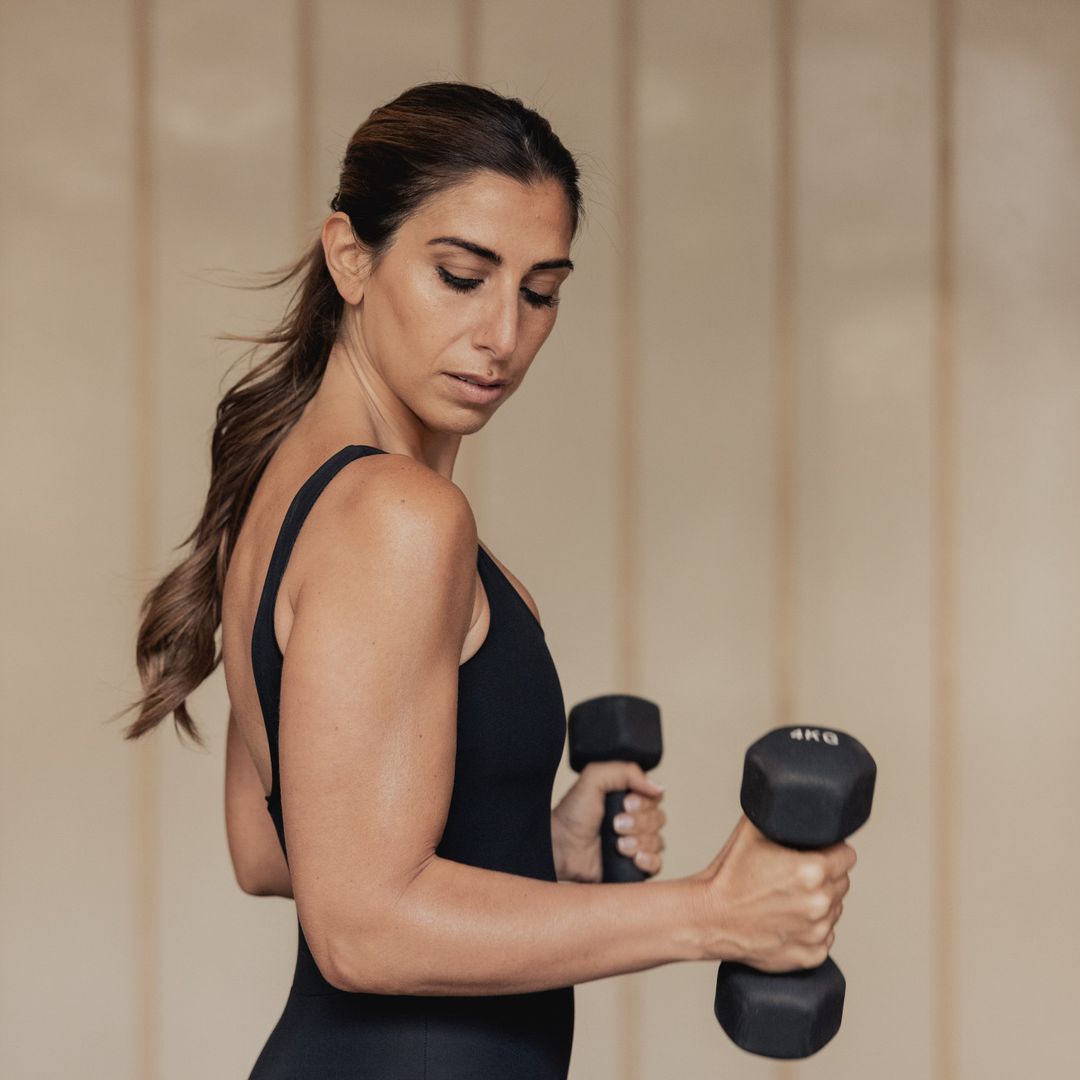
It's common knowledge that as we get older, we see a decrease in our lean muscle mass and our bone density. This spells trouble, as it can make us weaker and more susceptible to injury and falls.
For a brief science lesson, this happens because as we age, our muscle cells work less effectively. We have fewer and shorter fibres that are less able to process energy, and there's a corresponding decline in the mitochondria that power them, the motor neurons that control them, and the hormones that regulate muscle growth and atrophy.
So far, so bad. Especially when you consider this decrease begins when we're around 30 and accelerates in our 60s.
 © Getty Images
The good news? There are ways to future-proof our bodies, building lean muscle mass and focusing on strong bones. "With any strength or weight-bearing exercises, you can reduce the natural process of ageing," confirms personal trainer Kate Rowe-Ham, who specialises in training midlife women.

How can exercise support bone and muscle health?
"There are two types of training that are ideal to help us build strength and lay down new bone tissue," says fellow fitness professional Shakira Akabusi, who focuses on pre- and post-natal fitness. "Weight-bearing movements, where we're up on our feet, place our skeletal frame under gentle pressure, stimulating our bones to lay down more bone tissue.
 © Will Ireland
"In addition, resistance exercises, such as lifting weights or pushing and pulling against something, help to strengthen our muscles. Strength training causes small, microscopic tears in a muscle and as the fibres rebuild, they are reinforced, making our muscles stronger."
Kate adds: "The longevity benefits of strength training are enormous. Two or three sessions a week improve balance, reduce falls and make daily life easier, whether that's carrying shopping or playing with grandchildren. Strength training also boosts metabolism, supports heart health, and helps regulate blood sugar levels."
Here, Kate is joined by Shakira, plus fellow fitness professional Monika Akabusi and Jenny Stoute, to share four moves that they say can help to slow the natural ageing process, helping us live well, for longer. Let's dive in…
4 workout moves to slow the natural ageing process
1. Bent over rows
This move focuses on building strength in the upper back, which will improve your posture, helping you with all other movements - plus, easing back pain. It targets the often underused muscles in the back, plus it pumps your biceps too.
2. Squat and shoulder press
Also sometimes called a 'thruster', this move trains your whole body in one set, activating your quads, glutes, core and shoulders - as well as ramping up your heart rate. It's ideal for people who want efficiency from their workouts.
You'll notice that Jenny on the left is holding her dumbbells down at her sides. This is a great way to begin learning the movement and you can progress to the overhead press when you're ready.
3. Lateral reach
Lateral reaches are helpful for shoulder strength and mobility. Stronger shoulders are less likely to become injured, plus, your posture can improve with stronger shoulders. To do the move, reach down and then push back up to standing. This continues to work the lower body, but also the deep core as we come back up to a standing position.
4. Marching
Perhaps the simplest of all the exercises, marching can enhance core strength, stability, and posture. You can either hold the dumbbells at your sides or extend them overhead, working the entire body.
Depending on your experience with weight training, Shakira recommends doing each of these moves 10 or 12 times with a low weight. If you're intermediate, aim for eight to 19 reps with a medium weight, and if you're advanced, go for six to eight reps with a weight you find heavy.
When it starts feeling easy, up the weight of your dumbbells, or add weights on if you were originally working with body weight only.