

Picture a Sunday afternoon where, rather than jumping on a last-minute plan, you choose to stay in with a good film or your favourite series. To plenty of people, that sounds a bit dull or isolating, but for others, it's absolute bliss. But why?
This knack for switching off from the outside world and taking sanctuary at home isn't just down to being shy or introverted. In fact, researchers have spent years looking into how enjoying your own company might actually point to a much more active mind.
There's been a lot of talk recently about how people who cherish these quiet moments often have brilliant minds. But to really get to the bottom of it, you first have to understand how solitude—choosing to be on your own in a constructive way—can be a brilliant tool for self-discovery. It turns out that when we intentionally make time for ourselves, we unlock a real sense of wellbeing that actually sharpens our mental edge.
Solitude vs loneliness: The key difference for your brain
Psychologist Raquel Córdoba breaks down the mechanics behind this behaviour, emphasising that everything hinges on understanding where your need for isolation stems from. Choosing to retreat for your own pleasure is a world away from being forced into it by social or family pressures.
 © Getty Images
"There's a fundamental difference between chosen solitude and imposed loneliness," she says. "The former comes down to personal choice. You decide to carve out time for yourself because you view those moments as opportunities for rest, enjoyment, or personal growth."
Córdoba highlights the darker reality of true loneliness: that bitter feeling when you lack meaningful emotional connections. This involuntary disconnection from others yields results that are anything but brilliant: "Unchosen loneliness happens when someone longs for emotional bonds or deeper connections with others but can't achieve them due to external factors like rejection, loss, social isolation or relationship struggles."
This kind of forced isolation poses a serious risk to our emotional balance. Córdoba stresses the long-term impact this state inflicts on the mind: "It's usually accompanied by real distress and rarely leads to any sense of psychological wellbeing or enjoyment."
"Research consistently shows that people experiencing unchosen loneliness suffer from higher levels of anxiety, depression and overall poorer mental health"
Rethinking intelligence: Why being clever isn't just about logic
In order to connect quiet time with being intelligent, Córdoba suggests we first need to broaden our definition of what being clever actually means.
"Traditionally it's been tied to IQ, but nowadays we know that intelligence encompasses a whole host of other skills—such as emotional intelligence, self-regulation, psychological flexibility, creativity, reflective thought and the capacity to understand both ourselves and those around us."
Taking this definition into account, Córdoba points out: "Claiming that someone who enjoys their own company 'is more intelligent' would be an oversimplification. What we actually see is that people with a particularly rich inner life or high processing capacity often need to balance intense daily stimulation with stretches of calm, quiet and less social chatter."
Silence essentially acts as a reset button for the brain after demanding days. "That's precisely why intelligence can be linked to enjoying chosen solitude. It's simply the way these individuals recharge and regain their mental, physical and emotional balance."
They find far greater satisfaction in low-key activities that others might overlook—like "reading, going for a walk, taking in nature, creating, reflecting or simply resting without the urge for constant stimulation."
 © Getty Images
Why high-performing minds crave quiet time
Numerous studies support the theory that this voluntary isolation is both a driver of wellbeing and a catalyst for innovative ideas. However, the psychologist also reminds us that we are social beings by evolution:
“Research shows that, when it is a choice and not an imposition, solitude can become a space for introspection, emotional regulation, creativity and wellbeing"
The key to a fulfilled life lies in striking a balance between our inner and outer worlds, without tipping into extremes. Connection with others is fundamental, as the psychologist explains. "Our brains are wired to form bonds and feel connected to those around us," she notes. "Good health doesn't mean choosing between living in complete isolation or constantly relying on the company of others; you have to find the middle ground between a strong support network and having time to yourself."
 © Getty Images
Introvert vs. extrovert: What your need for socialising says about you
At this point, it is worth asking what traits set apart those who embrace solitude from those who constantly run from it. The former "tend to have a good relationship with themselves. They usually display a greater capacity for introspection, enjoy their inner world, are able to reflect on their own emotions and thoughts, and can find moments of calm without feeling uncomfortable."
Córdoba takes this a step further, continuing her analysis of their key traits. "They may also need those spaces because they lead highly stimulated lives on a professional, intellectual, or creative level, or simply because they have a more introverted personality. Solitude acts as a way to lower the activation level of the nervous system and recharge their batteries."
This search for calm does not imply a rejection of their surroundings or a phobia of friends and family. It simply means these individuals are autonomous enough to feel complete in their own company.
Is constant socialising masking an emotional void?
On the flip side, there are those who require constant movement, noise, and company at all hours. The expert points out that this can stem from an extroverted nature or, at times, serve as a subtle protective shield: "In many cases, they simply have a more extroverted personality and draw energy from social contact (unlike introverts), which is completely natural and healthy."
"Alone time" is essential for those in high-pressure jobs or with a distinctly introverted nature. Solitude effectively becomes their own personal—and necessary—recharging station
However, when this desire for company becomes obsessive, it can mask an emotional void that feels terrifying to confront.
You may have noticed it in your own circle—someone who fills their diary as a defense mechanism against their own thoughts. The real challenge arises when the noise fades and they are left alone with their inner demons.
At that point, social hyperactivity is revealed as a way to cover up uncomfortable realities: "Some people use constant activity, social media, or back-to-back plans with others as a way to escape from facing themselves—and everything hidden that they feel unable to manage—as an avoidant coping strategy."
By contrast, those who master the art of solitude look their emotions straight in the eye without judgment. "People who enjoy their own company aren't usually afraid of their thoughts and emotions, partly because they trust their ability to face and manage them. They use that space to reflect on whatever comes up, whether to observe it from a distance or review it from a place of calm," the expert notes.
 © Getty Images
When this self-awareness is lacking, one's own company becomes hostile, and a need for external validation takes over. The specialist explains how this lack of identity plays out in daily clinical practice: "I find that people with less self-knowledge struggle much more to enjoy solitude. If you don't know who you are, what you need, what you like, or what your values are, spending time alone is naturally going to feel uncomfortable."
This insecurity often stops people from enjoying life's simple pleasures just because a partner or friend isn't available. The fear of being judged holds us back unconsciously. To break this vicious cycle, the psychologist urges us to ask ourselves direct questions about our daily limitations, pushing us to look past prejudices and dare to live life on our own terms.
How to master the art of being alone: 6 expert tips
 © Getty Images
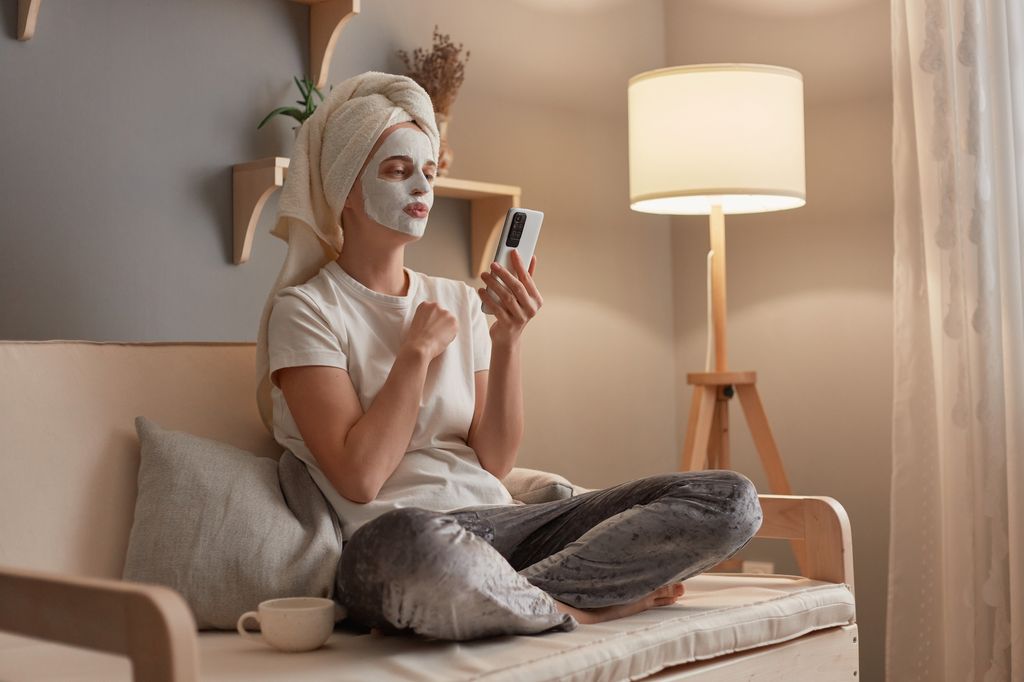
It may be really difficult for some, but learning to enjoy solitude is essential for taking care of your well-being. The good news? It is a skill you can train. To get started, the psychologist suggests the following steps:
- Start small. You don't have to spend an entire day alone. Begin with short blocks of 20 to 30 minutes dedicated solely to yourself.
- Choose activities that you enjoy. "Walking, reading, cooking, painting, listening to music, writing, going to the cinema, trying a new restaurant, visiting a museum, or having a coffee without your phone all help associate solitude with positive experiences."
- Reduce hyper-stimulation. "Many people think they're alone when, in reality, they're constantly glued to their phones. Learning to tolerate small moments throughout the day without screens fosters a genuine connection with yourself."
- Practise non-judgmental self-observation without judgment. "If uncomfortable thoughts or emotions crop up, observe them with curiosity rather than trying to escape them immediately."
- Get to know yourself better. "Asking yourself what you need, what brings you joy, or which values you want to prioritise strengthens your bond with yourself."
- Don't confuse solitude with isolation. "Enjoying time alone doesn't mean cutting yourself off from others. The ultimate goal is to feel content both in company and on your own."
Breaking through these invisible barriers to enjoy your own company is a clear marker of emotional maturity. As Córdoba points out: "People who enjoy doing things on their own don't even worry about external judgement—they simply do what they want. Being able to make plans with yourself, enjoy silence, or spend an afternoon without needing company usually reflects a kinder, more secure relationship with yourself. That's why it's so often linked to intelligence: it demonstrates a greater capacity for self-regulation and inner connection."


