

With A-Level results day taking place on 14 August in England, Wales and Northern Ireland, many young people in their late teens are beginning to think about their future.
Many will be desperately hoping they've secured the grades to meet the entry requirements of their chosen institution, while others might be considering whether university study is the right path at all.
Year after year, there are reports in the news around results day that ponder whether university study is truly 'worth it'. And, with the level of student debt circling in the arena of £53,000 on average, it's unsurprising that many are turned off by the prospect.
What's more, the average graduate starting salary is currently sitting at around £28,000 in London and less outside of the capital. The Times reports that the "latest longitudinal education outcomes data states the average graduate salary a decade after graduation was £34,300." An average increase of £6,300 over ten years.
 © Getty Images
It's therefore understandable that many are choosing to avoid attending university and opt for diving into the world of work as soon as they leave school at 18.
As someone with a Bachelor's degree and a Master's degree, I naturally lean towards thinking that an educational route is of high value in ways separate from financial.
I'm of the belief that people gain more than just an education, but a guide into adulthood through formative experiences.
But with the added promise of artificial intelligence (AI) advancement, the job market becomes even more complicated. So which jobs are likely to be AI-proof? And which ones can you train for without the requirement of a degree?
Here are just some of the many jobs that can be done without a degree and without the worry that AI is lurking in your shadow...
 © Getty Images
Sociology fields
The Department for Education states that, generally, jobs in sport, leisure, recreation and sociology are the "least exposed" to AI threats.
For example, many might choose to study marketing at university to venture into research-based roles, advertising or community outreach, but entry-level jobs of this type do exist.
Sociology-based jobs could also involve working with charities, or with children and young people, where you can qualify on the job (it's worth noting that Early Years work, generally, encourages degree study) to work with teenagers and make a real difference in their lives.
 © Getty Images
Human Resources
This leads to the next field, which is human resources. While many will be applying for these with relevant degrees, you can earn qualifications while working if you're prepared to start on a lower salary through the training period.
Roles in this field are considered low-risk when it comes to automation because they require human qualities such as strategic thinking, human interactions between employer and employees, and thoughtful decision-making, none of which can easily be automated.
 © Getty Images
Social workers and healthcare providers
Like with sociology-based roles, social workers and healthcare providers are some of the most important workers in our society.
You can investigate a path into social work, for example, becoming a carer for the elderly, while training on the job, and the same applies to healthcare providers.
 © Getty Images
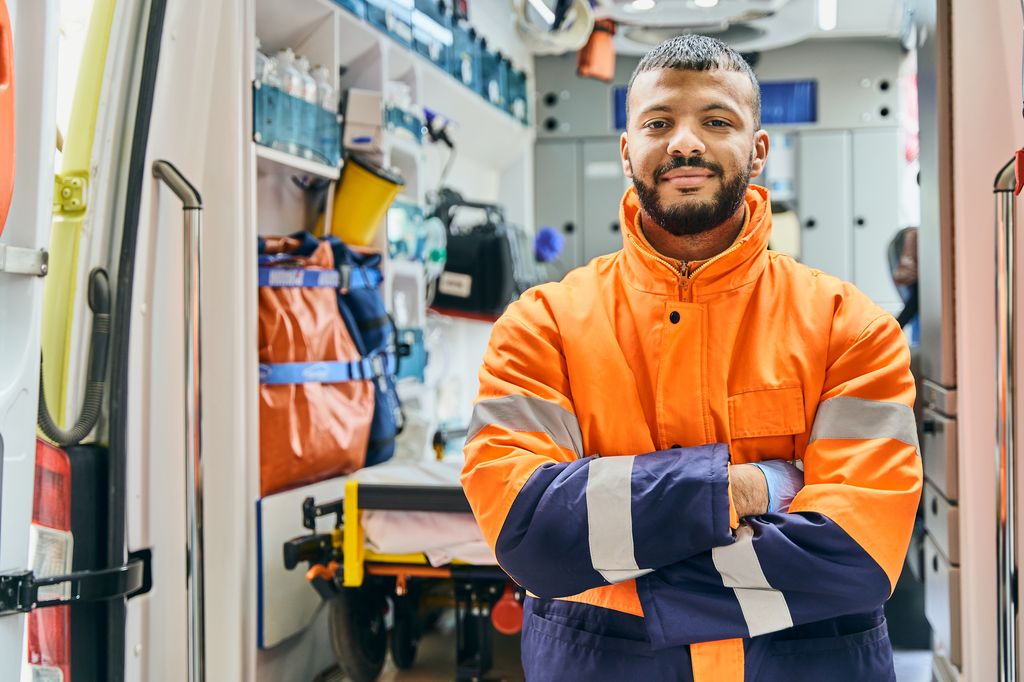
Healthcare workers – including nurses and paramedics
This leads nicely onto the next job role. We all know that to be a doctor, a surgeon, a GP or a Consultant, you need to wade through years and years of medical school to gain your doctorate.
But you don't need a degree to become a healthcare worker. The NHS offers apprenticeships, which provide on-the-job training and often lead to degree-equivalent qualifications.
For example, people can become nurses through an apprenticeship scheme and not necessarily a degree (though nursing degrees exist).
According to job search site Indeed, you can opt for degree study to be a paramedic, but you can also qualify through a student apprenticeship.
Ambulance services usually partner with a university to assign degree-equivalent qualifications to students who are working simultaneously.
More crucially, a paramedic student can benefit from finding support of £5,000 that they are not expected to pay back. They do have the option of applying for a maintenance grant through the Student Loans Company, should they require it.
 © Getty Images
Sports and fitness industry
The health and fitness industry can feel saturated at times, but with humans on average living longer, there will always be demand for health and fitness professionals offering in-person insight and expertise.
You can train to become a personal trainer or a fitness instructor (including Spin, Pilates and more) without obtaining a degree.
They are also generally achievable in a short space of time, meaning you can qualify and start teaching relatively fast.
 © Getty Images
Skilled traders and other maintenance workers
According to Forbes, workers who don't have degrees and work in AI-proof roles are considered the "New-collar workers" who "leave college degrees in the dust" and work for those who "provide more attention to skilled employees".
For example, those who can qualify as plumbers, electricians and other maintenance workers can do so without attending university. The salaries can often be lucrative, too.
 © Getty Images
Flight attendants and aircraft cargo supervisors
These jobs are undoubtedly being helped by automation, particularly cargo supervisors, but because of the stringent health and safety regulations and compliance needed, human interaction is essential, and therefore they're generally considered low risk of replacement from AI.