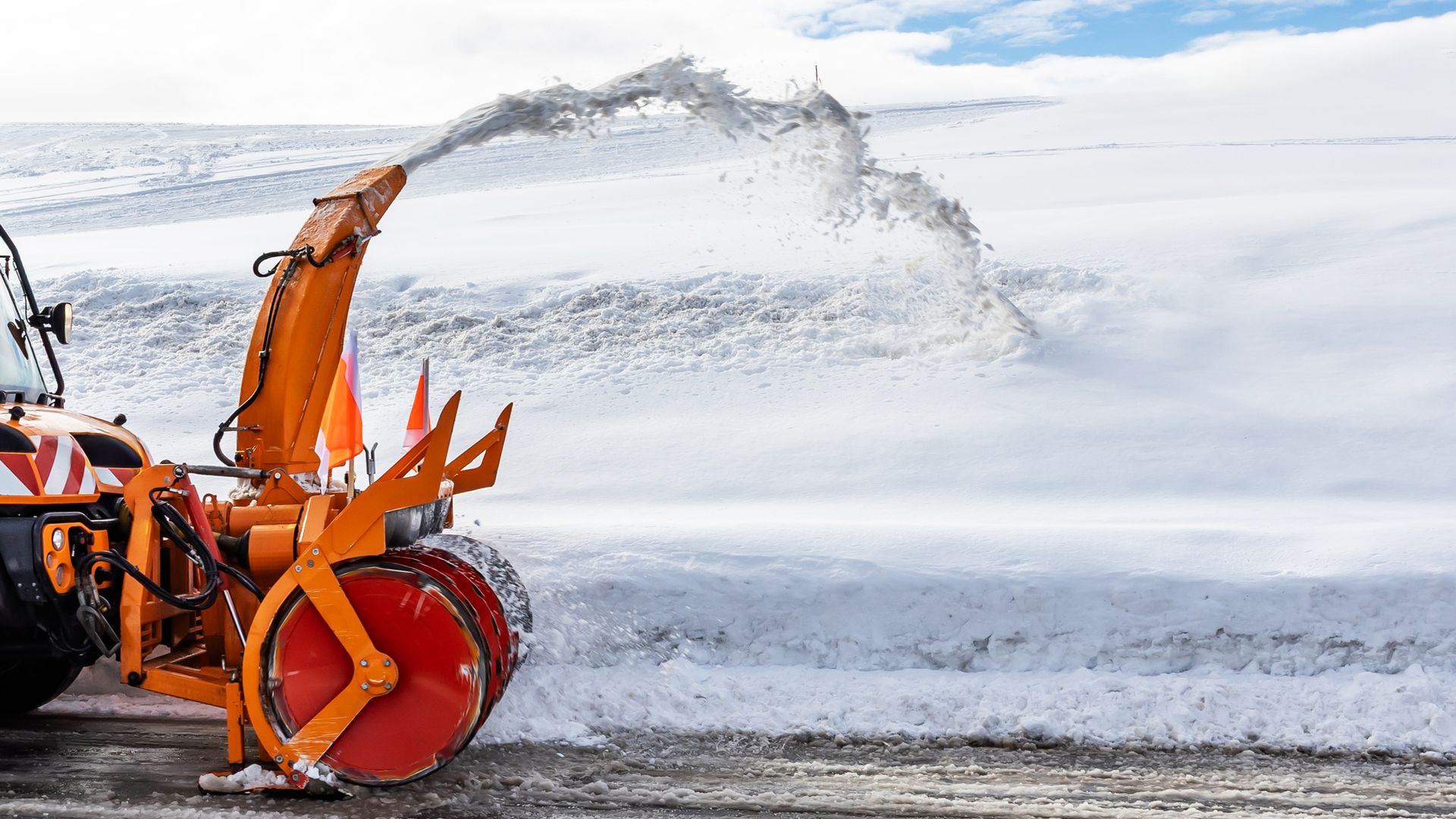

We've had "tiger", we've had "dolphin" and we've had "lighthouse", but now we're diving into the world of "snowplough" parenting (also known as lawnmower parenting) - a new phenomenon that describes a guardian determined to bulldoze obstacles out of children's ways so they can venture forward in life on a clear path.
Coined by former high school teacher David McCullough Jr, the term first appeared in 2012 when he used it in a speech and was later printed in his 2015 book, You Are Not Special: And Other Encouragements for Kids.
Essentially, while the intention behind snowplough parenting is well-meaning, the experts are wary of this style as it can disrupt children's natural development and make things a little too easy for them.
Eager to learn more myself, I enlisted the help of the experts to explain to HELLO! readers what snowplough parenting actually entails and if it really is doing more harm than good.
What is snowplough parenting?
The idea behind snowplough parenting stems from the action of the real life machinery that ploughs through obstacles and clears roads from treacherous conditions.
In actuality, it refers to a parenting style in which guardians aggressively clear all obstacles from a child's life to prevent them experiencing any discomfort, failure, pain or disappointment.
Experts worry about the promotion of this kind of parenting, as it discourages children from fighting their own battles and learn to stand on their own two feet instead of relying on others to solve all their problems for them.
Dr Sasha Hall, senior educational and child psychologist and a parent of two, described it as being "a style in which parents remove difficulties or obstacles from a child’s path in an effort to protect them from discomfort, frustration or failure".
She continued: "It involves stepping in early and often, managing situations on the child’s behalf and smoothing any challenge before the child has a chance to face it. It is conceptually similar to what research literature refers to as over-parenting or overprotective parenting, where parental involvement exceeds what is developmentally appropriate.
"The intention behind snowplough parenting is typically positive and arises from a wish to give children the best possible start, but the approach reduces opportunities for children to learn to navigate challenges independently."
 © Getty Images
What are the cons of snowplough parenting?
While wanting to help your child and protect them from any harm is a completely natural response, there's a fine line between constructive caring and dangerous overparenting that could stunt the growth and development of your little ones.
In the world of snowplough parenting, that line disintegrates and blurs, effectively wrapping the child in bubble wrap and letting them enter the world after you have cleaned it up for them.
Psychotherapist and professor at Florida Atlantic University, John Puls, explained his concerns when it comes to this style of parenting.
He said: "The desire of wanting to remove all obstacles from a child’s path is a normal one, but can have very serious consequences for the child's development and later in life.
"Children, adolescents, and young adults learn by making mistakes. We learn by solving difficult issues and failing. We have to be able to overcome disappointment and not have it devastate us."
The expert concluded: "Snowplough parenting essentially removes the ability to develop resilience, overcome challenges, and most importantly have confidence in one’s ability to do so. By removing obstacles, children never develop these critical skills."
Dr Hall examined studies and came up with a comprehensive list of the potential drawbacks associated with this type of parenting. These included:
- "Reduced autonomy and decision-making skills when children have fewer chances to practise solving problems independently.
- Lower development of coping and resilience, as children are not exposed to manageable levels of challenge.
- A greater likelihood of internalising difficulties such as anxiety, particularly in adolescence, when independence and self-management become more important.
- A reduced sense of self-efficacy if children learn that adults will always intervene for them.
- Possible difficulties in social situations where problem-solving, flexibility and emotional regulation are needed without parental support."
 © Getty Images
Snowplough parenting effects
As a relatively new style of parenting, the effects of snowploughing are yet to be fully examined, but they can be closely aligned with those of over-parenting and suffocating a child.
If children are not allowed or encouraged to explore and make mistakes, they will lack the skills to rescue themselves when they encounter trouble or stressful situations both in their early lives and even later on in work situations.
The dangers associated with this new style arise from the idea that all obstacles need to be removed for the child before they are able to experience anything for themselves. This can result in fragile, easily-spooked individuals who look to others to fix everything no matter what.
"Research on these related behaviours has identified associations with reduced resilience, lower independence, increased risk of anxiety or emotional difficulties, and challenges with coping in the face of setbacks," Dr Hall reflected on this style's similarities with overparenting.
She revealed: "Overall, the evidence suggests that children benefit from a balance of warmth, guidance and developmentally appropriate autonomy. This aligns with the idea of supporting children without over-rescuing them, so that they have safe opportunities to develop confidence and the skills needed to manage challenges as they grow."