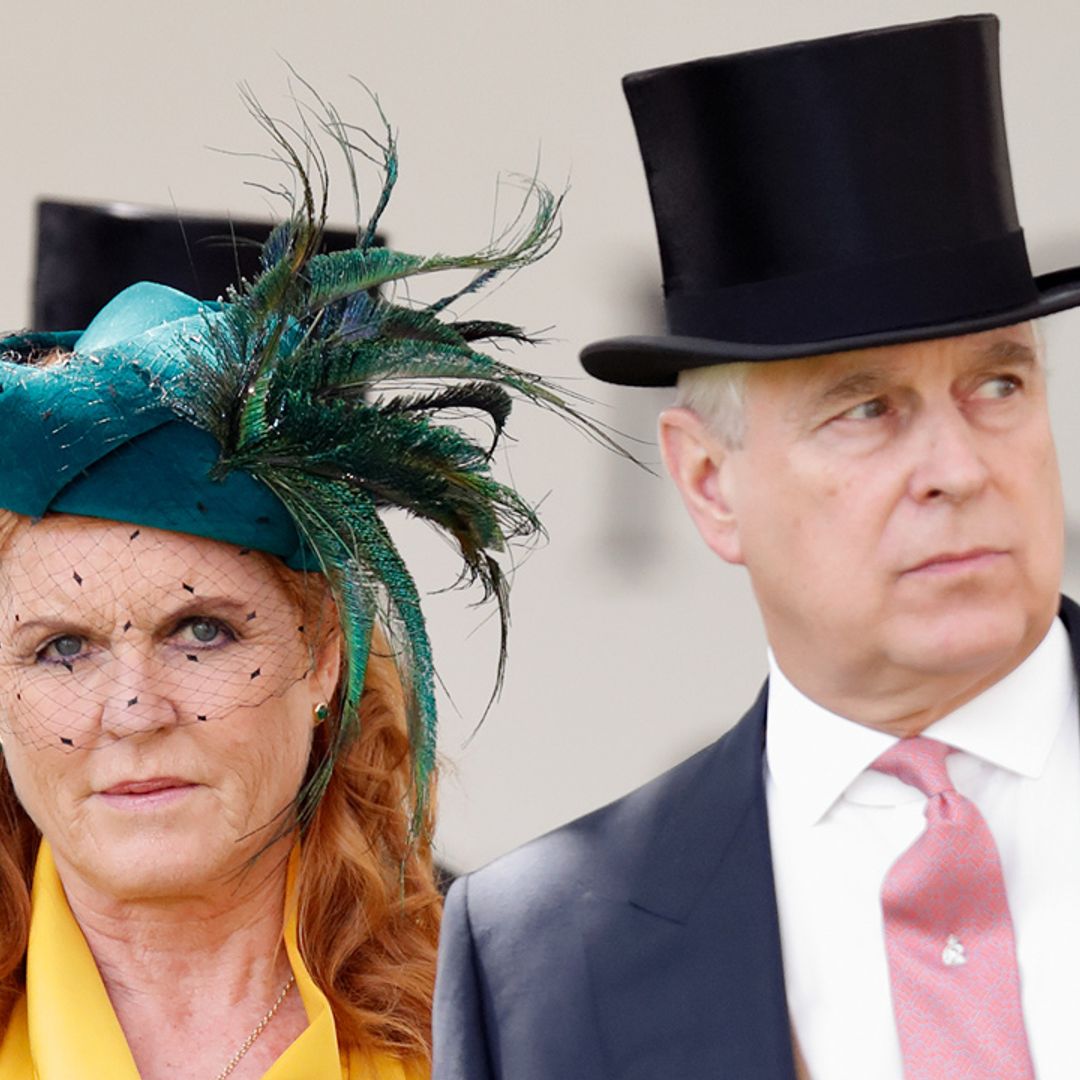
Andrew Mountbatten-Windsor could face the "uncomfortable prospect" of taking the witness stand in court after being served a summons this week.
The former Duke of York, 66, has been called to trial at the High Court, where businessman Selman Turk is being sued by Nebahat Isbilen.
Nebahat alleges that Selman, her former adviser, misled her over a £750,000 payment made to the then-Duke in 2019, which was later paid back; however, he denies dishonesty.
Andrew, who lives on King Charles's Sandringham Estate, is not accused of wrongdoing, but he will likely face questioning about his finances and the payment.
 © Getty Images
It will also be the first time he's been questioned publicly since his 2019 Newsnight interview with Emily Maitlis.
Allan Maidment, Consultant and Head of Regulatory at MSB Solicitors, told HELLO!: "His former royal status does not place him above the law or prevent him from being called as a witness and questioned about his involvement in the matters before the court.
"It remains to be seen whether his evidence will raise further questions about his judgement and actions, but one thing is certain: taking the witness stand would be an uncomfortable prospect for the former prince."
Here, HELLO! speaks to lawyers and legal experts about what a potential court appearance could really mean for Andrew.
What are Andrew's next steps?
The trial is expected to begin later this month.
It means that Andrew could make a court appearance on or around 15 December, either on video or in person.
Andrew Gilmore, a Partner at Grosvenor Law, tells us it is "unusual" for a witness to be summoned in this way for a civil case, explaining: "A summons is a formal legal order of the Court compelling somebody to attend to give evidence in a trial, when they are unwilling to attend voluntarily."
 © Getty Images
Lawyer Andrew said the former Duke's appearance in court is unlikely to be "pleasant", adding: "As a summons is for an uncooperative witness, he can effectively be cross-examined by both the party calling him and any other party to the Court. This will mean that the questions might be challenging and pointed."
However, the former Prince's appearance is not guaranteed at this stage.
The legal expert adds: "There is a provision under civil procedure rules that allows a witness served with a witness summons to apply to set it aside or vary it. This might be a route Andrew’s legal team decides to take; otherwise, he will be required to attend Court as part of the trial."
What could his court appearance look like?
Allan explained: "While many may be hoping for a revealing insight into the former prince’s affairs, the court will be focused on the facts relevant to the case, rather than wider questions surrounding his personal life.
"The judge will have the power to restrict questioning to matters directly relevant to the proceedings, and there may also be efforts to limit his evidence to a written witness statement."
Andrew Gilmore from Grosvenor Law added that, while it is difficult to be "definitive" at this stage, it's presumed the former Duke will be asked to provide his account in respect to certain payments he received, connected to the main claim.
Paolo Caldato, a litigation partner at law firm Spencer West LLP, said the father of Princess Beatrice and Princess Eugenie can expect "probing questions about his financial affairs and the uncomfortable allegation that the payment was intended as a bribe for passport assistance".
Other royals who have appeared in court
It's understood Andrew is the first royal to receive such a summons since the 19th century.
However, his nephew, Prince Harry, has appeared in court multiple times willingly to give evidence in legal proceedings.
Most recently, Harry testified in his failed legal battle against Associated Newspapers, the publisher of the Daily Mail, back in January.
 © Getty Images
Andrew Gilmore tells us: "The trial of Charles I aside, Prince Harry recently appeared in Court giving evidence in his legal proceedings against the Daily Mail, but he did so of his own volition.
"He was not summoned to attend. The then Prince of Wales, Edward VII testified upon subpoena in the Mordaunt divorce case in the 1870s."
However, Paolo added: "He is unlikely to experience the gentle questioning meted out to the future King Edward VII in 1870."
Andrew's involvement in High Court fraud trial – full details
Last month, it was ruled that Andrew could be called as a witness to give evidence, and the summons was served this week.
At the time, Mr Justice Adam Johnson said: "Given the seriousness of the allegations, both on their own terms and in light of their wider impact, fairness requires that Mr Turk should be afforded an opportunity of putting forward his own case, using the evidence he considers relevant and material."
The payment in question was made the day after the former Duke recorded his Newsnight interview, which ultimately led him to step down from royal duties.
 © Getty Images
He originally met Turk at a Pitch@Palace project in 2019 at Buckingham Palace.
Lawyers for Nebahat Isbilen previously told the court in London that tens of millions of her funds had been misappropriated, with Selman Turk then failing to explain where the money had gone.
The High Court was also previously told by lawyers for Nebahat that "money was used for purposes unconnected with her, eg, substantial sums were paid to Prince Andrew, Duke of York, and to Sarah, Duchess of York".
The court heard in 2023 that there had been a "settlement" between Mrs Isbilen and the then-Duke and Duchess of York.
Speaking of Andrew's upcoming court appearance, Paolo concluded: "No wrongdoing is alleged on his part, but he will hardly relish giving evidence in public.
"He would be well advised to undergo witness familiarisation training before December: it promises to be fascinating for observers, but exacting and uncomfortable for him."