
During her work as a GP, Dr Nirusha Kumaran quickly realised from seeing her patients that one hormone does not fit all for perimenopausal women - and a lot of us were actually doing it wrong.
While we might be told that having a rub of oestrogen will solve most of our symptoms, there are so many other factors going on inside our bodies that can impact how effective it will actually be - and some of the solutions she discovered are as easy as using a dry brush on your skin.
Dr Nirusha trained in functional medicine, which looks at how our bodies function as a whole so we can improve and optimise our health with the right supplements, vitamins and hormones that suit us individually.
Did you know how well your gut functions can have a direct impact on how effective your HRT can be absorbed and start working for you? No, I didn’t think of that either. But being armed with the information of how our body is interconnected can help us lead healthier lives for longer, she says.
For someone who was prescribed oestrogen in the form of Lenzetto from my GP with no blood tests, just a list of symptoms, I was intrigued by what she had to say and whether what I am taking is right for me. It turns out, possibly not!
 © Getty Images
Optimising midlife
“I started to focus on women’s health, perimenopause and menopause mainly because I’m fascinated in this space. There is so much we can do to improve and optimise health in midlife,” Dr Nirusha says.
“Instead of treating symptoms in isolation (like prescribing antidepressants or sleeping tablets), Functional Medicine asks: Why are these symptoms happening now? How can we support the root causes naturally? What future risks can we prevent through early intervention?
“Through a longevity lens, if we can get hormones right, especially in midlife, then it really does set you up for a healthy ageing trajectory as you're getting older because our hormones are connected to every single system of our body, even our cardiovascular, muscle and cognitive health. If we can optimise hormones, it really will have a positive impact on ageing moving forward.
“Taking a personalised approach, especially with hormones, is important as it can be quite intricate in terms of different forms and different doses.
“It's really very much trying to find what is the right dose and form (type) for you based on blood work."
So where do we start to make sure our bodies are in tip top shape so our HRT can be working effectively for us?
Testing, testing...
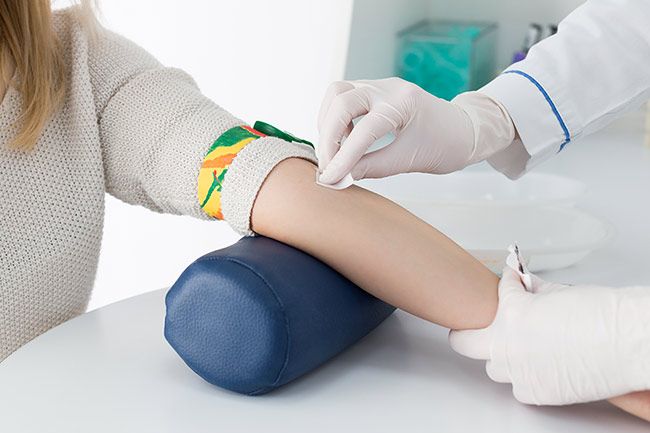
There are differing views on whether you need to have a blood test before you start taking HRT as our hormones can fluctuate so much. But Dr Nirusha is a firm advocate of having blood and urine tests to get an overall view on what else is going on in your body in case there are any other areas where you need some support.
 © Photo: iStock
“There can be other potential systemic imbalances that might be going on in the body, and we want to know what the root cause drivers for those imbalances could be. Then we also want to look at whether when we are prescribing things like hormones whether you are genetically able to handle them and clear them out? Are your pathways lacking and are there any other issues that we need to address along the way?
“The British Menopause Society don't believe in testing before starting HRT, but I very much do like to test, because I want to identify which hormones are imbalanced and make sure we're replacing those, especially in perimenopause.”
 © Moyo Studio
Gut health & body brushing
By taking the functional approach to medicine at her clinic Founders Health, Dr Nirusha looks at how everything in the body works together - hopefully in harmony. The quality of your gut health and the effectiveness of your liver can be vital to how HRT and other supplements are able to work to their optimal level in our body.
"Your gut is central to every system in your body; your skin, your brain, even your bladder. So we need to optimise your gut to make sure everything is working," she says.
When it comes to taking HRT Dr Nirusha says; “Your gut and liver play two key roles in hormone detoxification - how your body flushes it out. We've got this whole collection of microbes that will impact how we detoxify oestrogen. The same with the liver, there are four pathways by which we detoxify oestrogen, and if there is any imbalance in any of those pathways, it can impact how we clear out oestrogen."
Having high levels of oestrogen in your system can cause all manner of issues to your overall health and has been linked to fibroids, irregular periods, mood swings, tender breasts and cancer.
"If there is an imbalance, it's not to say you can't go on HRT," Dr Nirusha reassures. "We can put in the right support to help your body detoxify, whether that is taking a sauna or dry brushing and lymphatic drainage type of support or even supplements like Glutathione (an antioxidant that protects your cells from oxidative stress, regulates the immune system, and helps the liver detoxify harmful chemicals.)"
Which hormone should you take first?
"Starting oestrogen too soon could actually worsen symptoms like PMS, breast tenderness and water retention. So getting the timing right is really important," says Dr Nirusha.
“In perimenopause, often I find it's not oestrogen that's the first hormone to decline, it's actually progesterone which has an equally important role to play, especially if you are struggling with anxiety.
“When you have the Mirena coil, it's great at protecting the lining of the womb, but it's not providing the systemic progesterone that could be still missing.
“It's quite important especially the first few years of perimenopause to get the levels of progesterone right.
“And we shouldn’t forget testosterone because testosterone is one of those hormones that can decline at any point, we just don't know when.
“I've got women where testosterone is the first hormone that starts to go down, and then I've got other patients where they're fully post-menopause and their testosterone is still normal, so then you wouldn't need to treat.
“You need to be quite careful with the timing because it can have side effects depending on how your body metabolises it. You do want to make sure you start it when it's low rather than starting it when it’s normal."
"One of the big limitations is that the testosterone products currently available are designed for men, so you can't dose them accurately for women. You're told to use pea-sized amount, and actually, a pea-sized amount is different for different people. I prescribe it as a compounded form, so I can say exactly what dose in one pump I want to give you, and often it's a very low dose of 0.5 m at first and see how your body responds."
The main message Dr Nirusha wants her patients to take away is to listen to your body. We are all unique and what might work for one person may not work for you. By treating your body in a holistic way, rather than treating each symptom separately, you may unlock the key to leading a long and healthy life.