

Mansions, mega-yachts and life's greatest luxuries might give the ultra-wealthy an illusion of invincibility, but a massive bank account is rarely permanent. Being a billionaire is no guarantee you’ll stay one — a lesson history has proven time and again through the colossal financial blunders of the elite.
Whether it comes from bad luck or bad choices, fortunes can rise and fall, and the world has watched some of the most high profile financial failures make history and headlines.
Gilded Age dynasties like the Vanderbilts saw a slow-drip of their massive wealth diluted over generations, spent on extravagances like real estate. Modern moguls like Rupert Murdoch and Donald Trump meanwhile show us how billion-dollar corporate gambles can pay off big, or lead to them paying a big price when they find themselves at the mercy of economic downturns or changing trends.
Money-losing missteps can help crumble a fortune, but are there lessons to be learned for those of us without such big bank accounts?
Discover some of the biggest billionaire blunders of all time and find out what experts have to say about what these big losses can teach us all.
1/5
 © Bettmann Archive
Young Gloria Vanderbilt with her mother Gloria Morgan Vanderbilt
The Vanderbilts: Inside Anderson Cooper’s family 'curse' and the lost $150 billion estate
Vanderbilt descendant Anderson Cooper called his ancestor's wealth "the greatest American fortune ever squandered." In the 19th century, the CNN anchor's great-great-great-grandfather Cornelius "The Commodore" Vanderbilt famously built a massive empire worth billions in today's money. He accrued his wealth through steamships and railroads, but his heirs made some financial blunders that eventually caused the estate to dwindle within just three generations.
Heavy spending on real estate — dozens of lavish Gilded Age mansions in New York, North Carolina and Newport, Rhode Island — along with generational dilution and poor business decisions led to the family fortune, once larger than the U.S. Treasury, to wane. In contrast to the huge fortunes of some of her predecessors, Cooper's fashion icon mother Gloria Vanderbilt's fortune was just around $1.5 million when she died in 2019 at the age of 95.
2/5
 © Bettmann Archive
Newspaper tycoon William Randolph Hearst
The Hearst Empire: How a $2.5 billion Great Depression debt nearly crushed the media scions
The Hearst family may currently be estimated to be worth over $20 billion, but that doesn't mean they've never suffered hard times.
The clan became synonymous with a mass media empire in the late 19th and early 20th century when William Randolph Hearst parlayed his father's mining fortune into a network of newspapers across the country.
Starting in 1887 when he took over the San Francisco Examiner, he eventually ran nearly 30 newspapers plus a host of magazines coast to coast. Notably, Hearst didn't just splash out on news outlets — by 1920 he is said to have spent $50 million on real estate in New York alone, as well as around $50 million on his record-breaking art collection. One of his most famous investments was constructing the $10 million Hearst Castle, the dream California estate which still stands today as a state historical monument.
A tabloid reporting pioneer, he was riding high with expansion (and over-expansion) and his newspapers alone were worth over $100,000,000 in 1929 according to a 1933 article in Time Magazine.
In 1929, though, the Great Depression hit, eventually leading to the 1937 financial crisis which found Hearst in over $126 million in debt (that's around $2.5 billion today). He faced a court-ordered reorganization of his company, and was forced to step down as its head; he also had to sell off unprofitable outlets, along with prized real estate and art.
The Hearsts staged a financial comeback, however. The company was reestablished, aided by wartime prosperity and under the governance of a board of trustees, mostly led by non-family members.
Hearst died at the age of 88 in 1951; today the Hearst family billions are managed through a strict corporate trust controlling the Hearst Corporation.
3/5
 © Getty Images
Brooke Astor and son Anthony Marshall at the Plaza Hotel in New York City in 2002
The Astor Family: From Titanic tragedy and Gilded Age glory to an elder abuse scandal
America’s first multimillionaire, John Jacob Astor, built a massive fortune through the fur trade and Manhattan real estate, dying in 1848 with an estate worth over $100 billion in modern terms. The fortune's eventual decline was marked by dispersion across the new generations, property liquidations, the Astors' philosophy of giving much of their fortune away and, in the 21st century, a legal scandal.
The family legacy was split, literally, when William Waldorf Astor left New York for Great Britain in 1891, splashing out on a number of grand estates and a peerage. In the U.S., meanwhile, descendant Vincent Astor became one of the richest young men in America following the death of his father Jack on the Titanic in 1912.
Jack had built much of the family wealth on tenement real estate in NYC, and it seems Vincent was none too pleased with that legacy. "Vincent Astor realized, wait a minute, we're slumlords? He was not happy to learn this," noted Anderson Cooper, co-author of Astor: The Rise and Fall of an American Fortune. As a result, when Vincent died in 1959, he left half of his $120,000,000 estate to an eponymous charitable foundation he'd created for "the alleviation of human suffering,” which would be led by wife Brooke Astor.
Mrs. Astor, described in her New York Times obituary as the "last bridge to the Gilded Age," died at the age of 105 in 2007, but not before her final years and her estate were marred by scandal. Her son Anthony Marshall was convicted for fleecing his Alzheimer's-stricken mother's fortune.
Upon her death, her son's inheritance was cut in half, and millions went to legal fees. The bulk of her money, including around $4 million in artworks, were distributed to charitable endowments and cultural institutions in line with her final wishes.
"Whether you have $100,000 or $10 billion, the same basic rules apply: don’t overspend, don't take unnecessary risks, stay diversified, and have a long-term plan"
4/5
 © Getty Images
Donald Trump stands in front of Taj Mahal Casino Hotel in April 1990 in Atlantic City, New Jersey
Donald Trump & The Taj Mahal: Inside the $3 billion Atlantic City casino downfall
While President Donald Trump has seen his fortune enriched by about $3 billion since taking office, there was a time when his financial status wasn't so robust. During the 1990s, his company was making headlines for some major bankruptcies.
The first of the chain of Chapter 11 reorganizations was in 1991 when his massive Atlantic City Casino, the lavish $1.2 billion Trump Taj Mahal, which featured nine carved marble elephants at the entrance and $16 million worth of chandeliers on its ceilings, went under. Having been open for just over a year, the hotel found itself in a whopping $3 billion in debt.
In accordance with the bankruptcy, Trump gave up half his ownership in the casino. The Washington Post reported at the time that he also "agreed to a bank-set limit on his personal spending, and sold his airline, the Trump Shuttle, and his 282-foot yacht, the Trump Princess," the latter of which was formerly owned by the Sultan of Brunei.
The hotel and casino continued to have financial trouble for decades, and billionaire Carl Icahn acquired ownership in 2016, shutting it later that same year. The investor sold the closed property to Hard Rock International for $50 million in 2017, taking a $350 million loss.
"I think the biggest lesson is that building wealth and keeping it are two very different things"
5/5
 © Getty
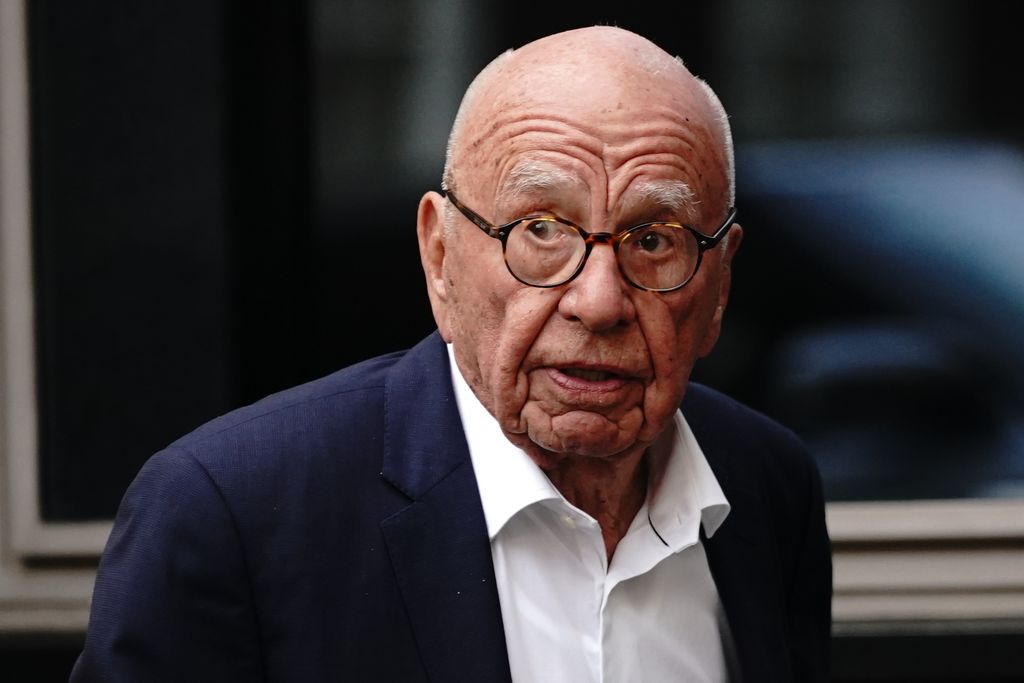
Rupert Murdoch, whose News Corporation bought Myspace in 2005
The Murdoch family and the $580 million Myspace mistake
While Meta and TikTok are dominating social media today, 20 years ago it was Myspace that was the darling of the fledgling social media scene. The Murdoch-owned News Corporation made headlines when it acquired the platform in 2005 for $580 million; within two years Myspace had a jaw-dropping value of around $12 billion as the most visited website in the US.
But the social media world is fickle and it wasn't long before popular upstart Facebook was leading the zeitgeist and Myspace's traffic and revenue collapsed. In 2011, News Corp sold Myspace to Specific Media and Justin Timberlake for just $35 million — a 94% drop from the price just six years earlier.
The new owners, brothers Chris and Tim Vanderhook, however, found themselves on a sinking ship, which they discussed in the documentary Myspace. Looking back, Tim says in the doc: "Everything that could go wrong, goes wrong. Every advertiser cancels. They like Facebook. It became just an onslaught of losses."
“We still own Myspace," he adds. "We are stewards of the Myspace brand at this point, and we are going to relaunch Myspace. We’re just waiting for the right time to do it. And if that one doesn’t work, we’ll do it again.”
What can we learn from billionaire blunders? Top financial experts weigh in
While a very, very small percentage of the population will actually face this type of financial loss, we average folks can still garner some lessons from the fascinating failures of the super-rich.
"I think the biggest lesson is that wealth doesn’t protect you from bad financial decisions," says Joon Um, Managing Partner at California's Secure Tax & Accounting, Inc. "Whether you have $100,000 or $10 billion, the same basic rules apply: don’t overspend, don’t take unnecessary risks, stay diversified, and have a long-term plan. The numbers may be different, but the fundamentals really aren’t."
Financial planner Gregory Guenther, CEO & Managing Director of GRANTvest Financial Group in New Jersey, puts things into perspective using some famous real-life examples.
"Building wealth and keeping it are two very different things," he says. "Howard Hughes died without a valid will, leaving a multibillion-dollar estate tied up in litigation for decades. The Vanderbilts showed how even a massive fortune can disappear over generations without proper planning and discipline."
Wealth, without a plan in place, "can quickly become conflict," he notes. "Whether you have $1 million or $1 billion, you need a current estate plan, a clear succession strategy, and heirs who are prepared for what they will inherit."
The finance expert concludes: "Estate planning is not just about who gets the money. It is about protecting your family and making sure your wishes are actually carried out."


