

While the United States may not have royals, there are family dynasties that have come to be regarded as such, among them the Vanderbilt family, one of America's most well-known — and once its richest.
The Vanderbilts have been prominent for at least six generations, from the 18th century to today, with Anderson Cooper being arguably the family's most famous descendant. Though their fame spans centuries, they are largely synonymous with the Gilded Age, and the expansion of wealth and fight for social mobility that came with the era.
With ancestors from the Netherlands, the Vanderbilts first arrived in New York City around 1650, when Jan Aertson, a Dutch farmer, established roots on Staten Island. The family's most notable patriarch was Cornelius "The Commodore" Vanderbilt (1794-1877), whose railroad empire made him a multi-billionaire by today's standards, and he once held a fortune larger than the entire United States Treasury of the time.
He had 13 children, some of whom managed to expand on the family's billions, but by the fourth generation, much of the fortune was gone.
 © Getty Images
CNN anchor Cooper has addressed his family's previous fortune on several occasions, maintaining he does not believe in passing down a huge fortune. Speaking on a 2021 episode of Air Mail's Morning Meeting podcast, he explained why he isn't afraid to lose money. "I grew up watching money being lost and knowing it was being lost, and I from a very young age, I was very aware of, 'This is not me. This is something my mom has, or this is money that my mom has but it's not money I'm going to have and I need to forge my own way.'"
He also said during a 2014 interview with Howard Stern: "My mom has made it clear to me that, like, there's no trust fund. There's none of that."
Below, a detailed family tree of the Vanderbilts, including what descendants made of themselves — and who lost the money.
First generation
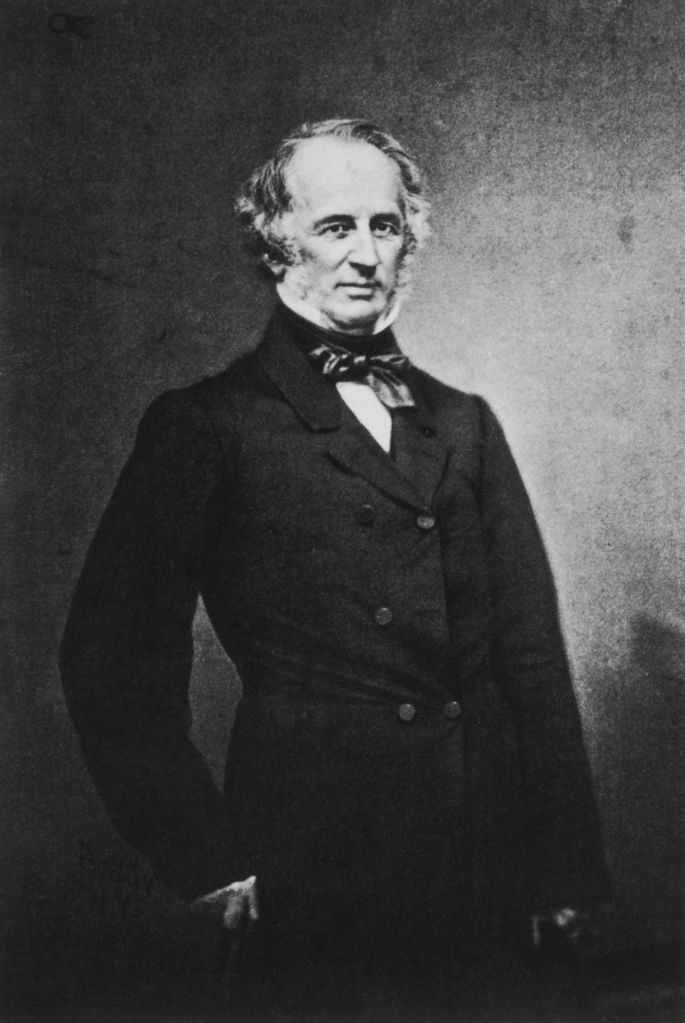
Cornelius "the Commodore" Vanderbilt (1794-1877)
 © Getty Images
Cornelius was born in Staten Island to Cornelius van Derbilt and Phebe Hand, and his steamship and railroad businesses made him the richest person in the United States. He himself had five known siblings, though it has been reported that his parents welcomed nine children in total.
In 1813, he married his cousin, Sophia Johnson (1795-1868) and they welcomed 13 children together. The children are as follows: Phebe Jane Vanderbilt (1814-1878), Ethelinda Vanderbilt (1817-1889), Eliza Vanderbilt (1819-1890), William Henry Vanderbilt (1821-1885), Emily Almira Vanderbilt (1823-1896), Sophia Johnson Vanderbilt (1825-1912), Maria Louisa Vanderbilt (1827-1896), Frances Lavinia Vanderbilt (1828-1868), Cornelius Jeremiah Vanderbilt (1830-1882), George Washington Vanderbilt (1832-1836), Mary Alicia Vanderbilt (1834-1902), Catherine Juliette Vanderbilt (1836-1881), George Washington Vanderbilt, whose older brother, also named George died at the age of four (1839-1864).
Second generation
William Henry "Billy" Vanderbilt (1821-1885)
 © Getty Images
Billy was the Commodore's eldest son, heir to his railroad empire and fortune, as the Commodore believed a family fortune should not be divided in order to preserve it. Billy received an 87% stake in New York Central, and expanded the family business, doubling the family fortune to over $200 million at the time.
In 1841, he married Maria Louisa Kissam (1821-1896), and they had nine children. Upon his death, going against the advice of his late father, he divided his fortune and business among two heirs, his eldest sons Cornelius Vanderbilt II and William Kissam Vanderbilt. His nine children were as follows: Cornelius Vanderbilt II (1843-1899), Margaret Louisa Vanderbilt (1845-1924), Allen William Vanderbilt (1846-1847), William Kissam Vanderbilt (1849-1920), Emily Thorn Vanderbilt (1852-1946), Florence Adele Vanderbilt (1854-1952), Frederick William Vanderbilt (1854-1926), Eliza Osgood Vanderbilt (1860-1936), George Washington II (1862-1914).
 © Getty Images
Emily Thorn Vanderbilt, who was pivotal to the creation of the Sloane Hospital for Women in New York, was married to William Douglas Sloane, with whom she had five children, and later, following his death, she married American diplomat Henry White. Her great-great grandson is actor Timothy Olyphant, through his father John Vernon Bevan Olyphant.
Billy and Mary Louisa's youngest child George was married to Edith Stuyvesant Dresser, with whom he welcomed daughter Cornelia Stuyvesant Vanderbilt. He is responsible for building the famed Biltmore Estate in Asheville, North Carolina, previously the largest privately owned home in the United States.
Third generation
Cornelius Vanderbilt II (1843-1899)
 © Getty Images
Cornelius has been reported to be the Commodore's favorite grandson, and he followed in both his and his father's footsteps in becoming chairman and president of the New York Central Railroad empire. He is responsible for building The Breakers in Newport, Rhode Island, another famed estate of the Gilded Age.
He was married to Alice Claypoole Gwynne (1845-1934) and they welcomed seven children, who are as follows: Alice Gwynne Vanderbilt (1869-1874), William Henry Vanderbilt II (1870-1892), Cornelius "Neily" Vanderbilt III (1873-1942), Gertrude Vanderbilt Whitney (1875-1942), Alfred Gwynne Vanderbilt (1877-1915), Reginald Claypoole Vanderbilt (1880-1925), Gladys Moore Vanderbilt (1886-1965).
 © Getty Images
Gertrude, the founder of the Whitney Museum of American Art, was married to Harry Payne Whitney, and they welcomed three children, Flora Payne Whitney (1897-1986), Cornelius Vanderbilt Whitney (1899-1992), and Barbara Whitney (1903-1983). She also became legal guardian of her niece Gloria Vanderbilt after a headline-making custody battle with her mother Gloria Morgan Vanderbilt.
William Kissam Vanderbilt (1849-1920)
 © Getty Images
Following his older brother Cornelius II's death, William took over the family's railroad business and investments. In 1875, he married Southern Belle turned women's suffrage activist Alva Erskine Belmont (1853-1933), and they shared three children, who are as follows: Consuelo Vanderbilt (1877-1964), William Kissam Vanderbilt II (1878-1944), and Harold Stirling Vanderbilt (1884-1970).
Fourth generation
Reginald Claypoole Vanderbilt (1880-1925)
 © Getty Images
Reginald was the youngest son of Cornelius II, and with whom the Vanderbilt family fortune largely ended. He was married to Cathleen Neilson (1885-1927) from 1903 to 1920, then when he was 42 years old, he married 18-year-old Gloria Morgan. An alcoholic he ended up dying in debt in 1925, aged 45. Per a 1932 New York Times report, he left behind an estate of just $423,761, exclusive of a trust fund of $5 million his father left him, which was reserved for his two daughters.
 © Getty
1650: The Vanderbilt family first established roots in New York when Cornelius "the Commodore's" great-great-great-grandfather Jan Aertson, a Dutch farmer, immigrated to what was then New Amsterdam as an indentured servant.
1794: The Commodore was born to a modest family on Staten Island, quitting school at the age of 11 to work on his father's ferry. He decided to start his own ferry service when he was 16, borrowing $100 to purchase a periauger (a shallow-draft sailing vessel) to do so.
1867: He later expanded into steamboats, and eventually built his notoriously cutthroat railroad empire, New York Central, which he took control of in 1867, right before the Gilded Age boom. It boasted tracks across the Northeast and Midwest, and gave him a monopoly on all rail service in and out of New York City.
1877: Believing the bulk of the family fortune should be bestowed upon one descendant, he left his eldest son William Henry "Billy" Vanderbilt an 87% stake in New York Central. Billy subsequently expanded the business, reportedly doubling the family fortune to over $200 million.
1885: The following generations, however, weren't so lucky — nor particularly pragmatic or productive. When Billy died, he split the family's stake between both of his sons, Cornelius Vanderbilt II and William Kissam Vanderbilt, dividing the famed fortune.
1899: While both managed the railroads at one point, Cornelius II died in 1899, and William Kissam retired not long after. Moreover, their brother George Vanderbilt was already eating away at the fortune with his 146,000-acre Biltmore Estate in Asheville, North Carolina, which still stands today as America's largest home.
1925: Anderson Cooper's grandfather Reginald Claypoole Vanderbilt dies deeply in debt with a personal estate valued at $423,761.
Consuelo Vanderbilt (1877-1964)
 © Getty Images
Consuelo, the only daughter of William Kissam and Alva, is best known for her marriage to British aristocrat Charles Spencer-Churchill, 9th Duke of Marlborough, which was arranged — and virtually forced upon her — by her notoriously overbearing mother. Consuelo became one of the first American women in history to hold the title of Duchess, a poster child of "dollar princesses" who wed into titled European families, and of arranged, quid pro quo marriages. The couple had a largely loveless marriage, before divorcing in 1921. They welcomed two sons: John Spencer-Churchill, Marquess of Blandford (1897-1972) and Lord Ivor Spencer-Churchill (1898-1956).
Fifth generation
Gloria Vanderbilt (1924-2019)
 © Getty Images
Gloria was only 18 months old when her father Reginald died, and about 10 years old when she was thrust into the national spotlight. She became known as the "Poor Little Rich Girl" in the middle of a highly-publicized, scandalous custody dispute between her socialite mother Gloria Morgan and paternal aunt Gertrude. She grew up to be a woman of many hats, becoming an actress, artist, and fashion designer known for her designer jeans.
She was married four times; to Pat DiCicco (1941 to 1945), Leopold Stokowski (1945 to 1955), Sidney Lumet (1956 to 1963) and to Wyatt Emory Cooper, from 1963 until his 1978 death. She welcomed four children: Leopold Stanislaus "Stan" Stokowski (born 1950), Christopher Stokowski (born 1952), Carter Vanderbilt Cooper (1965-1988), and Anderson Hays Cooper (born 1967).
Sixth generation
Anderson Cooper (1967)
 © Getty Images
Anderson is arguably the best known Vanderbilt today. He has worked as a journalist for three decades, and has anchored Anderson Cooper 360º on CNN since 2003. He also has a podcast about grief, All There Is, and has written several books, including on the Vanderbilts, as well as fellow famed Gilded Age family the Astors.
He shares two sons with his ex-partner Benjamin Maisani, with whom he still co-parents: Wyatt Morgan Maisani-Cooper (born 2020) and Sebastian Luke Maisani-Cooper (born 2022).


