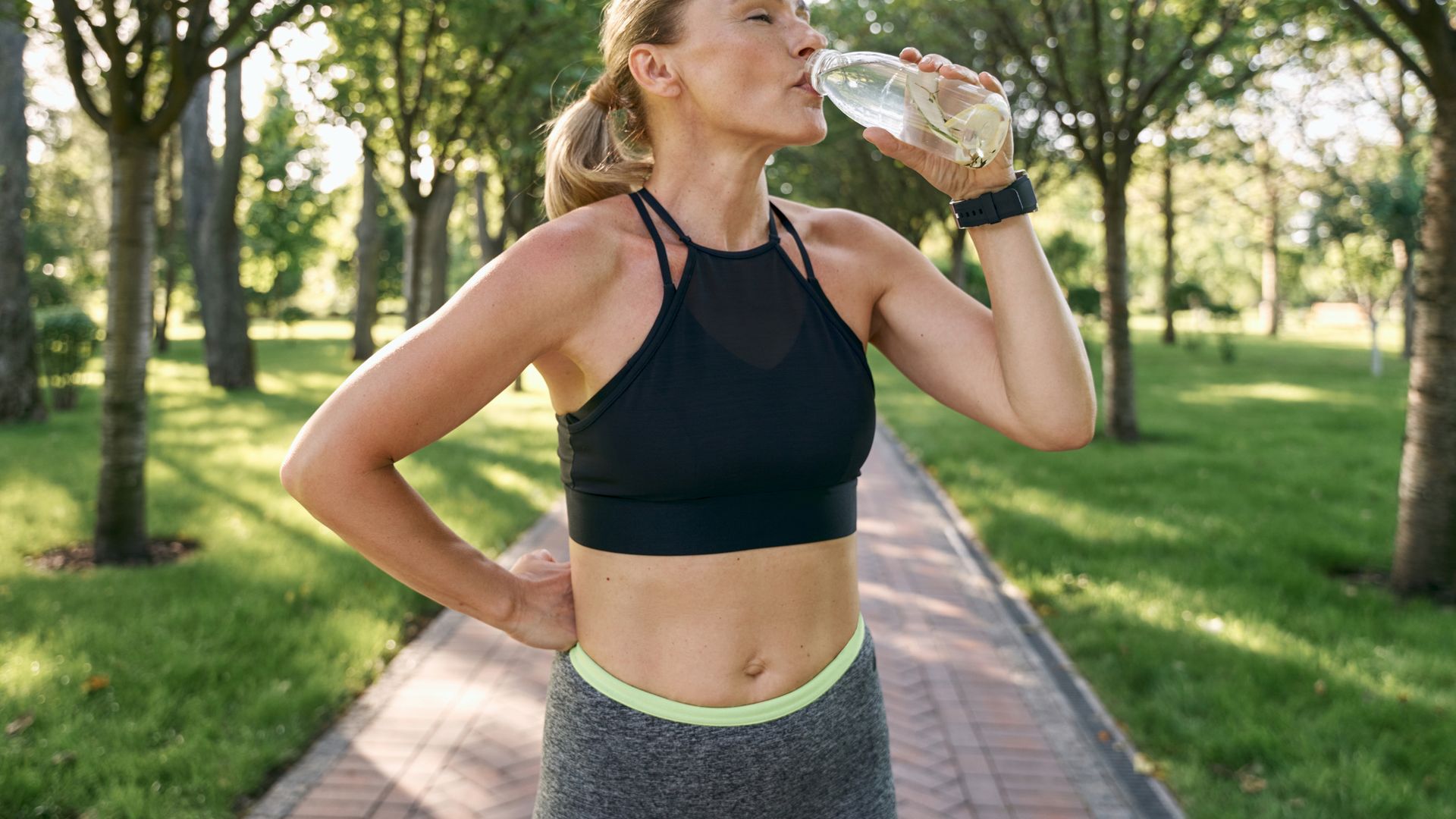
Ask ten people how much water you should drink and you will hear everything from 'two litres' to 'as much as you can.' Hydration is more nuanced than that. Your body’s needs shift with season, activity, diet, and life stage. The goal is not to chase a number but to meet a sensible daily target and then adjust it for the way you live.
The science-backed starting point
A reliable benchmark comes from guidance shared by the Mayo Clinic and based on the U.S. National Academies: about 3.7 litres of total fluids per day for men and about 2.7 litres for women.
Total means everything you drink plus the water locked inside foods. On a typical day roughly a fifth of your fluid intake comes from food, particularly fruit, vegetables, soups and stews, so you do not need to drink the entire amount as plain water. Think of these numbers as a compass rather than a hard rule.
Why the eight-glass rule persists
The familiar advice to drink eight glasses a day survives because it is simple and, for many people, roughly aligns with daily needs once food and other drinks are counted. It is not a perfect fit for everyone.
If you are small and sedentary in a cool climate you may need less. If you are larger, very active or live somewhere hot you will need more. For example, I live in Sydney which is fairly warm and I work out between 5-7 days a week, so I need more water than most. Those less active and in cooler climates will need less. Treat eight glasses as a floor you build on rather than a ceiling you fear crossing.
What really counts toward your total
Plain water should be your default, but tea, coffee, milk, sparkling water, broths and diluted juice all contribute to your daily fluids.
Hydrating foods matter more than most people realise. A salad piled with cucumber and tomatoes, a bowl of strawberries or a vegetable soup can meaningfully move the needle on intake. Keep added sugars modest and be mindful that very high caffeine or alcohol can undermine hydration by encouraging fluid losses or displacing water-rich choices.
How your lifestyle shifts the target
Move your body and your fluid needs to climb. Before planned exercise, have a glass or two, sip during longer sessions and top up afterwards. If you are training for more than about an hour or sweating heavily, a drink with electrolytes can be appropriate, especially in heat. Sport science clinics now recommend using thirst and performance as guides rather than forcing large volumes, a balance that helps avoid both dehydration and over hydration.
Heat, humidity and altitude increase water losses through breath and sweat, so travellers and outdoor workers should increase their baseline. Illness, especially fever, vomiting or diarrhoea, raises needs further. Pregnancy and breastfeeding also require extra fluids and are times to be deliberately proactive with water at meals and snacks.
The simplest self-checks that actually work
Thirst is useful, but it often arrives late. Build fluids into your day rather than waiting for a dry mouth. An easy at-home marker is urine colour.
If you rarely feel thirsty and your urine is pale yellow or nearly colourless, you are likely well hydrated. Dark yellow usually means you need to drink more. Pair this with a steady routine such as a glass on waking, one with each meal and one mid afternoon.
Who needs to be extra careful
Older adults are more prone to dehydration because thirst cues can dull with age and some medicines increase water loss or make getting up for a drink more difficult.
People on certain medications, those with kidney or heart conditions and anyone advised to limit fluids should follow personalised medical advice. In all of these cases, modest, regular sipping and water-rich foods are often better tolerated than large infrequent drinks.
Yes, you can drink too much
Drinking far beyond your needs can dilute blood sodium to a dangerous level, a condition called hyponatremia. It is uncommon in everyday life but seen in endurance events where athletes over consume plain water without replacing salt.
Symptoms can range from headache and confusion to seizures. The remedy is simple in principle: match intake with loss, use electrolytes during long, sweaty efforts and avoid chugging large volumes rapidly.
A practical plan you can keep
Begin with the evidence-based daily target for your sex, then adjust up on hot days, travel days and training days. Front-load with a glass on waking.
Anchor another glass to each meal and one to your mid afternoon lull. Keep a bottle at your desk and refill it at least twice. Let food pull its weight by leaning on hydrating choices such as salads, fruit, yoghurt and soups. Use urine colour as a daily audit. On long workouts bring an electrolyte drink. Ease off if you feel sloshy or notice continuously clear urine.
Faye James is a Sydney-based accredited nutritionist and author of The 10:10 Diet, The Menopause Diet, The Long Life Plan and her latest book The Perimenopause Plan.