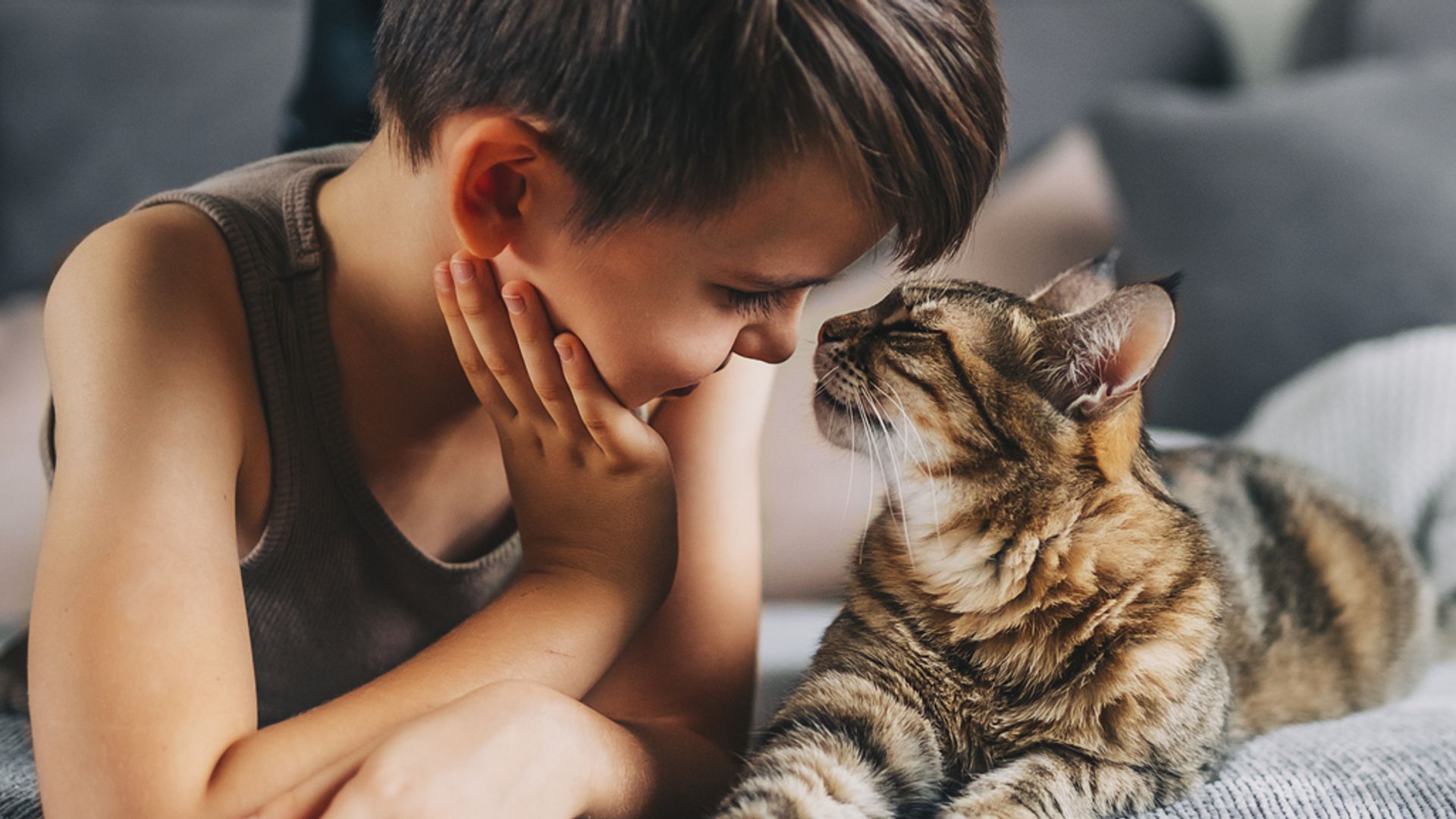
There are three key personality traits in cats that help us predict whether they can have a good relationship with children: patience, an energetic attitude and a low need to defend their territory. Patience ensures there are no conflicts when a child demands the cat's attention or gets a little too intense during playtime, and an energetic attitude is characteristic of active cats that both enjoy physical exercise and appreciate the boundless energy of children.
Last but certainly not least, a low defence of their territory is vital, because children could be perceived as intruders attempting to 'hunt' them - and there's nothing that will cause more conflict than the household's top hunter becoming the hunted. If you're wondering what the best cat breeds for families with children are, we're here to help. Whether the active and attention-loving Turkish Angora, intelligent Siamese or gentle giant Maine Coon, these are the top (and dare we say the cutest!) kid-friendly cats around.
The great thing about the oversized Maine Coon - one of the largest domestic cat breeds - is that it loves to play. It feels integrated into the family when a child involves it in their games and adventures. Maine Coons can have a lot of fun - you may even be able to teach them to retrieve a toy thrown for them. It's a very affectionate breed; it enjoys receiving love and knows to give love in return, both with children and adults. This sweet cat is capable of fitting well into any environment.
Persian cats can be a great companion for overactive children who need a little restraint and help finding a balance between curiosity and calmness. Persians are very tranquil cats, and they easily transmit this temperament through their composed manner. They're patient cats that may or may not be up for games; if they are, it's likely to be at a slow and measured tempo. This cat will also help instil respect for the needs and rest times of those around them, helping little ones understand that there are moments for play and moments for rest.
The docile nature of the Ragdoll is its strong point when it comes to living with children. They are calm and curious and will be interested in joining in games, following the child around and trying to participate - without becoming too stressed.
One of the most interesting characteristics of these cats is their high level of tranquillity and patience.
The worst trait for a cat who lives with a child would be a short temper, and the Ragdoll is quite the opposite. It's an animal that loves human contact - so much so that it got its name for going limp and relaxed like a 'rag doll' when held in our arms.
The two most important characteristics of this cat breed are that 1) it loves receiving attention and 2) it's extremely intelligent. It understands that children are the centre of attention in the home and that by playing with them, they'll be able to take part in kids' adventures that would be forbidden if a cat did it on their own.
A child is an ideal playmate and this cat genuinely enjoys feeling active and putting its hunting instincts to the test.
Siamese cats are famous for meowing a lot - it's their favourite way to ask for attention and affection. This is a sign of their desire to be part of the family unit and to socialise.
These cats are very intelligent and patient, so they tend to collaborate and adapt to the ages and stages of the children, too.
They greatly appreciate having toys, are sociable and even enjoy being groomed - they treat it like just another game.
What makes the Burmese cat a perfect breed for living with children is its docile nature. The greatest danger with cats is that if they feel their territory or integrity is threatened, they may lash out, become aggressive or resort to being extremely independent. The Burmese cat generally seeks the attention of its owners and wants to participate in games; because it is so docile, there's no real danger of it being aggressive if it feels its territory is being invaded.
Even so, precisely because of this trait, it is very important to educate children on respecting the time and space of everyone, including pets.
Himalayan cats are known to be calm and enjoy socialising with other pets. If a dog introduced into a Himalayan cat's life is not a hunter and doesn't try to chase the cat, this breed will be open to living and playing together. The same is true with other cats, and with children: Himalayan cats love to play and have enough patience to live with the youngest members of the family.
These are commonly chosen as housecats, because they're a cheerful breed with a good disposition. Generally, they don't run and hide when faced with rowdiness so get along very well with children.
Sign up to HELLO Daily! for the best royal, celebrity and lifestyle coverage
By entering your details, you are agreeing to HELLO! Magazine User Data Protection Policy. You can unsubscribe at any time. For more information, please click here.
Why low libido is normal after birth, the value of a co-parenting partner when it comes to desire and the benefits of pregnancy sex - all you need to know
From scorching city breaks to sub-tropical beach climates, three HELLO! journalists who love travel have shared their favourite places to visit in winter...
The Birds of a Feather star is a grandmother to the children of her son Andrew and daughter Elizabeth from a previous relationship with Carl Littlejohn.
Soft parenting is the latest phenomenon to infiltrate parenting advice and outlines how to set boundaries with children without yelling or losing their cool
HELLO!'s Second Act Editor-at-Large, Rosie Green, is mum to an 18-year-old daughter, and as a result, is all too aware of the divide between her generation and Gen Z. Here she dives into the friction points – how many can you relate to?