
Wearing your baby close to your chest can be one of the most comforting and convenient ways to immerse yourself in early parenthood, but like everything, there are some very clear dos and don'ts attached to the practice that will ensure your child's safety.
A well-fitted sling offers warmth, bonding and hands-free freedom, yet problems can arise quickly if the positioning is off or it hasn't been secured properly.
More topical than ever, following the release of new research from Durham University Infancy and Sleep Centre delving into carrier and sling safety, it has been highlighted that there is a serious lack of resources available to new parents about how best to approach this.
HELLO! asked the experts to share their tips and tricks on carrying your baby carefully and safely in a sling so you have no worries the next time you want to go out and about with your little one, hands-free.
How to ensure safety in a sling
Keeping your baby safe in a sling is surprisingly simple once you know how. It all starts with getting the basics of the positioning right.
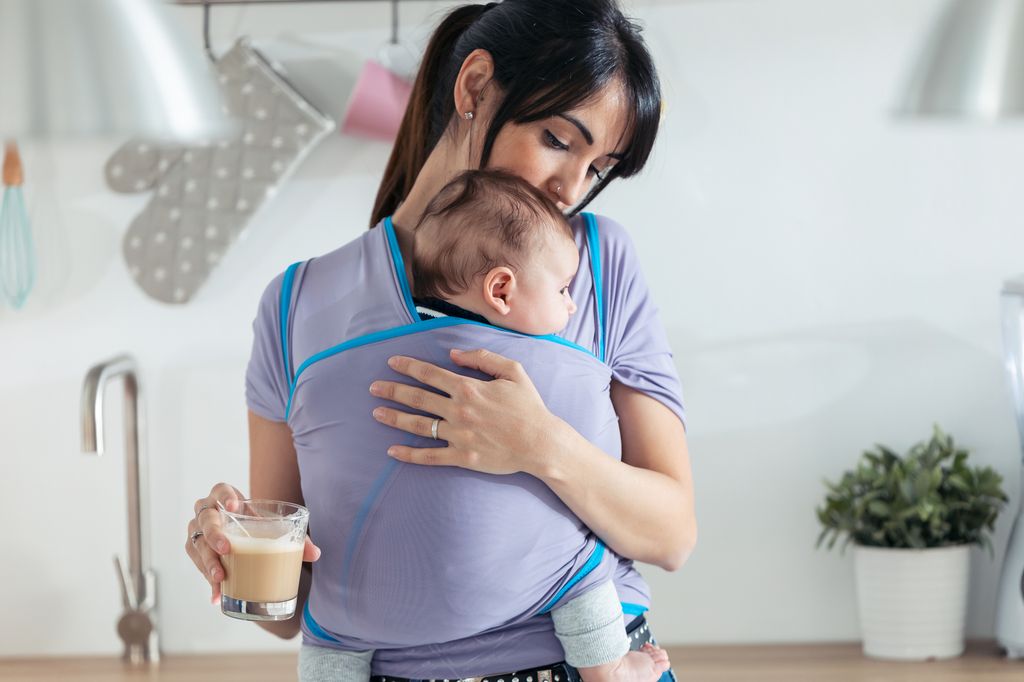
In short, it is vital that you always keep your baby upright, with their airways clear, and you should be able to see their face at all times without having to move any of the fabric aside.
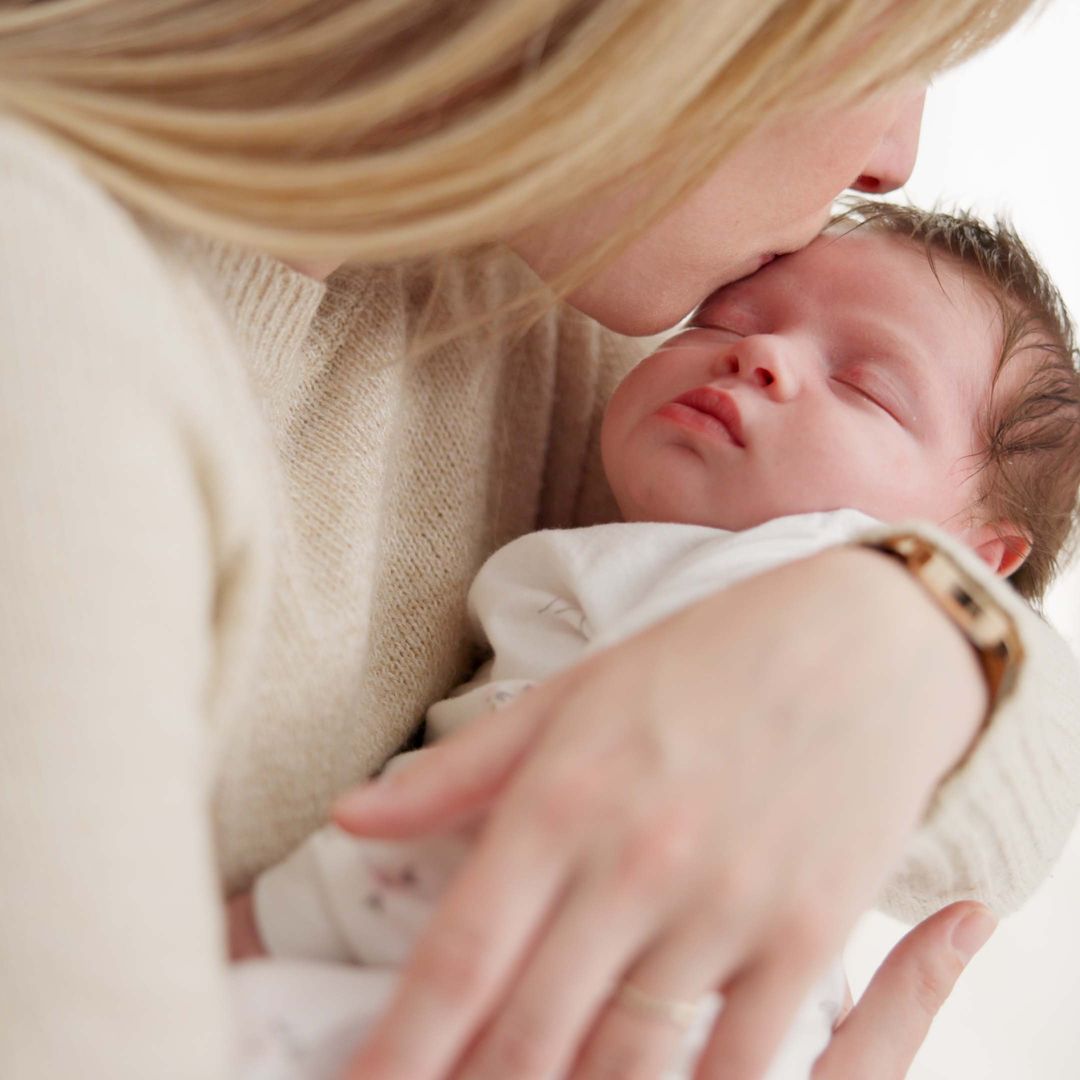
As a rule of thumb, to make it easier to remember, think about the fact that their chin should never rest on their chest and their head should be close enough to kiss.
Founder of Carifit, babywearing and movement expert, and father of two, Vern Hill, shared his advice for parents struggling to get to grips with the device.
He told HELLO!: "Firstly, we need to understand that babies will grow and develop and the support and positioning that is needed by a newborn baby is not the same as that required by a 6-month-old, 1-year-old or toddler.
"For most new parents, the real concern is the first 3 or 4 months when babies require great head and neck support, we must avoid any slumping as our babies are unable to support their own weight and we want an optimised, ergonomic, hip-healthy position that meets IHDI (International Hip Dysplasia Institute) guidelines."
 © Getty Images/iStockphoto
He continued: "So, the universal checklist that can be applied to any baby carrier or sling is quite simply:
- Is your baby high enough on your torso that you can readily kiss the top of your baby’s head?
- Is your baby tight enough on your body that they don’t slump or slouch inside the carrier or sling?
- Is your baby visible, particularly their face and ear?"
The UK Sling Consortium developed the T.I.C.K.S. rule:
- Tight
- In view at all times
- Close enough to kiss
- Keep chin off the chest
- Supported back
How do I make sure I am ticking off the checklist?
A simple once-over before moving around with your baby in the sling will mostly be sufficient to judge whether you have secured the device properly; however, if you are not sure, the expert left some words of wisdom to hopefully put you at ease.
He added: "For the most part, it is very simple to adjust any carrier or sling to meet this checklist. Simply boost your baby up and then look for any slack in the straps or fabric and tighten it.
"A well-fitted carrier or sling should replace both our arms if we were cradling and fully supporting our baby. For their hips, we should see an 'M' shape where babies' knees are slightly higher than their bums and the fabric supports from knee to knee in a wide leg 'cuddly frog' position."
Vern also noted details to be mindful of when carrying out your checks and some of the information brands don't tell you before sending you on your way with your sling.
He said: "Very well-known carrier brands come up large so your baby may need to grow to around 14lbs to start being able to achieve that optimised position despite them being advertised as 'from newborn or from 7lbs'.
 © Getty Images
"If your baby is hidden by fabric, you cannot see their ears and face above the fabric, then simply that carrier is too big for them at the moment - especially, if you have made the other optimisations, from tightening the straps or fabric.
"Finally, once the baby is in the carrier, then you should perform the 'tip test', gently tip your body forward, and your baby should not drift away from your body or slump inside the carrier."
Is a sling safe for a newborn?
When it has been adjusted properly and tested using the above checklist, then, yes, slings can be perfectly safe for a newborn baby to be carried in.
It is important to remember that newborns need extra support for their head, neck, and spine, so the key is choosing a sling that allows you to keep them upright and close enough to see them at all times. At this stage, their airway is soft and can kink like a drinking straw if their chin falls to their chest.
Stretchy wraps, ring slings and structured carriers designed specifically for newborns can all be suitable when used according to the manufacturer’s instructions as they are set out to ensure your baby's safety.
If you are feeling worried, Vern left some calming advice when he concluded: "Let’s not forget that babies are worn the world over and have been for as long as records go back. It is a tradition rich with history and has some very real benefits for both you and your baby."