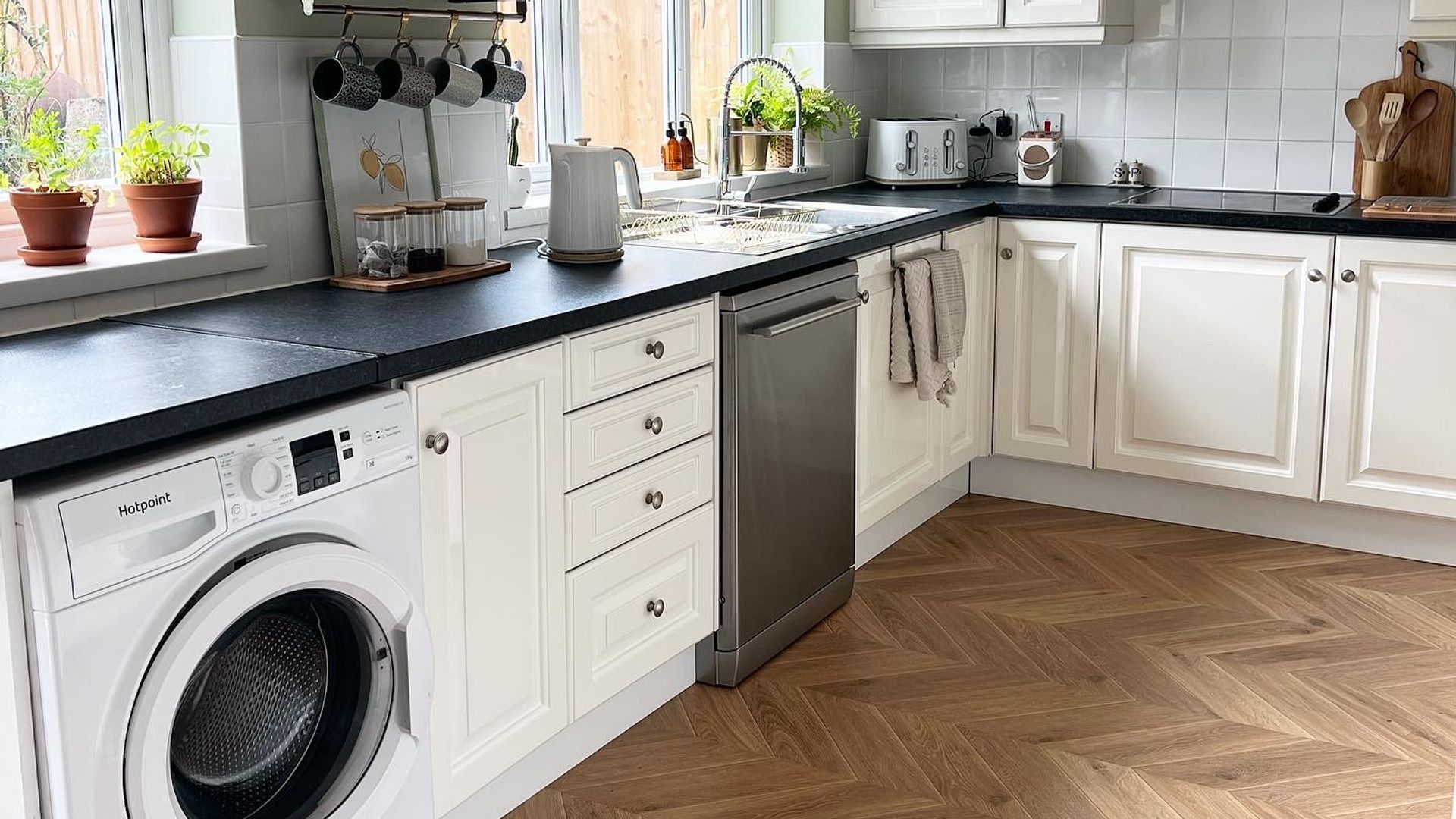
My DIY skills were fairly minimal when we bought our first home three and a half years ago, so when it came to transforming my flooring from lino to laminate, I enlisted some family help. My cousin masterminded our kitchen and hallway flooring with me doing quite little, while my brother taught me how to lay flooring as we tackled the lounge together.
What I will say is that laying laminate yourself isn't super easy, but it's the sort of thing that you definitely get into the swing of once you start. If you are braving your flooring, I need to warn you about these excruciating but totally preventable mistakes…
Over or under-estimating the gap around the edge of the room
When laying laminate flooring, you need to leave a small gap around the edge of the entire room to allow for any expansion or movement – this is very important so that your boards don't start lifting in the middle over time. You can buy handy spacers to place between the floor and the wall to make sure you get it just right but first, make sure you double check that the width of your skirting will definitely cover the gap. The last thing you want after all that hard work is to have an unsightly space next to your skirting boards.
Not overbuying to allow for wastage
You always overbuy when it comes to flooring to allow for unusable off-cuts and mistakes. You will be likely to use half planks towards the edges of the room so there will be some wastage. Most websites normally suggest how much extra flooring you will need, but a general rule of thumb is 10 per cent to be sure. Imagine running out halfway through, or worse yet, finding the flooring then out of stock. Save yourself the hassle and over order.
Not buying the right underlay
Depending on your subfloor, you may need different types of underlay. We have a concrete floor downstairs, so we needed to add a plastic membrane to prevent any damp before we added fibre boarding as our underlay. Choosing the right base for your floor will mean it will last longer so it's worth the extra research, time and money now.
Not leveling your floor correctly before you start
Old houses especially can have very uneven floors, which can be an absolute nightmare when it comes to laminate flooring. The way it works is it clicks together a bit like a jigsaw puzzle so if the floor isn't flat, you may have trouble actually locking the boards together. It wasn't fun or pretty but we ended up packing parts of our flooring out with newspaper around our fireplace, but your best bet is to get your floor screeded if it's really out of whack.
Scrimping on tools
The key to good DIY is often using the right tools – after all, there is a reason the professionals use them! When we laid our flooring, we used a chop saw which sped up the time so much – a hand saw would do the same job as the cuts are always hidden under skirting, but my arms certainly couldn't take all that sawing. You can get floor laying kits with a pulling bar, block and mallet in and these are really good for getting your pieces of wood fitting together tightly - they also often come with the spacers for around the room that I mentioned earlier.