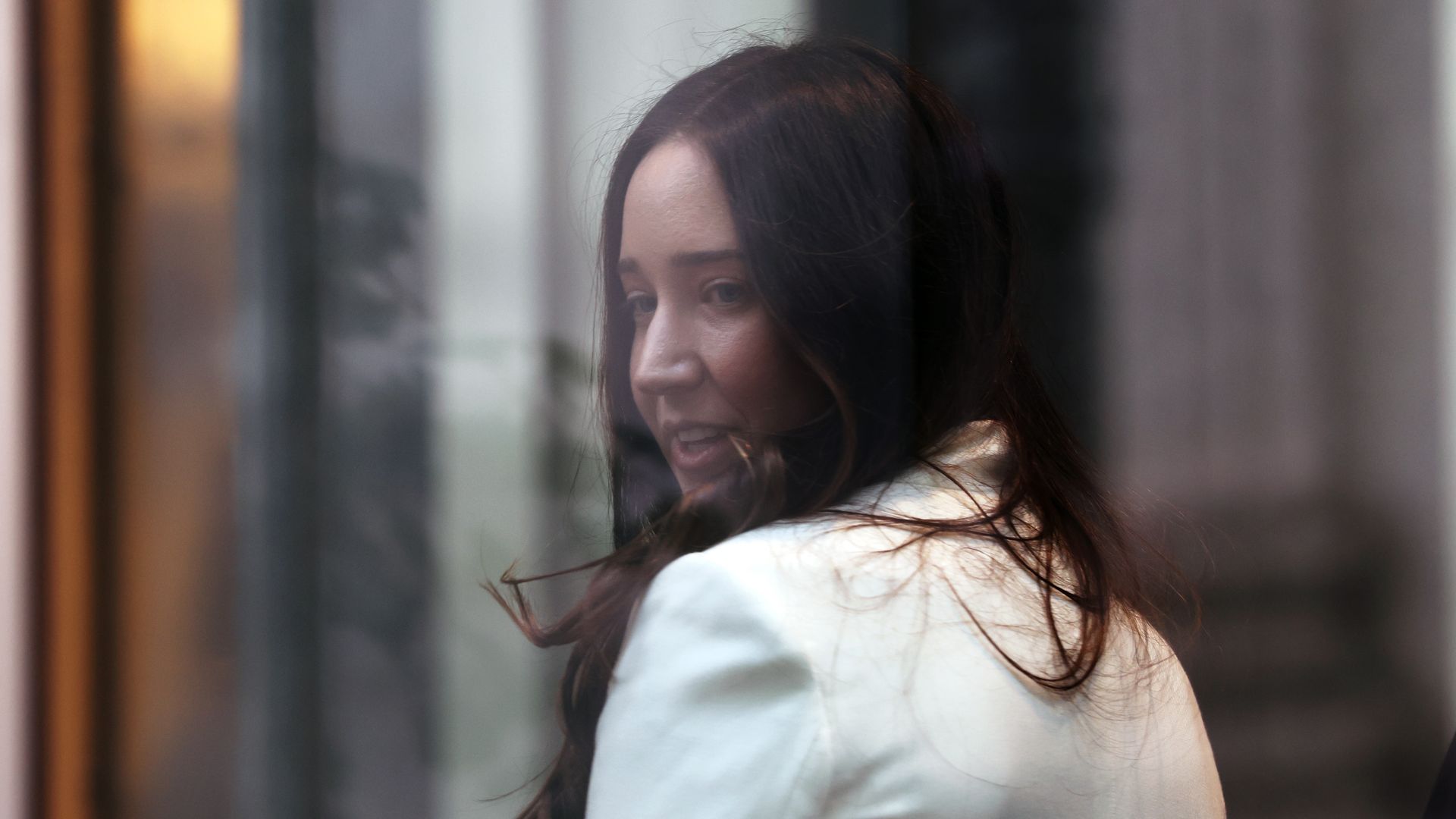
Another Forbes 30 Under 30 alum bites the dust. Charlie Javice, the 32-year-old founder behind Frank, the now-defunct fintech start-up that originally aimed to simplify the process of filling out FAFSA (Free Application for Federal Student Aid), was sentenced to 85 months (seven years) in federal prison on Monday. Her sentencing comes after in March, she was found guilty of three counts of fraud and one count of conspiracy to commit fraud, after inflating her customer list when selling her start-up to JP Morgan Chase. Here's what to know.
Charlie's early life and her family
Charlie was born on March 14, 1993 in Westchester County, New York. Her father is a French financier who worked at a hedge fund, while her mother is a life coach and former teacher. She went to high school at the French-American School of New York, and later graduated from the Wharton School of the University of Pennsylvania in 2013. She is currently in a relationship with Elliot Bertrand.
What is Frank, the company Charlie founded?
Frank was founded in 2016 when Charlie was 24-years-old, and was meant to help student loan borrowers with their applications and securing financial aid. Three years later, she was part of Forbes' 30 Under 30 list for 2019; at the time, the publication wrote: "Frank's software aims to make the application process for student loans faster and easier. Javice founded the 15-person startup in 2016. She has since raised $16 million, and Frank has helped 300,000 users apply for financial aid." She has since been added to their Hall of Shame list of honorees they wish they could recant.
In September 2021, Charlie sold her company to JPMorgan Chase for $175 million and was subsequently appointed managing director at JPMorgan, where she would oversee student-focused products at Chase. Just a year later, JPMorgan filed a lawsuit for fraud — and a federal lawsuit followed — alleging that she created synthetic data to add millions of customers to the list she provided the bank, with the help of Adam Kapelner, an associate professor of mathematics at Queens College in New York.
What did Charlie do? Fraud case and sentencing details
JP Morgan ran into trouble with Frank not long after their acquisition when, per the New York Times, they ran a test of her customer list hoping to persuade its young customers to open Chase accounts, and of 400,000 outbound emails, just 28 percent arrived successfully in an inbox. The bank's due diligence team appeared to have failed to sniff out Charlie's exaggerations during the acquisition process.
She did so with the help of Adam, the Queens College professor, to whom she paid $18,000, telling him she was in an "urgent pinch" and needed him to create a list of over four million customers from a Frank list she supplied, which had fewer than 300,000 people on it; he said during his testimony that she did not share why she needed it.
Charlie and her accomplice, Oliver Amar, Frank’s chief growth and acquisition officer, eventually bought real names and emails from commercial data providers to make it look like Frank did have millions of customers who had given the company their names and contact information. Oliver was charged and tried at the same time as Charlie, and was also found guilty on all counts.
"I accept the jury's verdict and take full responsibility for my actions,” Charlie said in a letter earlier this month to the presiding judge, Alvin K. Hellerstein, and during her Monday hearing, added: "I have remorse deeper than I knew possible."