
Amongst gynaecological tumours, uterine sarcoma is one of the least common. Because its symptoms mimic conditions like fibroids, uterine sarcoma is often overlooked until it has progressed.
For women over 40, knowing what to look out for can make a critical difference.
Because it is crucial to understand these symptoms so you know when to seek specialist advice, we spoke to oncologist Dr Alejandro Gallego Martínez, a specialist in the Gynaecological Cancer Department at the University of Navarra Cancer Center Clinic, to find out more.
What is uterine sarcoma and who is at risk?
As the doctor explains, uterine sarcoma is a rare type of cancer that usually originates in one of the layers of the uterus, known as the myometrium. "This differentiates it from endometrial carcinomas, which are the most common uterine tumours and originate in the inner layer of the uterus," the specialist notes.
 © Getty Images
Dr Gallego Martínez clarifies that this is not a common type of cancer. "Uterine sarcoma is very rare. It accounts for only 3% to 7% of uterine cancers. The most common is leiomyosarcoma, with an incidence of approximately 0.5 cases per 100,000 people per year," he indicates.
The oncologist notes that in most cases, uterine sarcomas are diagnosed in women over 40 years old, with an average age of onset of approximately 60.
And are there any known factors that can influence the appearance of this type of tumour? "In most cases, the exact cause of uterine sarcomas is unknown. However, some factors can increase the risk, such as previous radiotherapy to the pelvic area, prolonged use of tamoxifen, or certain rare hereditary syndromes like Li-Fraumeni syndrome or hereditary leiomyomatosis and renal cell cancer," details the doctor.
Key warning signs: Unusual bleeding to rapid fibroid growth
Once we understand what kind of tumour this is, as well as the risk factors, the question arises as to what warning signs might alert us to its presence. "The symptoms can be non-specific," notes the doctor, but the most common include:
- Abnormal uterine bleeding
- Abdominal pain or a sensation of bloating
A rapidly growing fibroid can also be a warning sign.
Types of uterine sarcoma
The doctor indicates that uterine sarcomas are a heterogeneous group of tumours with different subtypes.
The most common is leiomyosarcoma, followed by endometrial stromal sarcoma, which is further differentiated into low or high grade.
Other less common types include adenosarcomas, undifferentiated sarcomas, and perivascular epithelioid cell tumours (PEComa), among others.
 © Getty Images
How doctors diagnose uterine sarcoma
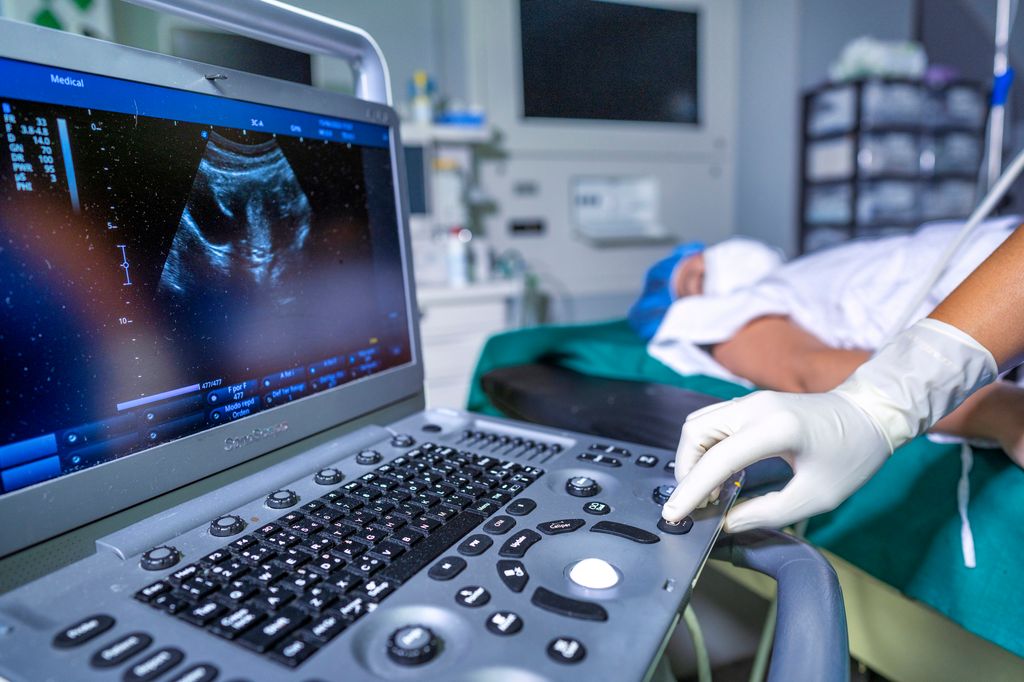
What are the keys to confirming the diagnosis of this type of cancer? The gynaecological cancer specialist confirms that the diagnosis begins with a clinical evaluation and a gynaecological examination, including a transvaginal ultrasound. "However, definitive confirmation requires a histological analysis of tissue obtained via biopsy. Furthermore, studies such as a pelvic MRI, CT or PET-CT scan help to determine the extent of the disease, both locally and distantly," he details.
Treatment options: Surgery, targeted therapies and chemotherapy
When any type of cancer is diagnosed, oncologists must establish an individualised treatment plan to try to halt the disease's progression.
"Treatment must be personalised and carried out in specialised centres with a multidisciplinary assessment. In the initial stages, the main treatment is surgery, which generally includes the removal of the uterus (hysterectomy) and, in some cases, especially in postmenopausal women, the ovaries and fallopian tubes. Depending on the type of sarcoma and its characteristics, chemotherapy may be added, although there is uncertainty about its benefit," the doctor tells us.
Promising breakthroughs
Once again, the importance of continuing to advance research to improve the understanding and management of this type of gynaecological tumour is confirmed.
"Collaboration between specialised centres is key to advancing knowledge of this pathology, as uterine sarcomas are rare and clinical trials often face difficulties in recruiting enough patients."
In advanced stages, chemotherapy is usually the main treatment
Dr Gallego Martínez's hospital is leading an international study in more than 20 countries with over 800 patients to better understand the role of chemotherapy in high-grade uterine sarcomas that have been operated on.
 © Carlos Duarte
Understanding prognosis and survival rates
As might be expected, the prognosis varies depending on the subtype and aggressiveness of the sarcoma. "High-grade sarcomas, in many cases, have an unfavourable prognosis," says the specialist.
For example, with leiomyosarcoma, even in the initial stages, there is a risk that the tumour could reappear in more than half of patients.
"On the other hand, low-grade sarcomas, such as low-grade endometrial stromal sarcoma, usually have a more favourable evolution and a less aggressive clinical course," concludes the doctor.