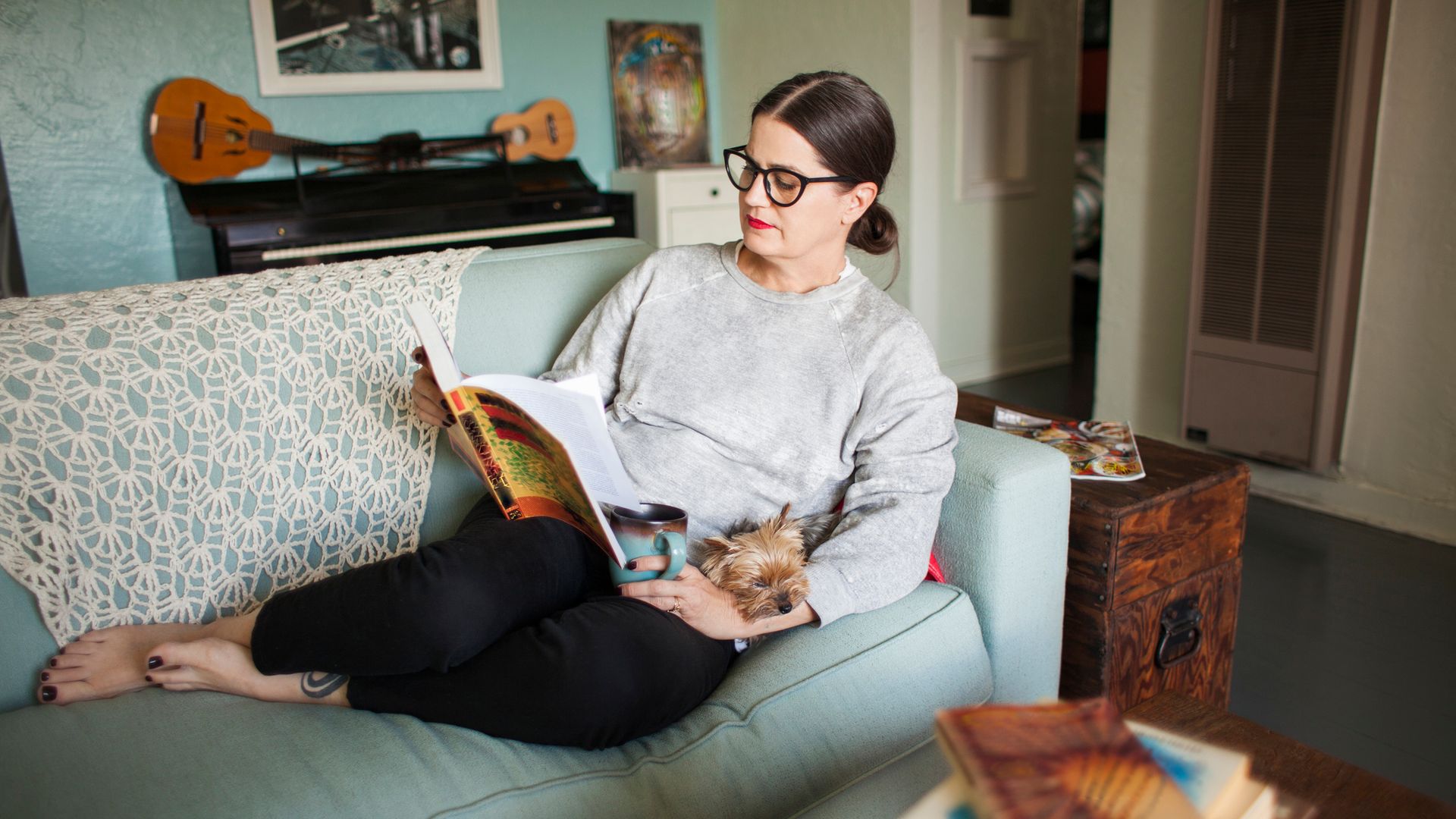

In midlife it’s hard not to be overwhelmed by all the things you think you should be doing. Strength training! More steps! More water! More protein! And, ironically, considering all the things you’ve been told are non-negotiable, the big one to fit in: More sleep!
It’s a lot — especially if you’re going into January feeling frazzled from a less than relaxing Christmas. But the new year doesn’t need to be about a whole new you just because it makes for a snappy headline. Instead, it can be a good time to think about little habits that could help you end the week, month or year feeling positive about your progress.
Women’s health coach, author and Owning Your Menopause founder Kate Rowe-Ham is a great champion of forming realistic, appealing habits rather than declaring lofty resolutions that you’ll struggle to stick to. “I’m a huge believer that we need to forget New Year’s resolutions and focus on New Year habits instead,” she says. “Resolutions are usually big, dramatic promises made when we’re exhausted after Christmas, and by February they’ve collapsed under the pressure.”
 © Sophie Mitchell Photography
She adds: “Habits are different. They’re small, repeatable actions that quietly change your life from the inside out. You don’t need to overhaul everything, you just need one or two behaviours you can stick to consistently. That’s where real transformation happens. Sustainable habits build confidence, momentum and long-term wellbeing. Resolutions fade; habits create a foundation you can actually live by.”
So, what sort of behaviours are we talking about? We had a think about some of the most common resolutions that get wheeled out every year, and how they can be turned into tangible habits.
The resolution: “I will read every day”
The habit: Keep a visible reading list
We all know that reading — whether in bed at night, curled up in an armchair on a Sunday afternoon or crammed into a commuter train — is the ultimate way to switch off and unwind, and yet we still can’t seem to put our phones down enough to actually do it. But using technology to empower you to read rather than prevent you from it can be key to making it something you do more regularly.
To ultimately become the go-to friend who ends 2026 with all the book recommendations, have a google of 2025’s best book lists (or text your friends and family for their favourites) and then use a platform like Goodreads to keep a list of your want-to-reads — as well as seeking out more that you’re likely to enjoy. This will give you a solid plan, rather than simply staring at a bookshelf in a state of overwhelm and scrolling Insta instead.
HELLO!'s Second Act is a newsletter for women in midlife and beyond. It's completely free to sign up and is a one-stop-shop for advice and inspiration on the issues our Second Act community have told us matter most: health, relationships, travel, menopause, divorce, careers, finance and more.
The resolution: “I will complete Couch to 5K/walk 10,000 steps a day”
The habit: Take baby steps — and make it social
Getting into running or simply walking more is often at the top of people’s lists for the new year — but dark, damp and gloomy January can be the toughest time of all to actually get out there. Starting small, by looking to increase your average step count by 1000 a day, can be helpful.
Giving yourself a goal, like making a parkrun date with a pal in the spring, or even signing up for a sponsored event a few months down the line, can also give you the accountability you need to start increasing your daily movement, without setting unrealistic goals during the most depressing time of the year.
Need another, more shallow motivator? Nice things! January can be a great time to get a great deal on activewear that makes you look and feel good. People often say the first step is putting your trainers on, but sometimes it’s just choosing some really pretty ones that you’ll actually want to wear.
The resolution: “I will quit drinking”
The habit: Log, rather than abstain
Many people swear by Dry January — it can be appealing to those of us with an “all or nothing” mindset — while others can’t think of anything worse than ditching the booze during prime hunker-down season. Ultimately, though, even those who complete a month of sobriety generally don’t change their habits long-term.
Instead, using an app like Try Dry or Reframe, where you can log your drinking (and be praised by AI for your alcohol-free streaks!) can make you more mindful about how much you reach for the wine after a tough day. Try this, alongside seeking out social occasions that don’t revolve around drinking, some of which could tick some of your other 2026 boxes too, such as joining a book club or taking a long walk with a friend. And remember, drinking less is one habit that could have a positive impact on other goals too, such as sleeping better or losing weight.
The resolution: “I will lose two stone”
The habit: Prioritise pleasure
Ah, one of the most common resolutions of all — and definitely the toughest to stick to long-term, even in this era of GLP-1 medication. If weight loss is on your agenda for the year, first think about why it’s important to you. Would losing weight genuinely boost your health and well-being, or do you feel pressured?
If you’re confident that shedding a few pounds is right for you, starting from a place of pleasure, rather than deprivation, is key: if you love cooking, seek out a couple of new, healthy recipes that will make you look forward to, rather than dread, mealtimes. If you’re more about convenience, it could be time to flirt with the numerous meal kit companies who are spilling over with special January joining offers and usually offer low calorie or protein-heavy options with weight management in mind.
Having mini-goals rather than huge, intimidating targets can keep you feeling positive too. Losing that first half a stone could be a good motivation to finally list a few old clothes on Vinted, to replace with lovely new-to-you outfits a size smaller.
The resolution: “I will sleep eight hours every night”
The habit: Try one phone-free night a week
We’re all aware that we probably don’t get enough sleep, but when social media is screaming at us that it’s affecting everything from our metabolism to our forehead lines, it can make matters even worse. And this is one area where technology can be both a help and a hindrance — sure, it’s wonderful that our smart watch can tell us how much sleep it thinks we’ve had, but sometimes we know we were really just lying very still on the sofa glued to The Traitors, rather than getting all that luxurious REM we know our mind and body is craving.
Banning your phone from your bedside table for just one night a week is a great way to start small in a way that can genuinely improve wellbeing longer-term. But going cold turkey isn’t always very appealing, so replacing the bedtime scroll with another desired habit, like reading, or a decadent new skincare regime, can make bedtime more alluring. Again, that “resolution” needs to be something you look forward to, rather than dread, or you’ll never reap the benefits.
Good luck! And let us know how you get on — we’ll be checking in!


