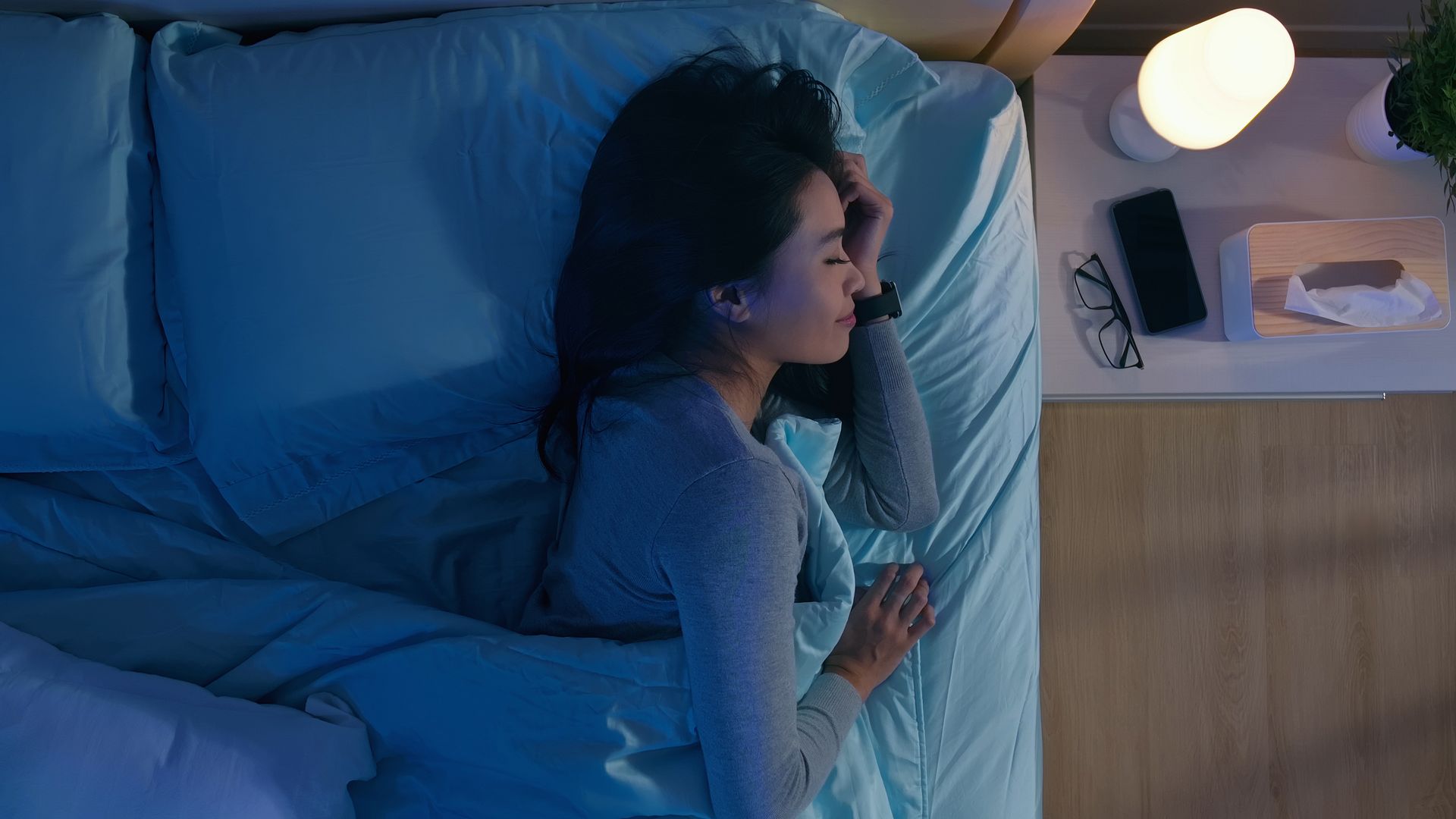
Recent research has discovered that the average Brit uses their phone for more than three hours a day, with mobiles acting as a constant companion from the moment we wake up until we go to bed.
And if you’re someone who struggles to switch off from your phone even when it’s bedtime, you may be wondering if it’s really bad to keep it next to you while you sleep, or what might happen.
We asked biochemist Dr Anna Persaud, CEO of This Works, to share her expertise - and if you often find yourself feeling stressed and fatigued from the moment you wake up, you may want to rethink your phone usage and the role it plays in your evening routine.
The blue light mechanism: How screens block melatonin production
"Keeping your phone by the bed, or using it just before sleep, can have a surprisingly disruptive effect on relaxation and sleep. The blue light emitted from screens suppresses melatonin production - the hormone that regulates your sleep-wake cycle - making it harder to fall asleep and impacting the depth and quality of sleep you achieve," Dr Anna warned.
The content you consume on your phone can also have an impact on your sleep quality. "Social media, news, emails, and messages can all stimulate the brain when it should be winding down. Importantly, the anticipation of notifications can keep your mind on high alert, preventing you from reaching the deeper, more restorative stages of sleep," the sleep expert explained.
"Over time, this pattern can reduce sleep efficiency and lead to increased fatigue, brain fog, and stress the next day. It's not just about falling asleep - it's about creating the right physiological and psychological conditions for quality sleep, night after night.
"Ultimately, to protect your sleep quality, it is best to leave your phone outside of the bedroom. Parents don’t let their children have phones in the bedroom, so why would we not follow the same rule?"
The wind-down: Why you need 60 minutes screen-free
Dr Anna recommends that one of the most effective things you can do to cut your reliance on your phone at bedtime is to create a "screen-free wind-down window."
"Aim to stop using your phone, and any other screens, at least an hour before bed. If that’s not always realistic, use your phone’s ‘Night Shift’ or ‘Blue Light Filter’ mode in the evening, and consider switching it to ‘Do Not Disturb’ or keeping it outside the bedroom altogether," Dr Anna advised.
"Replace that scrolling time with a consistent bedtime routine that cues the body and mind for sleep. This might include reducing light intensity and turning off overhead lighting to avoid stimulation of the sympathetic nervous system. Create a self-care ritual that serves both your body and mind, such as having a warm bath for muscle relaxation, using body products with positive touch through a body and face massage, and making your bedroom a sanctuary.
Dopamine detox: Breaking the cycle of late-night scrolling
Many of us may feel attached to our phones, especially if we’re used to catching up on texts, news or social media in the evening. However, the mental stimulation from late-night phone use can sabotage your sleep, so it’s wise to shift your habits with these top tips from the biochemist.
Go from digital to downtime
"If you struggle to put the phone down, create a gentle off-ramp from digital to downtime. Set a recurring alarm an hour before bed to remind you to start winding down. Place your phone to charge in a different room or use an analogue alarm clock so you’re not relying on your phone to wake up," Dr Anna says.
Sensory anchoring: Using scent and light to signal sleep
"Replace evening screen time with sensory rituals that help shift you into rest mode, such as reading a book that’s engaging enough to hold your attention but not so exciting that it keeps you awake," she advises.
"Using our deep sleep pillow spray can help override the need to check your phone, which should be out of the bedroom, and promote a sense of calm. Habit-stacking these actions - doing them at the same time each night - can help make them second nature."
Be kind to yourself
"It’s worth remembering that it took time to create a dependency on your phone, so it will take time to undo it. Be kind to yourself and keep at it. If you slip, try not to give up, but start again the following night. Small, consistent changes add up to better sleep over time. Ultimately, sleep is not a switch; it’s a process that works in harmony with our circadian rhythm, and the more consistently we support it, the better the results.”