
A few weeks back, I wrote an article about being addicted to my phone, and it was an easy admission to make considering I'm far from alone. I wrote about how my vices tend to be apps like WhatsApp, since I'm usually in frequent communication with the closest people in my life, and Instagram, thanks to its highly addictive visual content that is hard to tear my eyes away from. However, recent research has shown that our mobile devices are much more than that. They are the main source of news consumption, particularly among the younger generation, which has sparked a term you'll likely be familiar with: 'doomscrolling'. It's the act of consuming vast amounts of negative news content that increases feelings of anxiety, unease and, well, doom.
 © Getty Images
How doomscrolling became the norm
Such is the case, we have found ourselves in a situation where we're ingesting a huge amount of information that is doing nothing for our mental health, and yet we'd do almost anything to prevent our devices from being prised from our hands. As a journalist who writes for a living, I'm never going to advocate not keeping our finger on the pulse of what is happening in our world, but, as with everything, it's about balance. And when the balance tips over into poor mental health, it's time to restore an equilibrium.
According to experts at Click Consult and an Ofcom study, 96 per cent of the UK keep up with the news, but how we consume it is shifting fast. Among the 16 to 24 age bracket, most get theirs online via Instagram (41 per cent), YouTube (37 per cent), TikTok (33 per cent) and X (27 per cent). When we think about it in real time, it makes sense. A quick hop onto Instagram on Tuesday early evening, and I, among literally millions of others, was presented with the news that Taylor Swift and Travis Kelce had got engaged. The news had come straight from their verified accounts, so not many people needed to hear it announced on the six o'clock news to be in the know.
 © Getty Images
But when it comes to less joyful news, the term 'doomscrolling' rears its head. Multiple reports stated that 'doomscrolling' came about during the COVID-19 pandemic, and speaking from experience, the hours spent on X (Twitter) learning about rising cases, global spread, and rule changes regarding lockdowns were akin to addiction. The sheer speed with which we find out information (whether good or bad news) ultimately has an impact. However, there are ways we can consume news online without it veering into 'doomscroll' territory. Andrew Smith at Click Consult reveals how to navigate the way you consume news without fuelling anxiety.
How to prevent 'doomscrolling' your way to anxiety
Andrew notes that the more awareness we have about what – and how – we consume everything we see online, the more likely we'll be able to control our emotional response to it. One tip he has is avoiding 'passive' scrolling, and instead actively seeking out news with intention. "Avoid consuming news when passively scrolling, try to instead make a conscious effort to view news on your terms only by dedicating a specific time every day." This is likely going to form a habit where your mindset will be more prepared to 'consume news' from a non-anxious state.
 © Getty Images
Next, Andrew says that accessibility is important: "It's likely that your phone is always on hand. While this means that you are accessible to your phone, it also means your phone is accessible to you. Instead, wait for more traditional outlets such as print and television." For example, you could try and encourage 'cut-off times' in your evenings where your phone gets less attention, and instead you catch up on news via TV, to add a bit of diversity to your everyday media.
Speaking of diversity, anyone in the media will tell you that your first point of call is a trusted, reputable news outlet. These lines are blurred when social media comes in. Andrew says: "Balance short-form content explainers [rife on sites like TikTok] with trusted news outlets. People who consume a mix of traditional and digital news report higher trust and lower stress."
 © Getty Images
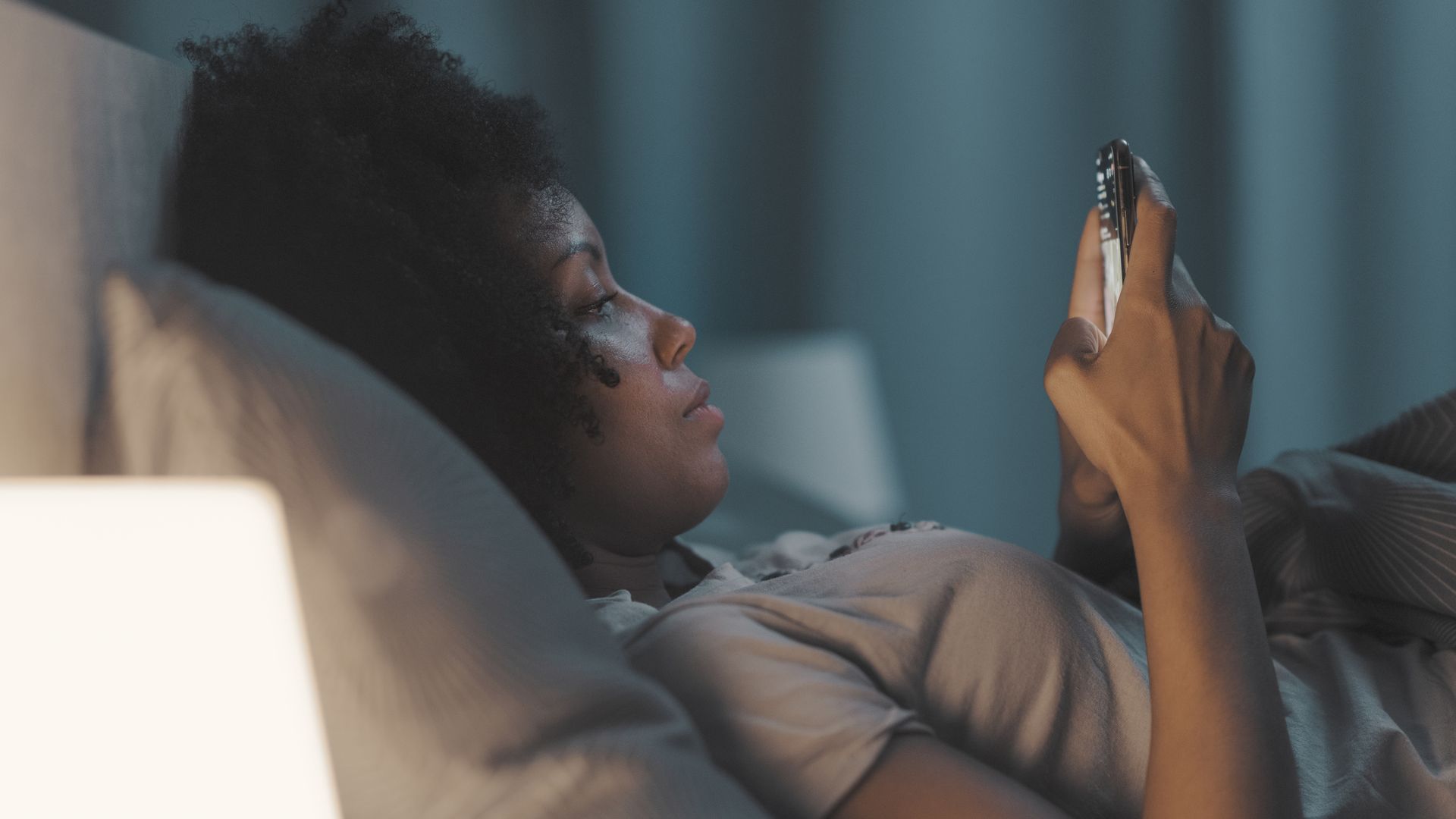
Another crucial tip is avoiding doomscrolling just before you go to sleep. It'll heighten feelings of anxiety and disrupt your quality of sleep – a vicious cycle when it comes to mental health. Harvard research shows that exposure to stressful content before sleep increases insomnia risk. Andrew advises to make your last scroll of the night entertainment (a funny cat video is my usual go-to), not information. Better yet, put the device down and opt for meditation, a book, or bedtime yoga instead; you'll thank yourself later.