"What was I saying again?" Ah, yes, brain health. As I write this, I've twice checked the notes on my phone (where I vaguely recall scribbling down an important stat) and remembered (while misspelling that word) that I forgot to pack the kids' water bottles. Then, somewhere between that and a 15-minute rabbit hole in my inbox, I finally circled back to the reason I was there in the first place: to pull up a press release for Exomind, the buzzy new treatment for brain health.
Hardly a glowing endorsement of my cognitive sharpness, but last month, I could barely remember my name. I jest, but after completing a five-week course, I've noticed a positive effect. And I'm in good company. Earlier this year, Gwyneth Paltrow wrote on Instagram that an "incredible non-invasive treatment" was helping her navigate the fog and anxiety of perimenopause. As with anything at this stage in life, it's difficult to pinpoint where hormonal angst ends and cognitive fatigue or everyday overwhelm begins. This also makes measuring the effects of Exomind tricky; it's less like tracking steps on a fitness app and more like teasing a delicate gold chain out of a tightly knotted ball. Frustrating, but when the strands start to loosen, the clarity feels worth it.
 © Getty Images
Mind management
Described as a "non-invasive neuromodulation device", Exomind uses gentle electromagnetic pulses, formally known as Transcranial Magnetic Stimulation (or TMS), to stimulate brain regions linked to your mood. The goal is to support mental clarity, ease anxiety and address symptoms of perimenopause. The treatment, which has been approved by the US Food and Drug Administration, specifically targets the dorsolateral prefrontal cortex to enhance neuroplasticity and clear the "mental static" that clouds our thinking.
During Gwyneth's treatment, her provider – the board-certified family physician Dr. Georgine Nanos – explained that Exomind doesn't simply "push happiness into the brain". Instead, it builds resilience, equipping you to better manage thoughts and handle life's challenges. Gwyneth described it as a "beautiful neuromodulation experience that helps calm the mind, restore clarity and reconnect with yourself on a deeper level", while the former tennis champion Serena Williams has credited it with changing how she prioritises her mental health.
I only wish I'd come across these endorsements during my tube ride to the Dr. Preema London clinic (one of the first to bring Exomind to the UK), rather than diving into articles about TMS and its conventional use for severe depression (curse you, patchy Elizabeth Line wi-fi).

By the time I arrived for my first appointment, I was frazzled, caught between the looming pre-holiday work maelstrom and the nagging fear that I might be signing up my already struggling grey matter for something irreversible.
Visiting the brain spa
It turns out that I didn't need to worry. Or rather, my worries (all of them) had gratifyingly dissipated by the time I hopped off the treatment bed. The process begins with a motor threshold test, in which a practitioner measures the magnetic stimulation needed to elicit a motor response (cue your arm twitching involuntarily). After that, a plate with an integrated coil is gently placed on the left side of the head, delivering painless pulses to stimulate targeted brain regions. Think a persistent but harmless woodpecker rhythmically tapping the outside of a bicycle helmet.

HELLO! has teamed up with women's health and fitness experts Move The Gap to signpost four key areas of lifestyle medicine that could help you to navigate the menopause minefield: heart health, mobility, muscle and bone strength, and cognitive health. Over the next four weeks, Move The Gap's co-founders, including personal trainer and regular guest on ITV's Lorraine, Shakira Akabusi, Owning Your Menopause author and founder Kate Rowe-Ham, former Gladiator and GB Olympian Jenny Stout, and health and mobility expert Monika Akabusi, will offer expert advice on each area – and you can sign up to receive the free and exclusive series by clicking on the button below.
By the end of the first session, I felt noticeably calmer. Not euphoric, puppy-room levels of joy, but a quiet brightness; a subtle mental lift. In clinical trials, 98 per cent of patients reported improved clarity of thought, while 92 per cent experienced better emotional balance, with benefits lasting from six to 12 months.
Try it
Rituals Mind Oasis
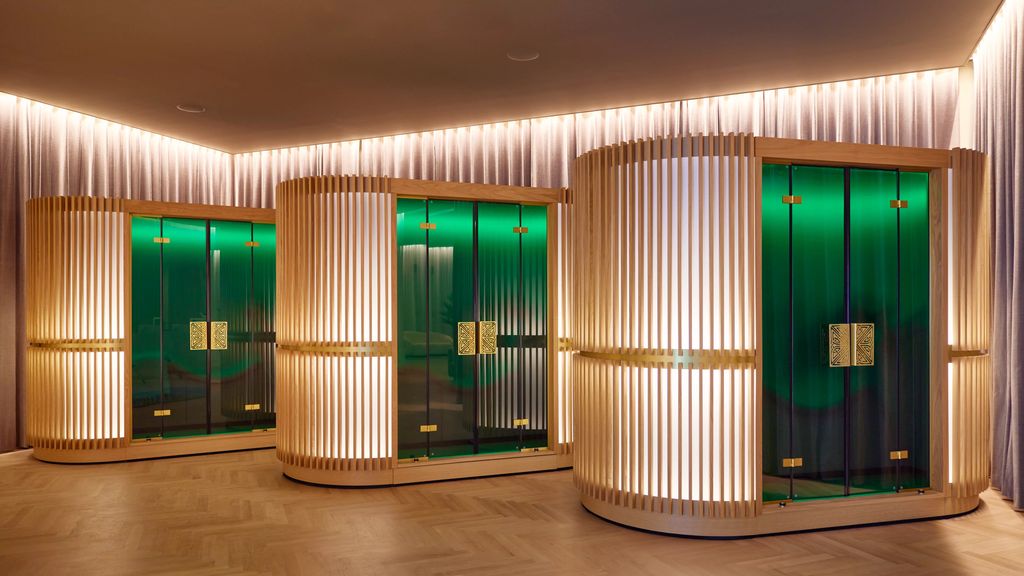
Opening on London's Oxford Street next month, the UK's first Mind Oasis offers a multisensory antidote to the bustle of London's busiest shopping destination. Its immersive experiences, which help to relax and reset, have already proved a hit in Amsterdam, Paris and Frankfurt.
Flow Neuroscience Depression Treatment Headset, £399
This Swedish-developed, medication-free headset delivers 30-minute at-home sessions and is already being used by four NHS trusts. It works by stimulating the dorsolateral prefrontal cortex to restore healthy brain activity, addressing depression at its neurological source.