

The Celebrity Traitors is the best thing on TV right now, and I won't hear anything different. Earlier this month, Claudia Winkleman, with her razor-sharp fringe and impeccable collection of tweed, welcomed 19 celebrities to the Scottish castle, including major stars from the world of British showbiz like Jonathan Ross, Sir Stephen Fry, Celia Imrie, and more. As per the rules of the classic game, three Traitors are selected to try and hoodwink their fellow famous friends into thinking they are faithful, so that they can reach the end of the game and bag a mighty £100,000 for their chosen charity.
The Traitors this year are chat show legend Jonathan Ross, singer Cat Burns and comedian Alan Carr, and so far, they're playing a blinder with none being unmasked and banished – although they have all been mentioned as potential liars (some more than others, looking at you, JR).
So how does one go about detecting a real-life traitor? Many slip up and make it obvious, of course, putting themselves in the firing line of suspicion, while others play it cool as a cucumber and sit comfortably below the radar. We spoke to a body language expert who shared insight on spotting a Traitor from a Faithful.
 © CREDIT LINE:BBC/Studio Lambert/Cody Burridge/Artwork - BBC Creative
Dr Pamela Walters, an MD and consultant psychiatrist at Eulas Clinics, gave her take to HELLO! and dispelled some myths about lying that many cling to. Dr Walters first states that there is not one definitive sign of lying, and that instead, it's often a combination of communicative indicators that might point to someone trying to conceal the truth...
Mismatched body language vs words
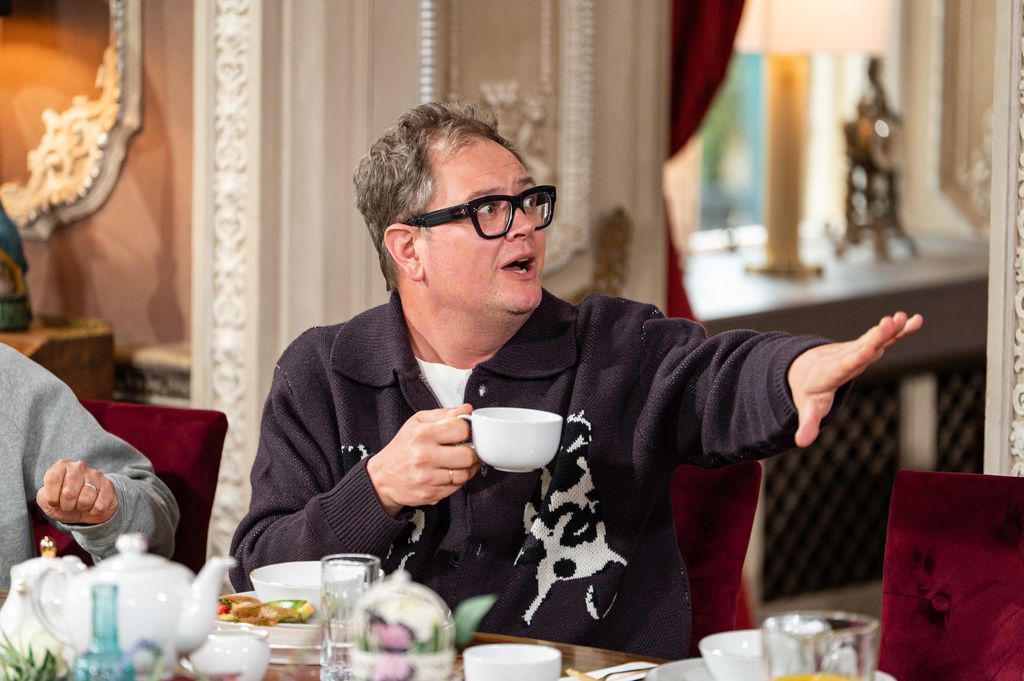
"Body language can be revealing but it is rarely as straightforward as people think," Dr Pamela Walters tells HELLO!, adding: "For example, a person might be saying 'I'm confident we can trust them' yet their shoulders are slightly hunched, they're shaking their head and so on. That mismatch can signal discomfort or anxiety."
However, the professional notes that even if a person is displaying this physical behaviour, it doesn't necessarily put a cross on their back. High-intensity situations, especially on a TV show, can influence how a person behaves. Everyone is under stress, and anyone can look guilty if anxiety gets the better of them.
 © BBC/Studio Lambert/Euan Cherry
Changes in behaviour
But, Dr Walters notes: "What is telling is spotting the subtle changes in someone's baseline behaviour (e.g. how they normally act vs how they behave when questioned)."
It's long been thought that those who avoid eye contact or look at the floor are lying, but it's not always the case, Dr Walters explains. "There actually isn't one definitive sign. People assume that people who are lying avoid eye contact or fidget around, but research shows that it's unreliable to go solely off this." Instead, she notes: "If someone becomes unusually still, starts over-explaining or starts distancing themselves linguistically (using fewer 'I' statements), those can be small clues."
How traitors get away with lying
Because of the high-intensity nature of the game and the fact that often the faithful don't have fundamental evidence, the guesses are purely based on instinct. And it's for this reason that some go completely undetected compared to others. Fans watching at home have been aghast that Jonathan Ross is still in the game despite being brought up many times. Meanwhile, others underestimated Alan and were convinced he'd be found out almost instantaneously, and yet the former Chatty Man host seems to be sailing through.
Dr Walters explains that, ultimately, it's our individual personality traits that make us more adept at fooling people. "Some individuals are naturally more adept at deception due to personality traits," she explains, adding: "Such as higher levels of extraversion or lower anxiety, which make them less physiologically reactive when lying.
 © BBC/Studio Lambert/Euan Cherry
"People with strong emotional intelligence or those skilled at reading social cues can also lie more convincingly because they adjust their performance in real time. But there's also a cognitive component, as lying is mentally tiring. The best liars can juggle multiple narratives without tripping over inconsistencies."
The key to the Traitors' success this year? Dr Walters says they've nailed the balance between visibility without overexposure.
"They've understood the importance of social cohesion, so blending in, showing empathy, and maintaining visibility without overexposure. Fatigue and guilt often compromise composure as the game goes on. It's the small slips under pressure rather than any of the grand gestures that tend to expose traitors in the end."


