
Perimenopause seems to usher in a constant cycle of recalibration – a slow renegotiation of who you thought you were (turns out I am not laid back) and the acceptance that many things simply aren't what they used to be.
I can make peace with a thicker waistline, the unexpected encore of teenage-style breakouts, and hair that has developed a mind – and lore – of its own. But my ailing eyesight has been a tougher pill to swallow.
After sailing through 45-ish years with 20/20 vision, I spent a solid three (denial-filled) years holding menus at arm's length and squinting at Instagram before finally admitting defeat.
As I tentatively typed 'glasses perimenopause' into Google, the search suggestions read like a transcript of my inner monologue: 'Can perimenopause cause blurry vision?' and 'perimenopause vision problems.'

Vision and perimenopause
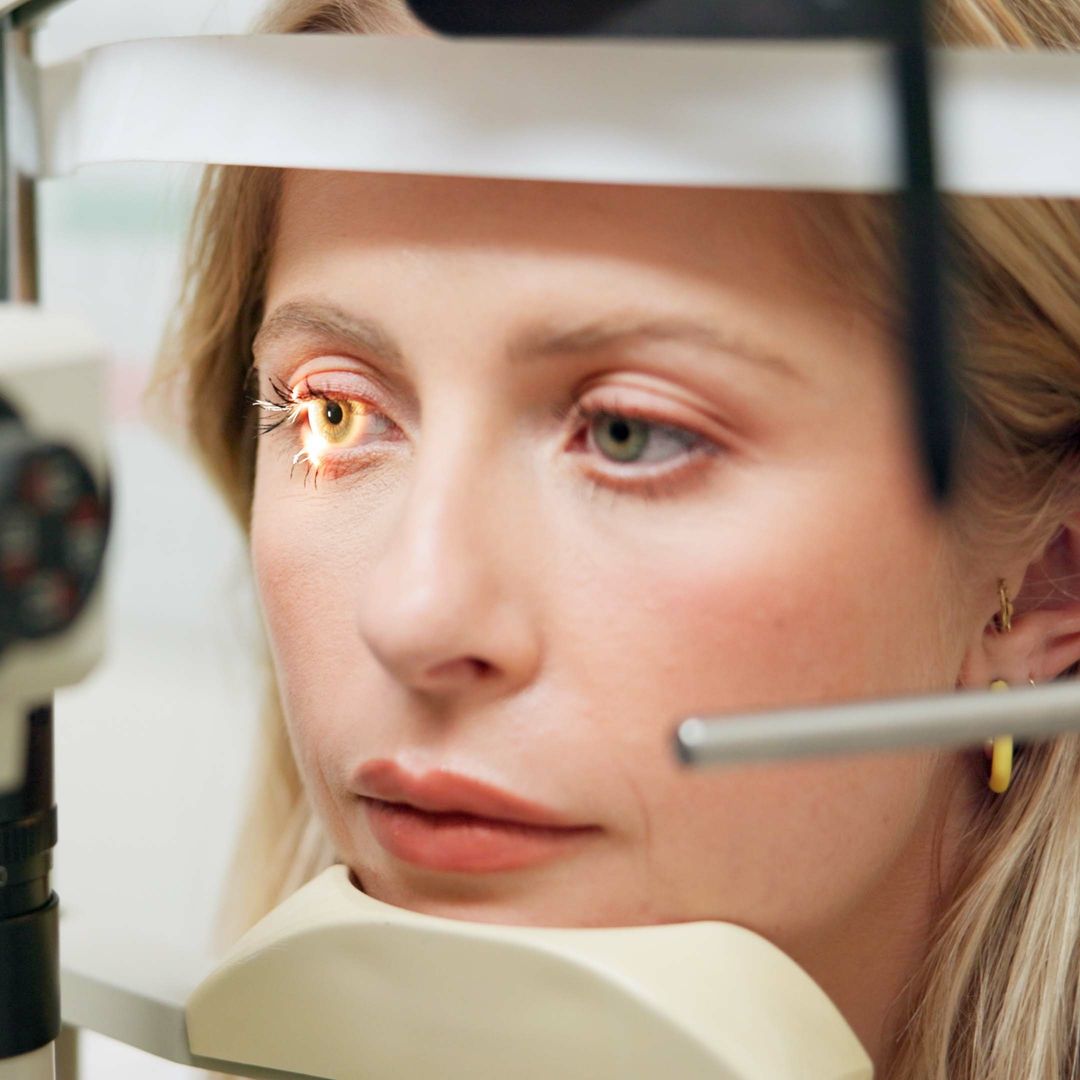
According to optometrist and founder of eye health brand Peep Club, Nicola Alexander Cross, this vision change is as inevitable as grey hair: "It's called presbyopia and is just a natural part of the aging process," she explains. "Like grey hair, everyone is affected differently and it certainly exists on a spectrum (the severity of needing reading glasses and also how early into your 40s you find yourself needing them)."
Nicola explains that in our 40s, the focusing system of the eye (controlled by the lens in the eye and the muscles around the lens) begins to lose elasticity. "As a result, it becomes less effective at accommodating near work. It can feel sudden and is especially obvious with small fonts, dim lighting, or when you're tired, because those situations demand more focusing effort. But really, it's been creeping up for years."
While Nicola says presbyopia is fundamentally age-related rather than hormone-driven, women tend to notice it earlier than men. "There is a higher prevalence of presbyopia in women under 50 compared to men of the same age," she says. "It hasn't typically been linked to hormonal changes, but like most menopause-related research, the data is limited. It's very possible that menopause accelerates the process but we can't say that for sure yet."
A trip to my optometrist confirmed what I already suspected: a +1.75 prescription for reading. My emergency Flying Tiger glasses were very much not going to cut it.
Specs acceptance
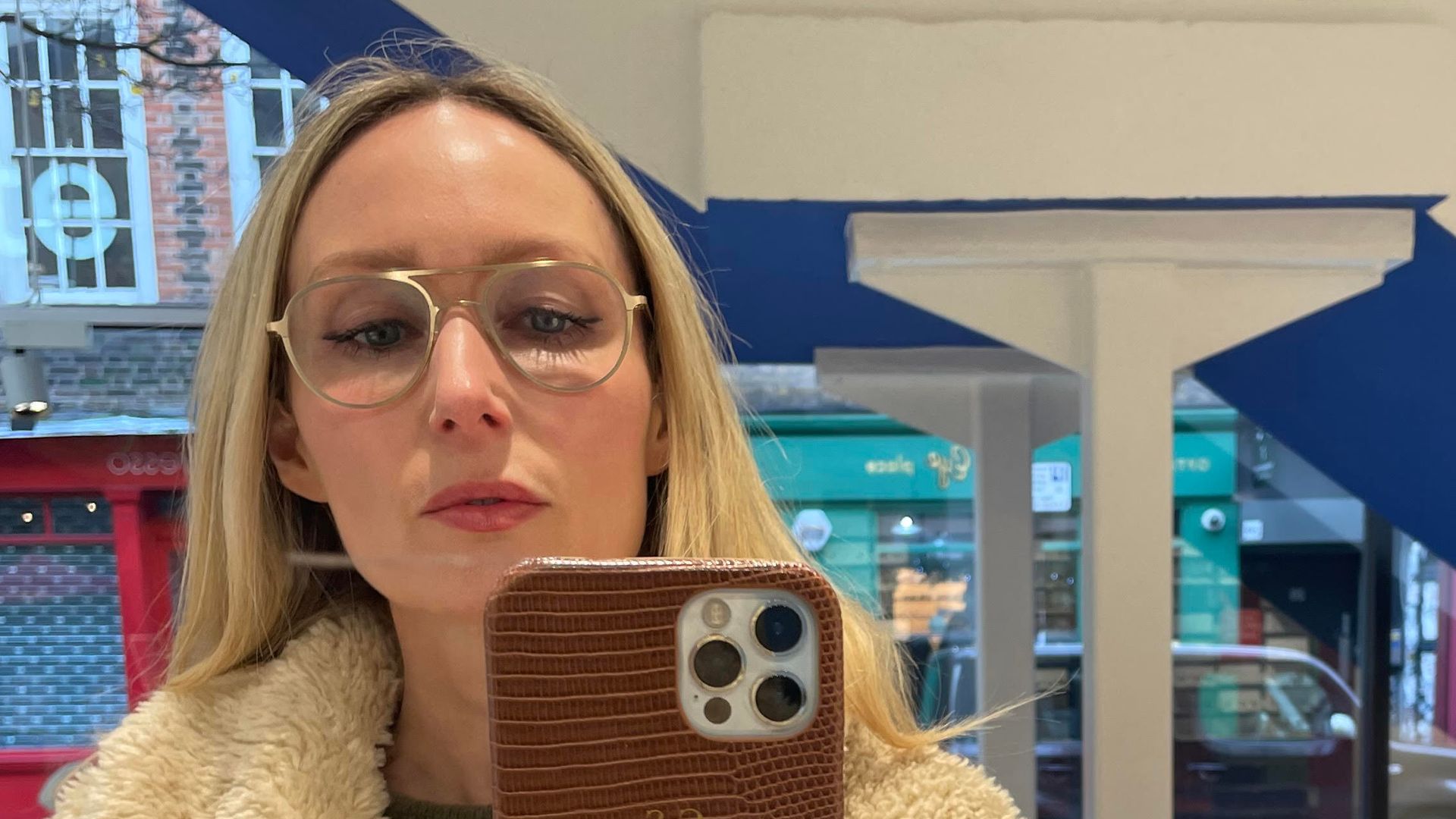
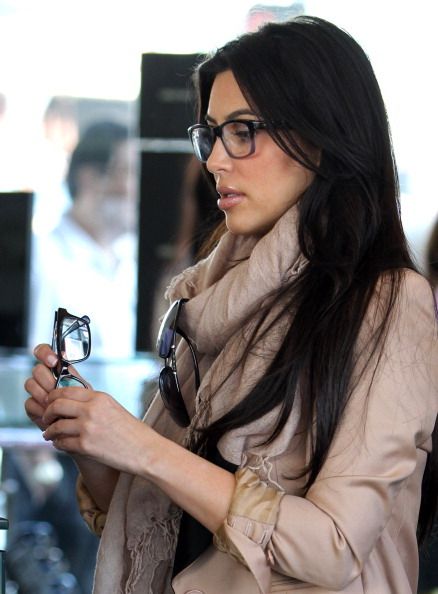
Now officially part of a club I'm still not entirely ready to embrace, the next step was finding frames that still felt like me and not a caricature of my perimenopausal self. My friend and fellow journalist Ahmed Zambarakji lobbied hard for a style that would hoik up my features (or as he calls it 'specs Botox') but in the end I opted for 70s-esque aviators similar to the sunglasses I naturally gravitate towards.
 © Getty
The bigger challenge turned out to be actually wearing them. When I confessed this to Nicola, she assured me I wasn't being dramatic; "It can be harder for people who start wearing glasses in later life to adjust to wearing them," she says. "It's more of a mental hurdle. If you've never identified as someone who wears glasses, needing them due to age-related changes can feel like a big milestone and is sometimes the first real confrontation with being middle-aged. There used to be a stigma around reading glasses, but now, with modern demands on our eyes, people of all ages need them."
Makeup for glasses wearers
With my new specs somewhat integrated into my look, a fresh dilemma emerged: did my makeup routine need a rethink? My already fair brows seemed to vanish into the gold frames, and my signature eyeliner flick suddenly felt… underpowered.
I turned to my friend and makeup artist Sonia Deveney for advice: "If you're going for a thicker frame or statement glasses, your makeup does need to be more considered," she says. "A little more definition around the eyes and a groomed, brushed-up brow work well. The brows really help to frame the eyes in general, so ensure you create a good balance between your eyes, brows and the frames.
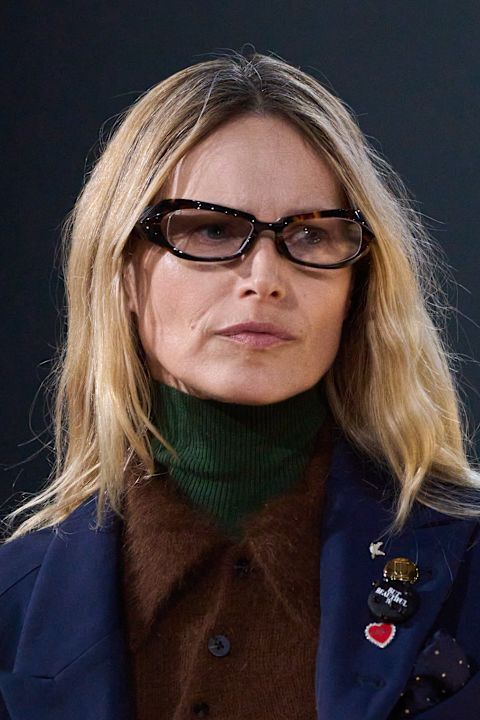
"Spectacles of any description will draw attention to the eyes, so it pays to go the extra mile." As for my go-to wing? "You don’t necessarily need to extend it," Sonia says. "Stick to what suits your eye shape but you might want to thicken the line slightly for added lash-line definition. I personally wear quite a large square gold Dior frame and find that more voluminous lashes balance the delicacy of the frame beautifully."
Reassuring words, although my attempt at a bold red lip for after-work drinks left me feeling more overdone than elegant. "If you can't leave the house without a lip, you can still opt for your favourite shade but tone it down slightly with a balm; you don't want too much going on," says Sonia. "Think chic Parisian rather than sexy librarian. Go for hydrating textures that are going to ensure your pout looks smooth, conditioned and plump."
I may not have mastered 'chic Parisian' (or chic anything for that matter) in my new specs just yet, but at least I can finally read the instructions on my products, and for that, me and my skin are profoundly grateful.
HELLO!'s Second Act is a newsletter for women in midlife and beyond. It's completely free to sign up and is a one-stop-shop for advice and inspiration on the issues our Second Act community have told us matter most: health, relationships, travel, menopause, divorce, careers, finance and more.