January is in full swing, which means the decorations are back in the box, the gym is packed, and somewhere between the school run and 3 am night feeds, you might be wondering whether this is the year you’ll finally feel a little more like yourself and have some time to find balance with your schedule again.
If your New Year's resolution is getting through the day in clean leggings and remembering where you put your coffee, trust me, you’re not alone! We might have days where we’re smashing targets, meeting deadlines and all around feeling like a superhero, but moods aren’t linear, and some days we’re simply surviving.
As a women’s health expert, I like to think of the new year as not a time for 'bouncing back' (in fact, can we completely retire the phrase). I’m much more a fan of the slower but more sustainable mindset of rebalancing and re-entering a workout routine.
With that in mind, let’s delve into the facts and start from the floor up - the pelvic floor to be exact! Let’s start this year by building strong foundations so that we can enjoy an active lifestyle for the long term.
What is the pelvic floor?
Your pelvic floor muscles are a group of muscles and connective tissue that support your core like a hammock at the base of your pelvis. The pelvic floor supports your bladder, bowel and uterus, helping with bladder and bowel control, sexual function, and core stability.
Pregnancy and birth, no matter how straightforward, can place additional pressure on the pelvic floor, and postpartum core rehab is an important part of getting back into an active lifestyle.
The Kegel myth
More isn't always better! Somewhere along the line, postpartum advice seemed to be summarised with 'Do your Kegels', and that was it. While strength training for the pelvic floor is incredibly beneficial, doing Kegels incorrectly or excessively can, in some cases, worsen symptoms.
The pelvic floor is like any other muscle; let’s take our biceps, for example. A healthy muscle needs to be able to contract and fully relax. If it’s always clenched, it can’t generate an effective contraction when you need it. With the pelvic floor, this can contribute to issues such as pelvic pain, pain with intercourse, difficulty emptying the bladder or bowels, and even persistent leaking.
So if your New Year’s resolution is to take care of your pelvic floor, the goal shouldn’t just be 'stronger at all costs.' Let’s create balance.
The missing piece
Don’t get me wrong, Kegels definitely have their place. After childbirth, many women experience reduced muscle tone and symptoms like urinary incontinence, lower back ache, a feeling of heaviness in the pelvis or changes in sexual sensation.
Exercises like Kegels can help us reestablish a connection to our pelvic floor and support everyday demands such as lifting our baby, coughing, laughing, or returning to exercise. But it’s not about squeezing as hard as possible. It’s about learning to lift the muscles gently, with control, coordination, and breath. And it’s about an effective release on the inhale, to help us get more power and support when we exhale and engage our muscles.
This is where the other piece of the puzzle comes in. All pelvic floor muscles should also be able to relax and release. Having an overly tight pelvic floor can cause similar symptoms similar to a weaken pelvic floor, such as lower back ache, struggling to hold urine, clenching of the jaw and toes and struggling to hold urine.
How to release a tight pelvic floor
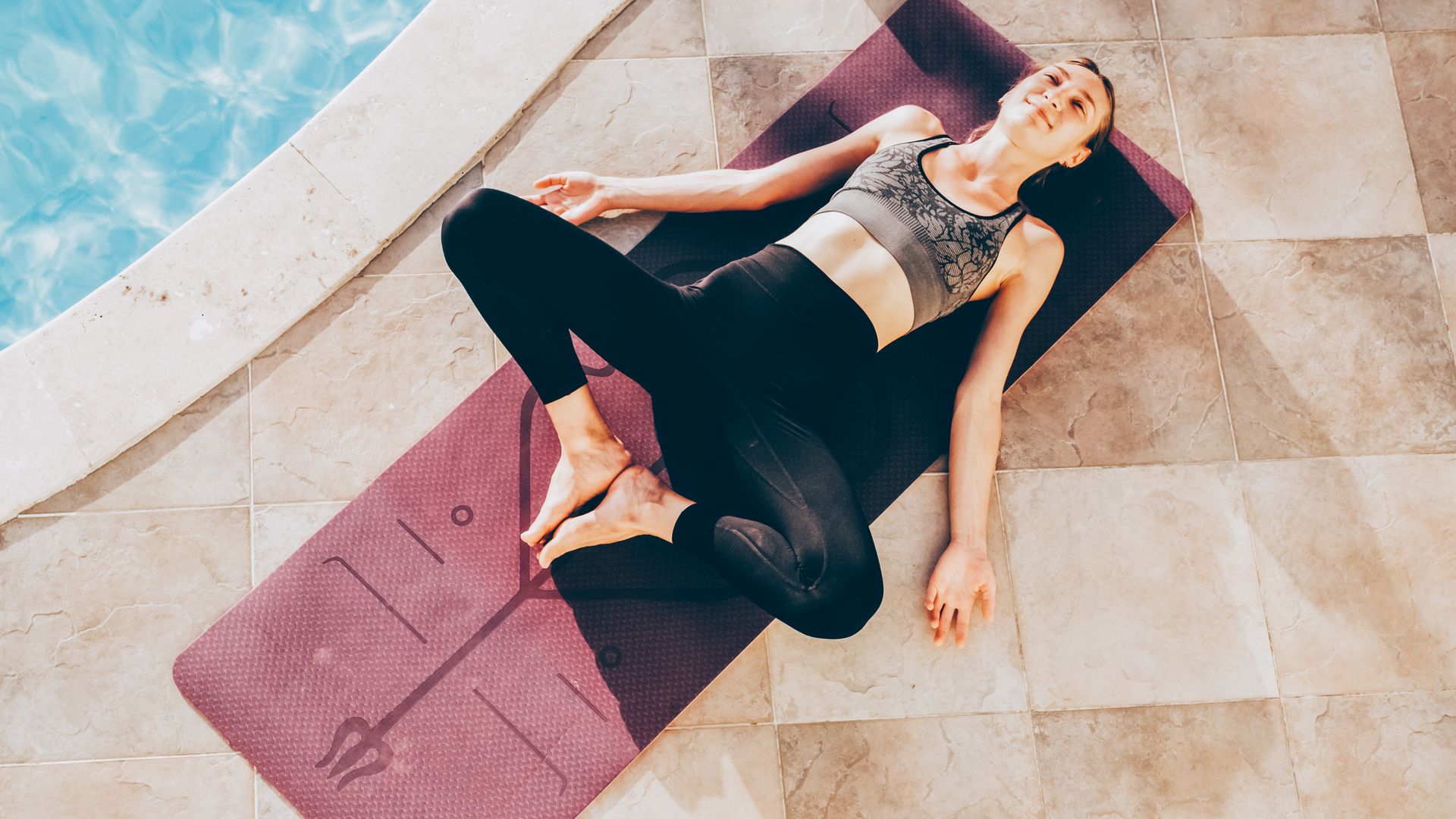
Lying back on the floor or in bed, place the soles of your feet together, so that your legs fall into a butterfly position. Take a deep inhale and visualise a flower opening at the pelvic floor. Exhale and instead of engaging the pelvic floor, allow the breath to fall out with a simple 'Hah' sound. Inhale and focus on the release again. Be mindful not to bear down on the inhale, just gently allow the pelvic floor to release.
The pelvic floor is also connected via deep body tissue from the soles of your feet, up to your jaw. Gentle jaw release massage or releasing tension in the feet can also help to unlock a tight pelvic floor. More tips on pelvic floor release can be found in my book The StrongLikeMum Method.
Slow, steady and sustainable
This New Year, instead of subscribing to the 'get your pre-baby body back' mindset, consider a different intention: listening to your body. Supporting it. Rebuilding the foundations and forming healthy habits that last.
Pelvic floor rehabilitation isn’t glamorous, but it’s deeply empowering. It improves comfort, confidence, and long-term health. And it reminds us of something new mums often forget, you deserve care too.