

The challenges facing parents and teachers when it comes to educating the next generation continue to evolve as the technological landscape grows and develops. In the last couple of years, there has been a growing conversation around the use of artificial intelligence (AI) and its place in the workplace and in scientific and medical research. Now, AI is weaving its way into the classroom, with children and young people becoming increasingly tempted to use it to help them with their homework.
For parents and teachers, this can be a daunting thought. Is AI just as useful as Google has become in helping children broaden their academic horizons? Or is there a valid concern that young people will become overly reliant on platforms like ChatGPT and Grammarly, which will hinder their academic progress in the long term? To help answer all these questions, we have enlisted the help of two child development experts. Dr Sasha Hall, an award-winning HCPC-registered Senior Educational and child psychologist, and Dr Amanda Gummer, a child development expert and Founder of FUNdamentally Children, are offering their thoughts on how AI is being used to complete homework, how it can help, and where it crosses a line.
 © Tom Werner
The rise of AI in homework: what's really happening
Dr Sasha tells us that many teachers she works with have noticed that pupils are beginning to use AI tools like ChatGPT to support their homework, especially for research or drafting ideas. "It has become a growing topic of conversation in schools. Teachers often say they see both curiosity and confusion from pupils about what is acceptable," she says. "The Department for Education has recognised that AI use is increasing and has encouraged schools to help pupils understand how to use it responsibly."
What schools say about using ChatGPT and other AI tools
You may assume that teachers see all use of AI tools as 'cheating', but Dr Sasha says she sees schools taking different approaches. "Some allow AI to be used for early research or planning, while others discourage its use altogether," she explains. "Most are emphasising the importance of pupils demonstrating their own understanding. This reflects the Department for Education's view that AI can be useful if applied thoughtfully and checked carefully, but that it should never replace a pupil's own work or thinking."
 © Getty
When AI can help - and when it crosses the line
Dr Amanda explains: "AI can be a brilliant educational tool when it’s used to support learning rather than replace it. For example, it can help children organise their thoughts, practice problem-solving, or explore new topics in an interactive way. But it crosses the line when it stops children from thinking for themselves. Learning is about developing understanding, not just getting the right answer, so if AI writes the essay or solves the maths problem, the child misses out on the cognitive process that builds confidence and critical thinking. Parents and teachers should encourage children to use AI as a digital coach, not a shortcut."
How teachers are detecting AI-generated work
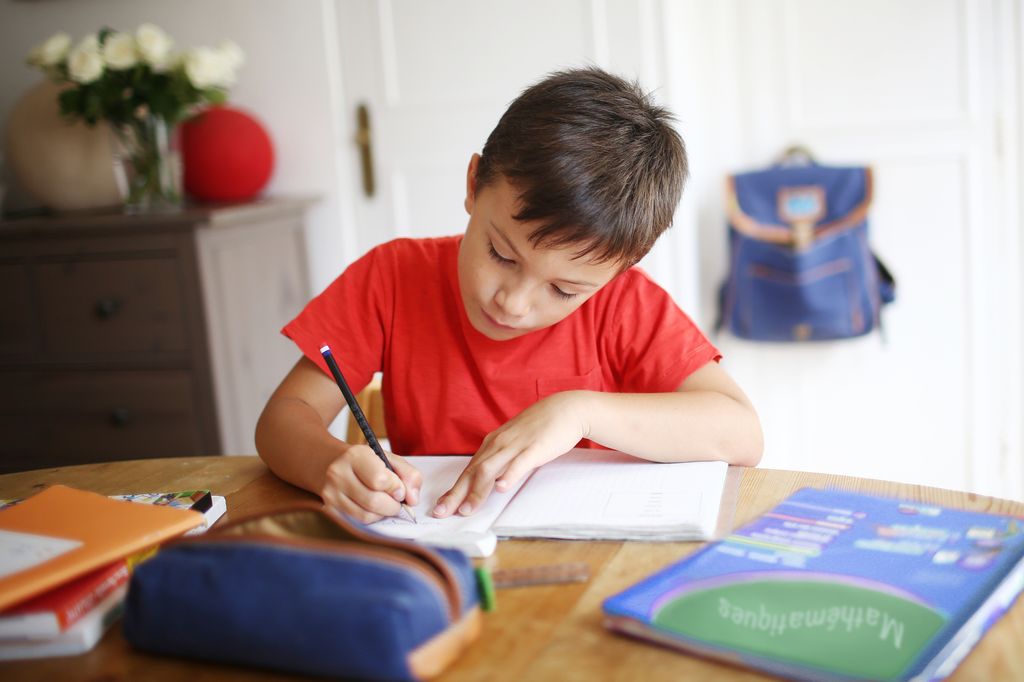
While teachers may see an advantage in children understanding the technological tools at their disposal, they will discourage their pupils from replacing their own thoughts with AI-generated ideas, and so will be on the hunt for times when young people have cut corners.
 © Getty
"Teachers often say they can tell when a piece of work has been created using AI because it sounds different from the pupil’s usual writing," Dr Sasha reveals. "They may notice a more formal style, unusual phrasing, or punctuation that the pupil would not typically use. Some schools are trialling detection tools, but many teachers prefer to rely on their professional judgment and their knowledge of each pupil’s voice and level of work."
How parents can talk to kids about using AI responsibly
 © Getty
So how can parents approach talking to their children to ensure they use AI safely and without disregard for their own development? Dr Amanda reassures us that parents don't need to be tech experts to have this conversation. "They just need to approach it with curiosity and openness. Start by asking children how they're already using AI, then discuss what feels helpful and what might be risky," she says. "It's important to emphasise honesty, creativity and fairness - for instance, explaining that passing off AI's work as your own is a bit like copying someone else's homework. Encourage kids to question what AI tells them and to check information against reliable sources."
The future of AI in education - what to expect next
The fear for many parents is that AI is a constantly developing phenomenon, and we are not sure where it will end. The experts give us their thoughts on where they think it's heading and how parents can adapt to it – and resist its use where needed.
 © getty
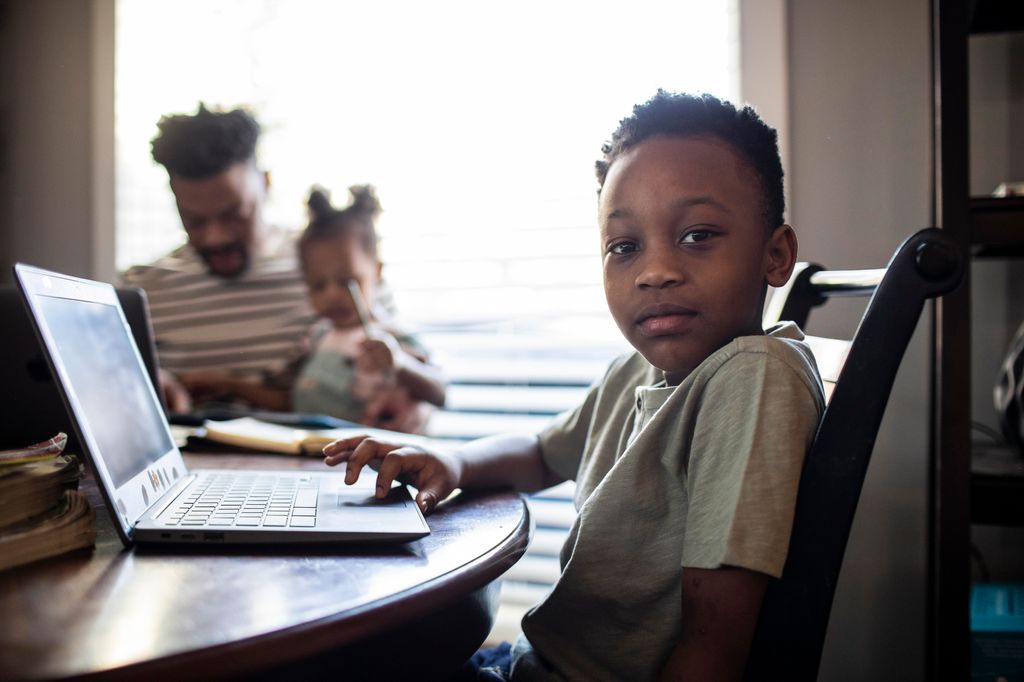
"AI is likely to make learning more personalised than ever before. Imagine every child having a digital assistant that understands how they learn best, adapting the pace, style, and content to suit them," Dr Amanda says. "That could be transformative, especially for children with additional needs. But we mustn't lose sight of the human element. Children still need teachers, friendships, and real-world play to develop social and emotional skills. The challenge for schools and policymakers is to harness the benefits of AI while protecting those uniquely human experiences that no algorithm can replace."
Dr Sasha adds: "Schools are likely to place more focus on teaching digital literacy, critical thinking, and the ability to check sources. From a psychological perspective, maintaining confidence and independent thinking will be just as important as keeping up with technology."