When Dr Louise Newson starred in the Davina McCall documentary Sex, Myths and The Menopause back in 2021, her expert comments were pivotal in shifting the conversation on women's health in the UK.
Before the show aired most women of perimenopausal age were struggling with symptoms, scared of HRT and feeling gaslit by doctors who, to be fair, were also untrained in what their symptoms meant.
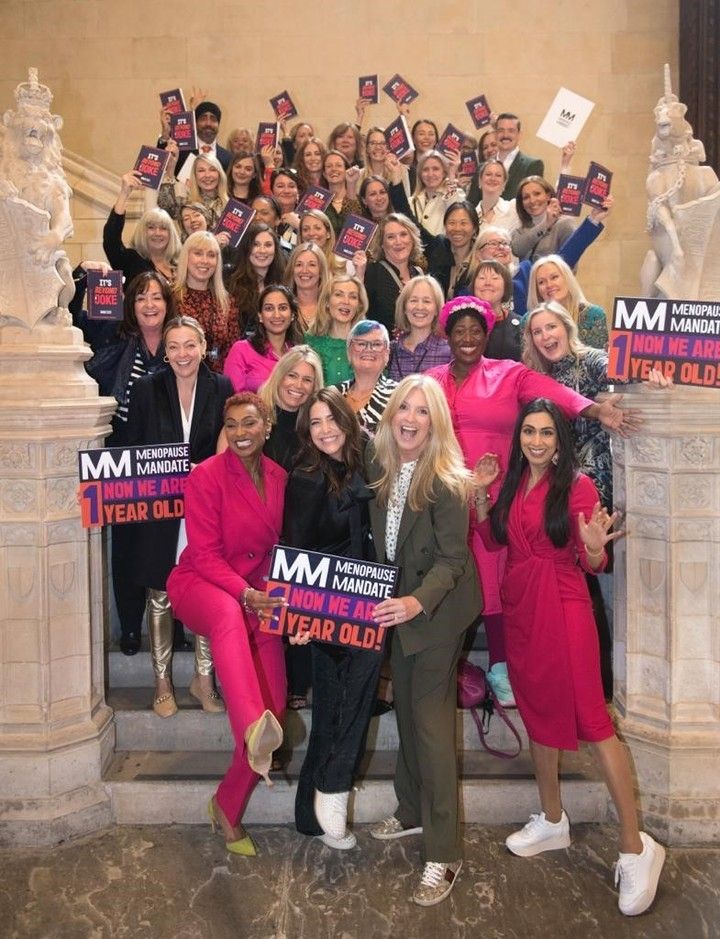
Now, with more research and sharing of real life stories on platforms such as Second Act, we are all a lot more clued-up on recognising the symptoms. The campaigning from Dr Newson, our columnist Mariella Frostrup and all at the Menopause Mandate even created change in the NHS when they finally added perimenopause screening to the women’s health MOT test.
 © Instagram
So why, five years on, as Dr Newson is set to appear in a new documentary Balance : A Perimenopause Journey, does she want us to stop talking about the menopause?
“I don't like the word menopause really,” says Dr Newson as we catch up over Zoom ahead of the launch of the programme. Having become an expert in her field, she was approached by two female monks for advice as they attempt to educate themselves on the symptoms and various treatments for perimenopause. “I'm trying to change the language and thinking about being really clear about which hormone it is that we need.
“When people talk about menopause and HRT, it's almost like everyone's the same - and they are not. That's what used to happen, which wasn't very good really.”
What is mentioned in the programme is that, despite the noise that has been made around the perimenopause and menopause with the work that was put into the Davina documentary, the UK is not as progressive in treating women as we might think. Even Dr Newson says she still struggles with getting her own GP to prescribe her HRT. And this is why she wants to make a change.
Instead of just zoning in on the term menopause - which actually marks the one day in a calendar when your periods have stopped for a year, Newson says we should be focusing more on different hormones and the effects they have on our body to make treatment pathways clearer.
“If you said to me, oh, look, I'm really tired, tiredness might be a diagnosis, but it doesn't tell you what's wrong. Whereas if I said, 'oh, you've got low vitamin D', then you'd go, oh I have a vitamin D deficiency, which causes tiredness.
“It’s the same if you've got brain fog and irritability and you're still getting regular periods, but your testosterone is low. Then you'll be deficient and might just need testosterone. Whereas if you've stopped your periods, you might need progesterone, estrogen and testosterone.
“In my clinic we're optimising hormones and topping up the hormones that are lost, and everyone's different - just like diabetes patients are with their levels of insulin.
“I think changing the language as to what's going on (in our bodies) helps get the right treatment and it makes people understand more.”
 © Getty Images
Don’t leave it too late
By reframing menopause and educating women on how our bodies react to hormonal changes when we are younger, could it make the transition into the perimenopause go a bit more smoothly? That is what Dr Newson hopes for.
“A lot of my work is about hormonal changes. I don't think we should wait 'til we're 40 because it's too late.
“I think every woman, and men, need to be aware of hormonal changes. A lot of my work is not just menopause and perimenopause, it's PMS, PMDD [Premenstrual Dysphoric Disorder], in teenagers too. Knowing about the hormonal imbalance that occurs during your cycle and all the symptoms are the same regardless of what the label is to women because it's due to changing hormones.
“My conversation's very much about hormones throughout the ages. I do get a bit tired of all this midlife noise about menopause because one in 30 women will be menopausal under the age of 40, so we are missing out on women all the time.
“I think everybody needs to have knowledge at every age, really."
HELLO!'s Second Act is a newsletter for women in midlife and beyond. It's completely free to sign up and is a one-stop-shop for advice and inspiration on the issues our Second Act community have told us matter most: health, relationships, travel, menopause, divorce, careers, finance and more.
But what are the different hormones and what do they do?
Dr Newson explains.
"The three main hormones are progesterone, estrogen, and testosterone. They work differently, but they work on every single cell in our body. So they have specific functions, but they're similar and they help themselves to function properly.
They help the mitochondria, the powerhouse producing our energy to function properly, and they help our immune system to work properly. And then they just work slightly differently, but each one is really beneficial. So that's why you can't just replace one hormone and expect the other two to work. They are closely linked, but they are different.
And it's very hard to know which symptom is due to which hormone or deficiency because they're very similar. So for example, low testosterone can cause flushes and sweats as well as low estrogen.
- Testosterone is often thought of as the most important hormone. When people have low testosterone, it can affect their mood, energy, concentration and stamina as well as their libido.
- Progesterone is a very neuro calming hormone. Progesterone actually forms testosterone and estrogen. So you could argue, it's the most important hormone, really, but it also forms cortisone and cortisol. So if people have a lot of cortisol and stress in their body, often they have lower levels of progesterone. So you want the balance to be really, really good. When people have (good levels of) progesterone, they often feel calmer, they sleep better, they're less anxious, they can think more clearly as well. A lot of people think progesterone is only prescribed to protect the lining of the womb when people have estrogen, but actually it does a lot more than that.
- Estrogen - helps produce or improve our immune function. It helps us to function properly, helps our brain. It's really important for our brain to function too but it's everywhere, so it helps build bone and helps reduce inflammation in the cardiovascular system as well."
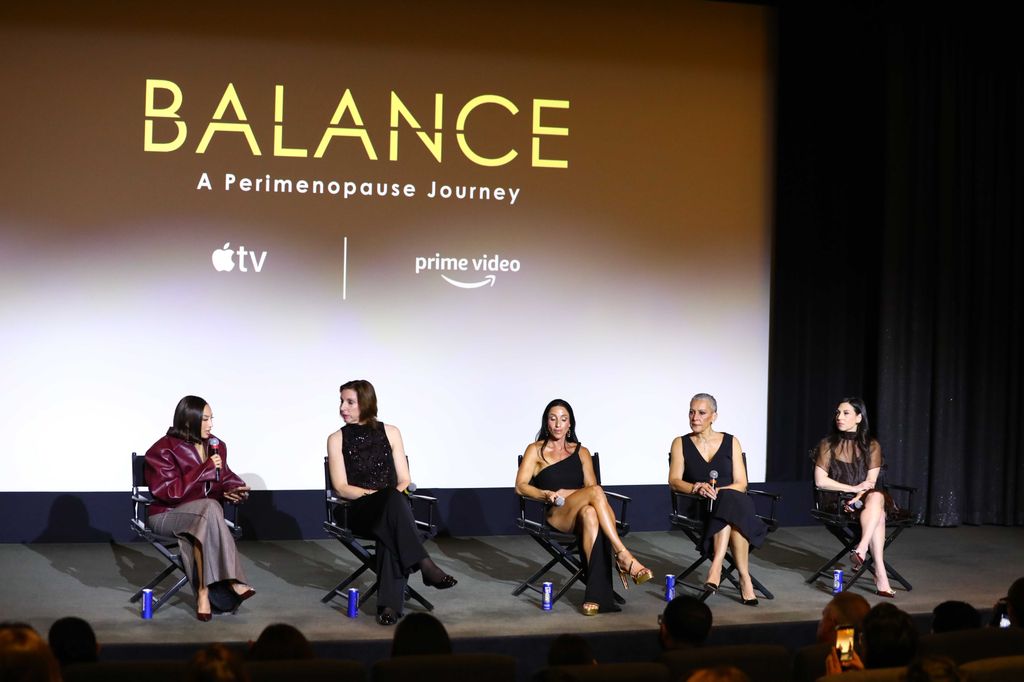
In the programme you'll see award-winning Jain monk filmmaker Sadhvi Siddhali Shree opting for HRT treatments, while Sadhvi Anubhuti opts for the more natural approach to dealing with her symptoms as they speak to various experts around the world.
"The monks had two different journeys and made their own choices about hormones and when it was the right time for them. And that's what's so important with all of this work to make a change," says Dr Newson. "It's got to be a woman's choice."
BALANCE: A Perimenopause Journey is available on Apple TV and Amazon Prime from 30th of January