

Anyone who has ever been in love knows that relationships are complicated. Once the initial butterfly phase of the romance is over, it's perfectly normal to fall out of love with your partner or drift apart. People change, couples evolve and you know, sometimes it just doesn't work out. The best thing you can do when that happens is to communicate. Express how you feel with respect and honesty, then negotiate a civilised split or look for solutions together if you both think the relationship can be saved.
But on the flip side of that relationship coin, there's a much less ideal situation: your partner decides to completely hide the fact they're no longer in love, maybe even pretending everything's just fine. Out of cowardice or convenience, they let the relationship slowly die without ever letting you know, and then blindside you with a breakup. You thought getting ghosted was bad - but you've just been Banksyed!
What is 'Banksying'?
Psychologist and author Lara Ferreiro went on a deep dive to explain the toxic relationship trend known as 'Banksying' - a silent emotional breakup that has devastating consequences for the person on the receiving end. And it can happen to you at any age, whether you're part of a young couple, you're married or you're an experienced mid-lifer who is back in the dating scene.
 © Getty Images/iStockphoto
"There are people who fall out of love but keep acting like everything's fine - until one day, seemingly out of the blue, they tell you they just don't love you anymore. You're left with a broken heart and unanswered questions... They've already gone through their grieving process [about the end of the relationship] in silence, but you then have to start your process from scratch with an open wound."
Why is it called 'Banksying'?
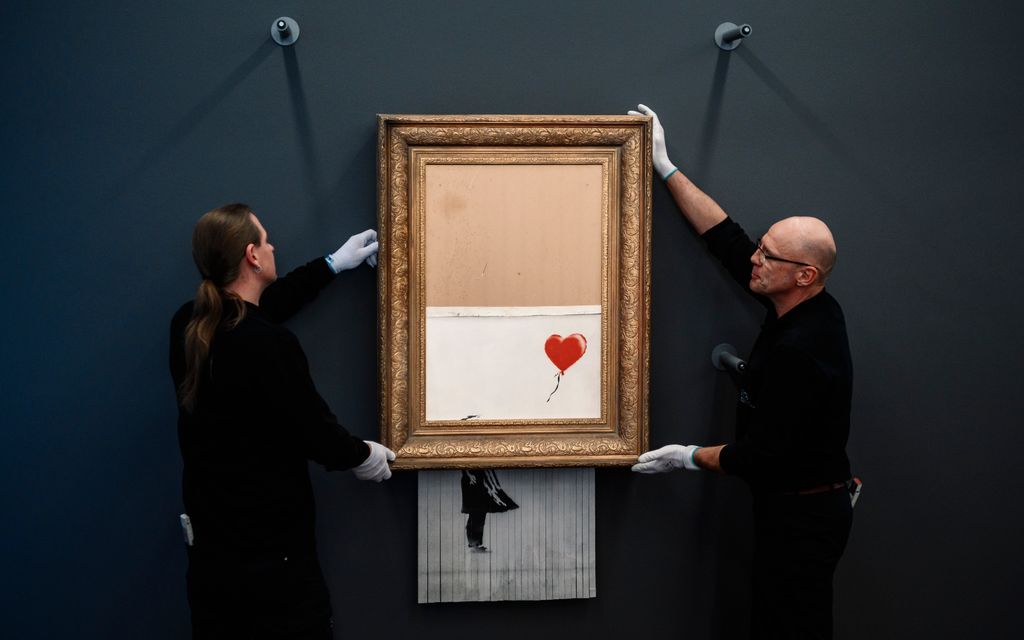
The trending term is inspired by the anonymous and elusive British street artist Banksy, whose works famously pop up in public spaces without warning. We can more specifically look to his canvas Girl with Balloon, which famously self-destructed during a Sotheby's auction in 2018, just after selling for £1 million ($1.4 million). Unbeknownst to the auction's bidders, Banksy had built a shredding mechanism, triggered after the piece was sold to its new owner, into the artwork's frame. (By the way, the shredded version was later renamed and is now appropriately titled Love is in the Bin.)
"The term 'Banksying' is inspired by the surprise self-destruction of Banksy's £1 million canvas artwork Girl with Balloon, which shredded itself suddenly without warning"
The "banskying" breakup is when your partner ends a relationship slowly, premeditatedly and secretly until the shock announcement that they're dumping you. Basically, your relationship is suddenly shredded right in front of your eyes.
 © Getty Images
Incredibly, the process can last months or even years as your partner emotionally disconnects while seamlessly keeping up an appearance of normalcy. "They fall out of love without telling the other person, going through their own grieving process in silence. Once they've moved on emotionally, they leave you. Sometimes it happens not 24 hours after you've been sexually intimate or even talked about having children." The psychologist notes that although the process can last between six months and a year, it may be even longer if the couple live together or there are already children involved.
Signs you're experiencing 'Banksying'
The silent breakup, according to Lara Ferreiro, begins with tiny gestures. The person suffering this slow and silent form of abandonment usually notices that something is wrong, but often rationalises or justifies it.
Key warning signs include:
- There's less sex and physical intimacy than usual.
- You receive fewer calls and text messages checking in.
- There are fewer shared plans, or they no longer seem interested in dreaming of future projects together.
- You are clearly no longer their priority.
"Your partner tells you it's just that they're stressed, that it's work - but their behaviour still just isn't making sense. Maybe they've stopped doing things with you, started criticising you in public or making you feel invisible. And when you ask what's wrong, they respond: 'Nothing'." Or when you try to ask what's really going on, they make you feel guilty for questioning them. "It's emotional gaslighting," warns Ferreiro.
 © Getty Images
Who is likely to 'Banksy' their partner?
According to the psychologist, there isn't a single profile, but there are certain patterns.
- Narcissistic component: Prioritising their own emotional comfort above all else.
- Avoidant personality: These are often people with a deep-seated phobia of commitment.
- Emotional immaturity: Some individuals simply lack the skills to handle difficult conversations.
The Banksying partner might be doing it deliberately, or they may not be aware of their toxic behaviour. "But being unintentional doesn't mean it doesn't cause harm. There are people who don't know how to put what they feel into words, but that doesn't exempt them from responsibility. The harm is still there," she points out.
"Their behaviour isn't making sense, and when you ask what's wrong, they respond: 'Nothing'. It's emotional gaslighting"
Ferreiro also describes another common pattern: those who wait for you to break up with them so they don't have to take the blame. "There are people who start 'Banksying', hoping the other person will give up on the relationship first. They gradually withdraw until their partner says: 'I can't take it anymore.' That way, they don’t look like the bad guy."
There are also those who drag out the relationship purely out of self-interest. "There are those who are falling out of love but continue to live with their partner because they’re financially dependent. They let them continue to pay the rent," she explains.
Common Behavioural Patterns
Ferreiro describes two common patterns seen in people who engage in 'Banksying':
- Waiting to be the victim: Hoping their partner will eventually get fed up with their behaviour and end the relationship. "This allows them to avoid looking like the 'bad guy'."
- Acting out of self-interest: Prolonging the relationship despite their unhappiness because of benefits like financial security, but they're emotionally checked out. "Meanwhile, they're letting you pay their rent."
What are the stages of the process? First, emotional disconnection (coldness, less contact), followed by ambivalence (warm then cold again), and finally reverse blame, where they blame you for them falling out of love. "They're actually just avoiding their own responsibility," she concludes.
The devastating consequences of Banksying
The psychological consequences of 'Banksying' can be very serious. "As a therapist, I've treated a lot of people who have symptoms like anxiety, insomnia, heart palpitations, panic attacks, and even depression. The grief it causes is brutal," states Lara Ferreiro.
 © Getty Images
One of the most frequent side effects for the partner who has been Banskyed is a drop in self-esteem. After getting Banskyed, "you can't help but wonder what you did wrong. You feel like you're not enough, you're not attractive, you're not worthy. You think that if you were prettier, smarter, more understanding, they wouldn't have left you."
During the process of Banksying, "there's a progressive self-negation. You become less vocal, minimise your needs, and become more compliant and emotionally dependent. Some women have told me they thought, 'If I complain, I'll overwhelm him more.' That's devastating," she adds.
How to detect and prevent it
The key is not to ignore your intuition. "Some people have told me, 'I felt like something wasn't right.' You have to listen to that inner voice. If you notice less contact, fewer plans, less affection, if they... don't want to have sex but also don't want to talk about what's happening... Something is going on," she warns.
"Getting Banksyed doesn't mean you're not enough - it just means that your partner is immature, cowardly or selfish"
She also recommends developing your own emotional intelligence and working on overcoming any fears you might have of speaking up. "You have to be brave enough to name what you feel, even if you're afraid of your partner being uncomfortable. If they don't want to be with you, it's better to know sooner than later."
Healing and moving forward
When experiencing 'Banksying', Lara advises accepting the pain of the situation, asking for help if you need to, and never justifying your partner's behaviour. "It's not that they were stressed out or afraid of commitment. It's that they didn't love you enough, and that's not your fault."
 © Getty Images
Mourning your loss is essential. "The other person might be a year ahead of you emotionally [in terms of letting go after a breakup]. Now it's your turn to go through all the phases: shock, guilt, anger, sadness, hope, fear of loneliness, acceptance and learning. It's a process that can often take anywhere from six months to a year."
To help close the cycle:
- Write down what you've experienced to put words to what happened.
- Go to therapy.
- Go no-contact with the person, blocking them on your mobile and social media if necessary.
And above all, stop blaming yourself: "Rewrite your story. This speaks to who he or she is, not who you are. Getting Banksyed doesn't mean you're not enough - it just means that your partner is immature, cowardly or selfish."
About the expert: Lara Ferreiro is a couple's therapist, psychologist and author of the Spanish-language book No More Jerks: The Definitive Method for Loving Yourself and Finding Your Perfect Partner (Ni un capullo más. El método definitivo para quererte y encontrar tu pareja perfecta).