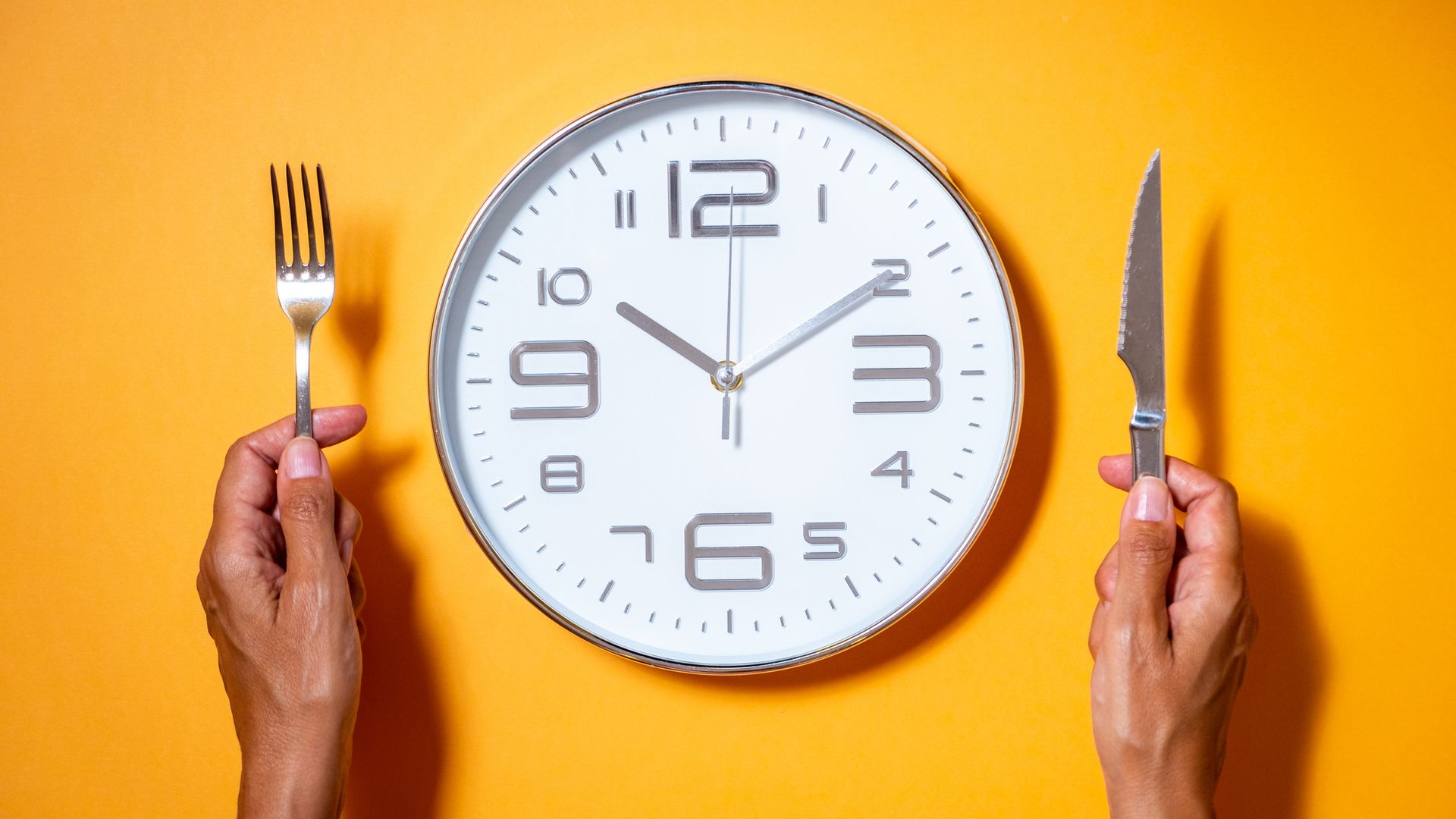
You may have heard celebrities such as Jennifer Aniston, Halle Berry, Hugh Jackman or Chris Hemsworth regale the benefits of 16:8 intermittent fasting but what does it exactly entail? First of all it centers around TDE, otherwise known as 'time restricted eating' which means fast for 16 hours and consume all your food within an eight hour period. It may seem quite laborious to end your last meal of the day around 4pm, but research shows that fasting for 16 hours helps burn fat, reset your metabolism and lose weight overall.
So what's the best way to go on this diet? Here are my top tips.
Studies show that 16:8 works better if you don't eat too late and start your first meal of the day earlier. So rather than start your breakfast at 11am and your last meal at 7pm, I suggest starting your first meal at 9am and finishing your last meal around 6pm. Why? Fasting works better if you don't go to bed on a full stomach and have your last meal at least four hours before bedtime. Not only will you sleep better but the diet will work better for you.
Eating within an eight hour window does not mean you can gorge on processed foods and fizzy drinks and still expect the same results. Ensure you are getting at least 25g of lean protein at each meal and at least 25g of fibre a day. You can do this by focussing on consuming plenty of wholegrains, plants and legumes as well as fatty fish, nuts and seeds.
One thing you need to avoid as much as possible is alcohol. A glass of wine can be around 225 calories and if you're restricting your eating within an eight hour window you need to fill it with nutrient dense calories rather than empty ones. Drinking also can lead to unnecessary snacking. It also spikes your blood sugar which in turn contradicts the benefits of fasting.
One of the benefits of TDE is that you have more time to sleep. A good night's sleep is fundamental for rest, relaxation and weight loss. The better night's sleep we have, the less likely we are to experience energy crashes and reach for carb-rich and sugary filled snacks. Sleep is key towards ensuring your cortisol levels don't spike. When your cortisol levels spike it derails your hormones and can lead to belly fat storage.
Aim to drink around eight glasses of just plain water. If it's a particularly hot day or if you're having a physically active one, drink according to your thirst levels. You may need up to ten glasses. If you're not keen on plain water, add a slice of lemon or lime to add a little flavour and vitamin C.
9am: Two-egg omelette with sourdough toast, avocado, feta and rocket
11am: Blueberries with Greek yogurt
1pm: 200g grilled salmon with sweet potato, spinach, cherry tomatoes, pumpkin seeds and olive oil
5pm: 150g grilled chicken with roasted broccoli, brussel sprouts, kale with a tahini dressing
Faye James is a Sydney-based accredited nutritionist and author of The 10:10 Diet, The Menopause Diet, The Long Life Plan and her latest books The Perimenopause Plan and Everyday Easy Vegan
Sign up to HELLO Daily! for the best royal, celebrity and lifestyle coverage
By entering your details, you are agreeing to HELLO! Magazine User Data Protection Policy. You can unsubscribe at any time. For more information please click here.
Yoghurt, kefir and kimchi are popular, but experts warn against thinking they're a 'miracle' cure. Learn the real benefits of fermented foods for your health
As safety concerns have been raised around protein powders, a nutritional therapist reveals what to look for when choosing one and who actually needs to use it
Have the TikTok doctors finally found the cure for unbearable migraine pain? The experts debunk the McMigraine Meal myth and reveal the science behind the viral trend
The Viking Diet is hailed by experts for weight loss and anti-ageing. Learn its principles, essential foods, and how it compares to the Mediterranean diet