
Is spending eight hours a day at your desk leaving you with aching muscles? A sedentary lifestyle often goes hand-in-hand with an office job, but with some simple stretches and movement breaks throughout the day, you can ease the discomfort from prolonged periods of sitting. We caught up with Rebecca Bossick, Co-Founder & Lead Physiotherapist at One Body LDN, to discover the best stretching routine to undo hours of sitting in just a few minutes.
Why sitting hurts your body more than you think
You may think that sitting down all day will cause less strain on your body than being active, but anyone who is used to spending long periods at a desk will attest to the fact that it can lead to aching and stiffness.
"Chances are, you spend most of your day sitting, whether on the commute, at your desk, in meetings, even on Zoom calls at home, and while it might feel harmless, long hours in a chair quietly take a toll," Rebecca says. "Sitting for nine hours or more a day isn’t just uncomfortable, it can actually weaken your muscles, stiffen your joints, and make your body less resilient. One study found that people sitting that long had a 90 per cent higher risk of sarcopenia, the age-related loss of muscle mass and strength, than those who sat for less than four hours, while another linked over ten hours a day to a higher risk of heart problems, even in people who exercise regularly."
 © Getty Images/iStockphoto
So what actually happens when we persistently sit down for a long time? "Our bodies aren’t designed to stay still for long periods because when we sit too long, muscles switch off, circulation slows, and joints stiffen, causing posture to adapt in ways that gradually affect both how we move and how we feel," the physiotherapist explains.
"Physically, prolonged sitting shortens hip flexors, weakens glutes, tightens hamstrings, and encourages forward head posture, which strains the neck and shoulders, while mentally, it reduces blood flow and oxygen to the brain, leaving concentration, energy, and mood impaired."
So even if you may feel focused on your work, your body may be sending quiet signals that something isn't right. "Over time, what starts as minor discomfort can quietly reshape the body and your energy, evolving into stiffness, weakness, and chronic aches that make everyday movement harder," Rebecca says.
A stretching routine to undo hours of sitting
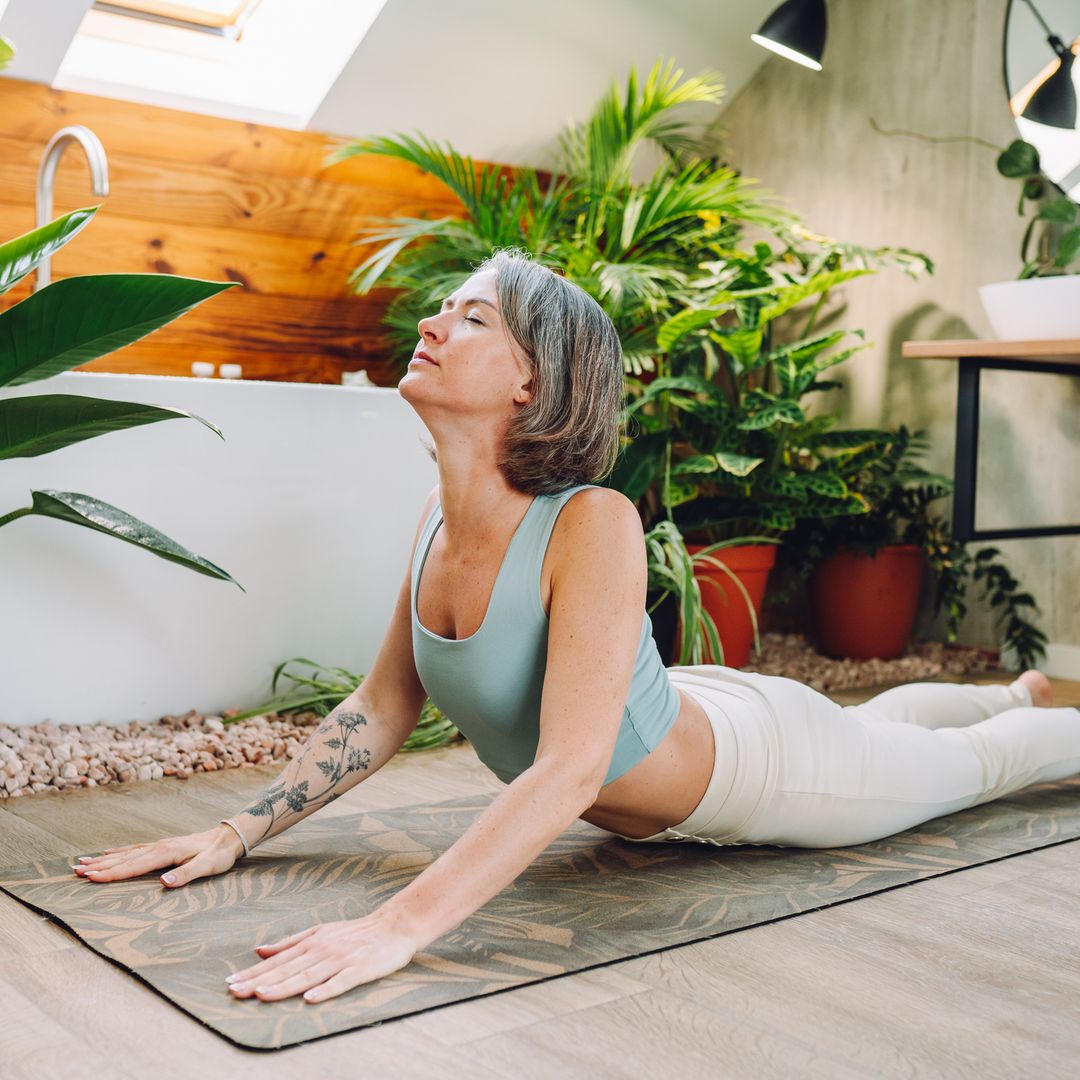
Fortunately, you don't have to quit your day job or spend all day at the gym to reverse the impact of sitting on your body. Rebecca has shared a short, daily stretching routine to restore mobility, ease tension and improve posture. Try this after work, at lunch, or whenever you have a moment:
 © Getty Images
- Hip Flexor Stretch (1 min per side): Kneel with one leg forward, gently pushing the hips forward to open tight flexors.
- Seated Spinal Twist (30 secs per side): Rotate from the waist while sitting tall to release stiffness from hunching.
- Chest Opener (1 min): Stand in a doorway, hands at shoulder height, leaning forward to expand the chest and shoulders.
- Hamstring Stretch (1 min per leg): Reach gently toward your toes while keeping your spine long.
- Cat-Cow Stretch (1 min): On hands and knees, alternate arching and rounding the spine to mobilise the back.
"Over time, your muscles 'remember' how to move freely, stiffness eases, and posture starts to feel natural again, and taking a few minutes to stretch can leave you feeling more alert, energised, and ready to tackle the rest of your day," she says.
Quick-fixes to build into your day
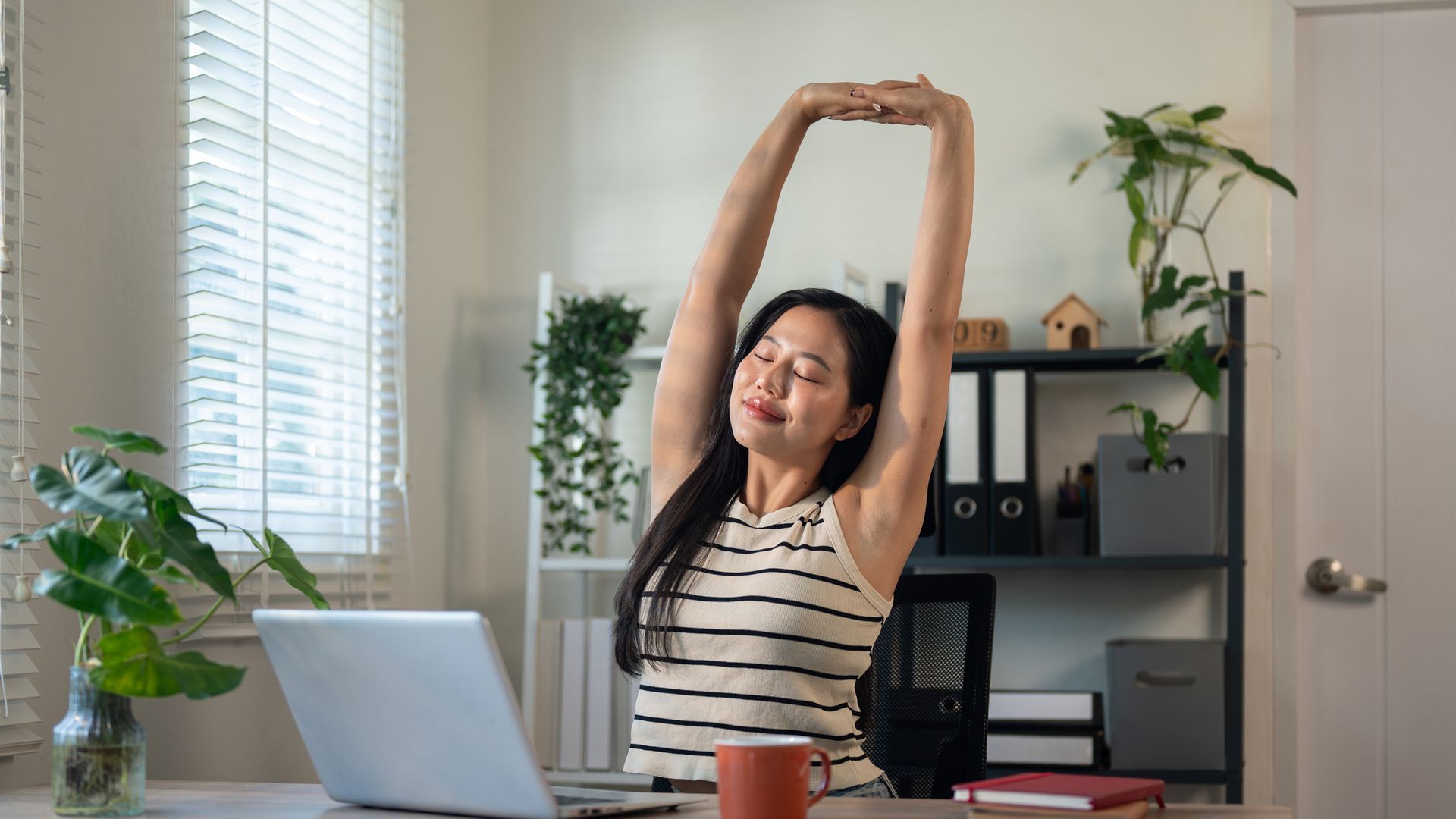
Meanwhile, some simple changes to your daily routine and intentional movement breaks throughout the workday can help prevent aching muscles and stiffness from developing.
"Even if your workday keeps you glued to a desk, staying active doesn’t have to mean a full workout, as small, frequent bursts of movement, what I call 'movement snacks,' can be spread throughout the day to keep your body engaged," Rebecca explains. "You can set a timer every 30 to 45 minutes to stand up, stretch, or take a short walk, and easily incorporate desk-friendly exercises like shoulder rolls, ankle circles, glute squeezes, or gentle torso twists."
The physiotherapist continues: "Simple swaps, like standing during phone calls, using a Swiss ball instead of a chair, or taking a quick lap around the office, help wake up muscles, improve circulation, and break the cycle of stillness without disrupting your workflow. While they might seem trivial, these little interventions reduce stiffness, restore circulation, improve posture, and even sharpen focus by increasing oxygen flow to the brain, and over time, they can transform your daily work experience, boosting energy, easing stress, and strengthening resilience, all without needing a complete lifestyle overhaul."
And consistency is key. "By pairing movement with daily routines, your body is constantly reminded that it’s meant to move, making these small actions one of the most effective ways to counteract the hidden costs of a sedentary lifestyle."