
Wellness can often feel more expensive and complex than ever these days. In a world obsessed with tailored supplements, sleep trackers, meticulously optimised routines and near-clinical sleep protocols, simply enjoying a good night's rest can feel like a mammoth task.
Against this backdrop, it's easy to see why viral social media trends promising quick, stripped-back solutions are taking off—with one of the latest crazes being the practice of showering in the dark before bed.
The online noise surrounding the habit is rivalled only by the claims made by its enthusiasts. Advocates swear it acts as a total sleep booster, ideal for tackling insomnia, resetting your body clock, or slipping into a deeply relaxed state before turning in for the night.
Showering in the dark for better sleep: myth or reality?
Showering in pitch black sounds more like a recipe for a bruised shin than a wellness hack. However, the trend doesn't actually require complete darkness.
 © Getty Images
While a few brave souls do navigate the shower sight unseen, most people are simply talking about using very dim lighting, letting natural light filter in through a window or keeping artificial light down to a bare minimum.
Across social media, those who swear by it claim this tiny tweak noticeably boosts their sleep quality. They frame it as a moment of pure mindfulness—a sensory wind-down ritual where you focus entirely on physical touch and sound: the hum of running water, the warmth on your skin and the steady rhythm of your breath.
To unpack the biological science behind it, we spoke to Dr Francisco Díaz García, a specialist in Clinical Neurophysiology and Sleep Disorders.
The neuropysiologist offers a crucial perspective right off the bat. "Our brain relies on light as its main indicator for telling day from night. As dusk falls and light gradually fades, the brain begins releasing melatonin—the hormone that preps us for sleep. Keeping bright lights blaring right up until you climb into bed completely disrupts that natural process," he explains.
"It is clinically proven that taking a hot bath or shower 60 to 120 minutes before going to bed makes it much easier to drift off"
In short, the benefit isn't down to the shower itself, but rather the ambient light levels surrounding your entire evening wind-down.
Dr Díaz García is quick to draw a firm line between evidence-based habits and social media hype. "What is backed by science is gradually dimming the lights as bedtime approaches across your entire home, not just in the bathroom.
"Showering in the dark as a specific, isolated ritual hasn't been clinically studied, so it can't be officially recommended. The underlying biological logic is sound, but without direct clinical proof, it's a trend—not a medical intervention."
In other words, while showering in low light makes theoretical sense, it hasn't been proven as a standalone cure for a bad night's sleep.
"Gradually dimming the lights as bedtime approaches across your entire home, not just in the bathroom, is backed by science"
The science of thermoregulation: Why water temperature matters more than lighting
Whether a shower actually helps you sleep comes down to factors that have nothing to do with lighting, with thermoregulation being the real game-changer. Dr Díaz García points out that the true benefit lies in getting your timing and temperature right.
"It is clinically proven that taking a hot bath or shower 60 to 120 minutes before going to bed makes it much easier to drift off," the expert explains, breaking down the science behind it: "Hot water boosts your body temperature, and as soon as you step out, that temperature drops rapidly—mimicking the natural cooling process your body needs to trigger sleep. That mechanism works its magic whether the light is on or off."
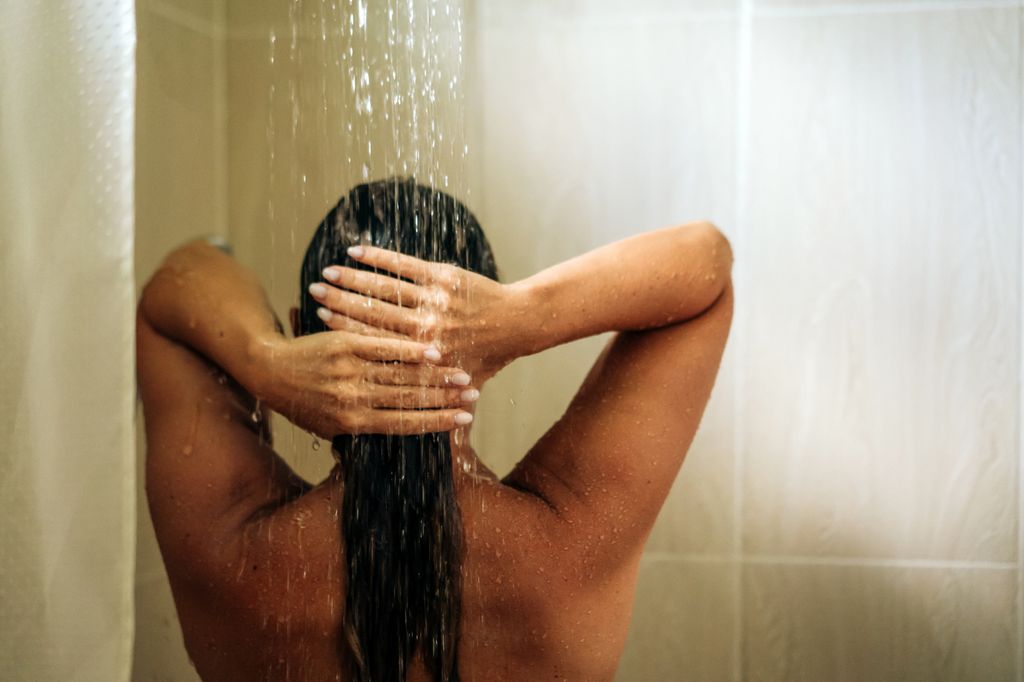
What's more, considering how common slip-ups in the bathroom are even with full visibility, the doctor offers a fair warning that tends to get brushed aside by viral trends: "Showering in complete darkness carries a very real risk of slips and falls—something these social media crazes rarely take into account."
 © Getty Images
Can a dark shower undo the effects of late-night phone scrolling?
The short answer is no. The expert is particularly firm on this point when it comes to teenagers and young adults, who are the most exposed to this sort of craze on TikTok.
"If you scroll on your phone at full brightness for hours, taking a five-minute shower in the dark isn't going to undo the damage"
The reason comes down to biology: a young person's circadian system is exceptionally sensitive to light at night. "Teenagers have a circadian clock that’s far more sensitive to night-time light than adults, as their brains react much more intensely to the exact same light levels, which already pushes back their natural bedtime. Scrolling on your phone at full brightness for hours and then taking a five-minute shower in the dark isn't going to undo the damage—it's already done," he notes.
Dr Díaz García is clear on what actually works: "What is genuinely backed by evidence is cutting down on bright lights and screens for an hour or two before turning in, sticking to a consistent sleep schedule, and, if you want a shower to be part of your wind-down routine, opting for hot water with plenty of time to spare before bed. Turning off the shower lights on its own isn't a silver bullet."
The trend of showering in dim light fits right into modern wellness culture—aesthetically pleasing hacks promising massive results for next to no effort. While tuning into your senses in the bathroom might serve as a nice psychological cue to unwind, the real key to brilliant sleep remains respecting your body’s internal clock. Rather than buying into algorithmic social media hype, it's always best to stick to expert advice and evidence-based routines.


