

Are you guilty of checking work emails with your eyes half-open while your morning alarm is still going off? Some people haven't even rolled out of bed yet and they are already logging into social media or replying to messages while still tucked in.
The habit seems harmless, and sometimes it is simply automatic - we just chalk it up as another inevitable habit of modern life.
However, a growing number of psychologists are warning that looking at your mobile as soon as you wake up can alter how the brain copes with the rest of the day - and not in a good way.
As Professor Alfredo Rodríguez-Muñoz, Chair of Psychology at the Complutense University of Madrid, explains, when you look at your phone right when you wake up, your brain goes "from a state of recovery to a state of alert in a matter of seconds".
 © Getty Images
This abrupt shift has consequences. When the first things the brain receives upon waking are pending emails, negative news, urgent messages or constant social stimuli, the feeling of stress sets in before you've even had breakfast.
So the real issue isn't just a question of too many screens or wasting precious time in the morning. The problem has far more to do with how the nervous system starts the day.
What happens to your brain when you look at your phone immediately after waking up?
During the first few minutes after we wake up, the brain goes through a particularly sensitive period for regulating attention, cognitive activity and our emotional state. It is a sort of natural transition between rest and activity.
The trouble is that mobiles interrupt this process almost instantly. "The brain misses out on a gradual transition towards activation and goes straight into demand mode," explains Rodríguez-Muñoz.
Your brain doesn't really distinguish between a real emergency and the constant sense of urgency created by notifications - and that's why many people start their day already feeling rushed
It may seem small but this jump is significant, cognitively speaking. To your brain, waking up slowly, opening the curtains, moving around for a few minutes and having a peaceful breakfast is a world away from receiving an avalanche of information the second you open your eyes.
Why morning phone scrolling is so addictive, according to science
For many, waking up and grabbing their phone is an almost automatic impulse, even when they aren't expecting any important messages. But why does it happen?
 © Getty Images
According to Professor Rodríguez-Muñoz, when you're immediately grabbing your phone the minute you wake up, the mobile is no longer functioning purely as a technological tool. "It has become a psychological extension of your social, emotional and professional life," he says.
The brain quickly learns that every time you look at your mobile, it might find something new, rewarding or relevant on the screen - and this is where reward mechanisms associated with novelty and uncertainty come into play. Social networks, notifications and messages are all designed to trigger small, immediate rewards that create a habit. The brain anticipates this stimulation and ends up associating waking up with logging on.
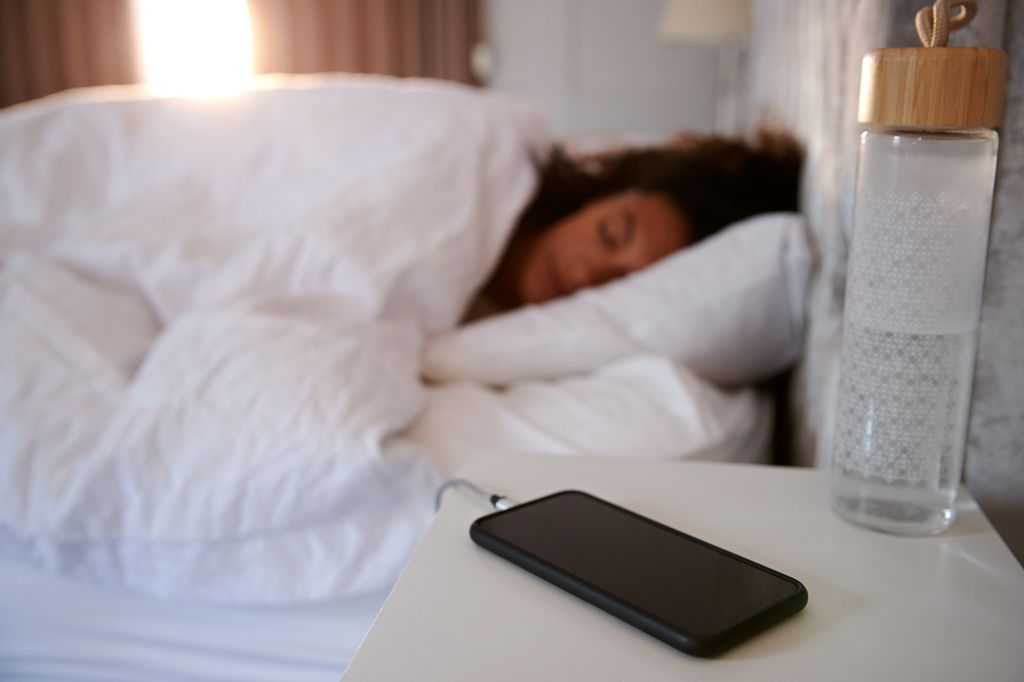
Adding to this dynamic is the fact that many people sleep with their mobile on the bedside table and use it as a clock to help them wake up - this means the connection literally begins the very instant the alarm goes off every morning.
The hidden link between morning screen time and chronic mental fatigue
This problem rarely stems from looking at your phone first thing in the morning every once in a while; it arises when this behaviour is repeated day after day. Staring at your mobile as soon as you wake up can foster a continuous sense of rushing, mental overload and psychological burnout.
"A lot of people already feel tired before they've even properly started the day"
When the brain enters "response mode" too early, you'll feel like you're living permanently at the beck and call of something else - emails to answer, messages to attend to, news to process - which is essentially an onslaught of constant stimuli.
In the long term, this hyperconnectivity can encourage irritability, difficulty switching off, fragmented attention and the feeling that you're always living life in the fast lane. Often, there's a strange paradox: you feel like you've been constantly busy all day but you haven't really accomplished anything.
What's draining you isn't always the number of tasks on your to-do list - it's the constant mental activation.
How a bad morning routine is secretly ruining your nighttime sleep
One of the most interesting points highlighted by the specialist is that morning and evening habits tend to feed into one another. Someone who starts the day glued to their mobile often ends it the same way - checking messages in bed, watching videos late into the night or replying to emails.
All of these actions can lead to a restless night. "The brain needs clear moments of disconnection to regulate stress and prepare for sleep," explains Rodríguez-Muñoz.
When we spend the entire day connected, that disconnection practically never arrives. The brain remains in a continuous state of alert and attention that hinders psychological recovery. The problem isn't just the famous blue light from screens; the main issue is mental hyperstimulation.
 © Getty Images/iStockphoto
"Sometimes we try to do the impossible: go straight from checking emails or social media in bed to falling asleep immediately," the expert points out, but sleep doesn't work like a light switch.
The brain needs a progressive transition to wind down activation and enter a state of rest. When that transition disappears, many people find it incredibly difficult to switch off, even when they are exhausted.
The 15-minute morning rule: A simple trick to get the day started
The good news? "You don't need to create a miraculous morning routine," explains the psychologist. "Sometimes the most important change is much simpler: letting the brain wake up before plugging it into the noise of the world."
Delaying phone use by just 15 or 20 minutes can already help to better regulate mental activation. "Make sure the first thing your brain sees when you wake up isn't a notification," he says.
By opening the window, getting some natural light, moving a little or eating breakfast without immediate stimuli, you're allowing the brain to make that transition more gradually.


