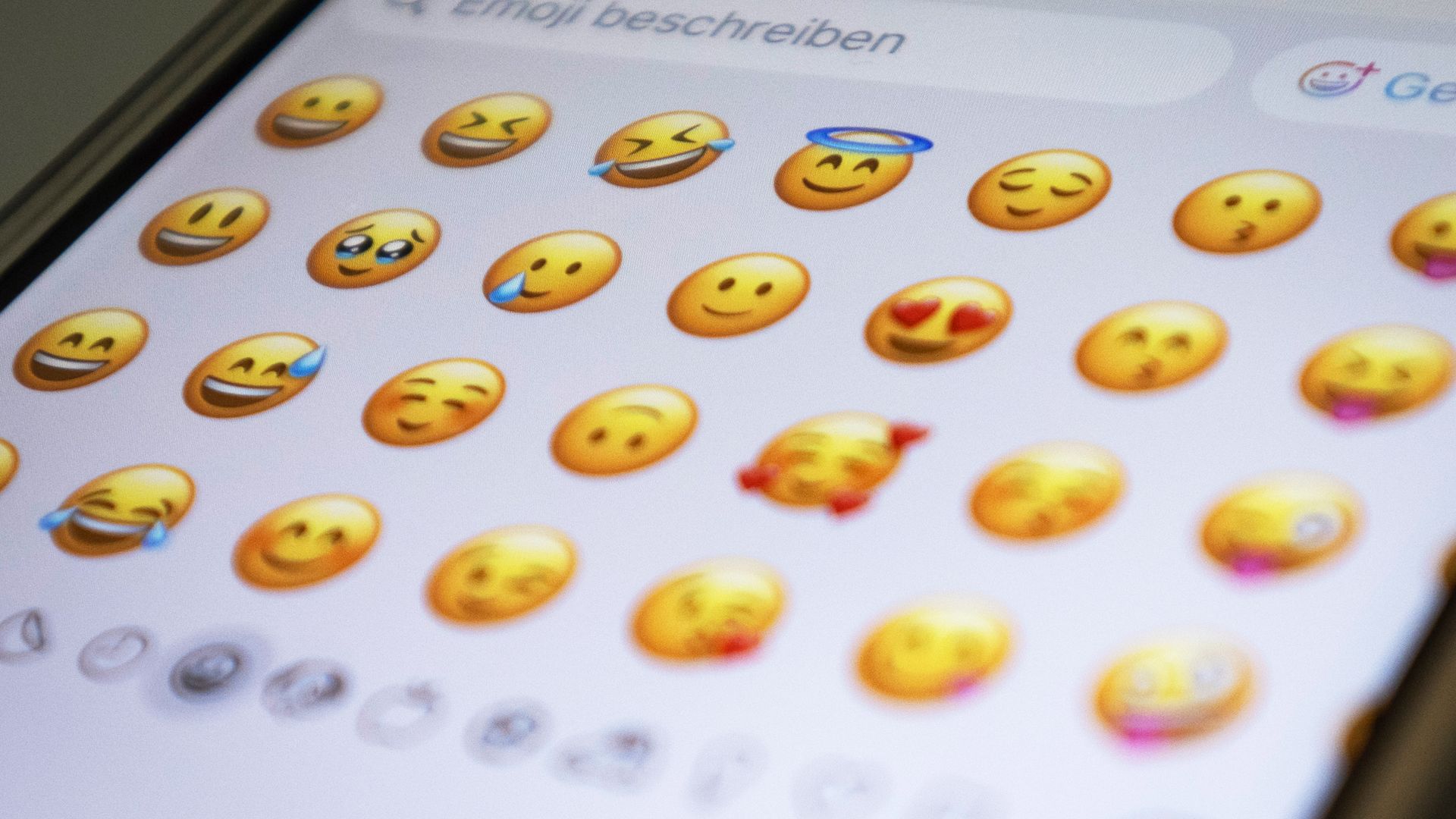

Thursday 17 July marks World Emoji Day, and this year, there's a mystery to solve.
Emojis can be useful for a quick reaction or to express how you're feeling, but the language of emojis is getting increasingly complicated, leading to misunderstandings and confusion.
Many emoji users from older generations can relate to being bamboozled by their younger counterparts' messages, or being laughed at by younger relatives for their own emoji use. That's because, somewhere along the way, emojis have taken on different meanings and significance for different generations.
 © Getty
Noël Wolf, Linguistic and Cultural Expert at language learning platform Babbel.com explains more:
"Emojis may feel like a universal language; but in reality, they behave more like digital dialects, fluid, contextual, and shaped by age, subculture, and platform norms.
"While older users often interpret emojis literally, younger generations, particularly Gen Z, have repurposed them into a form of expression, rich with irony, ambiguity, and in-jokes born from internet culture."
Babbel's data shows that UK Google searches for "emoji meaning" hit a record high this March.
That's why they've collaborated with Emojipedia, the world’s leading emoji resource, to put together a list of the top ten emojis that are most commonly misread, misused or interpreted differently between generations.
 © Getty
Now, you can finally make sense of those messages in the family group chat…
1. Skull
💀
Older generations often - understandably - use this emoji to reference death, danger, or similarly dark themes.
Younger generations, however, tend to use this to say "I'm dead" - expressing laughter and amusement.
2. Thumbs Up
👍
A particular favourite among dads, older generations will use the thumbs up to sincerely express approval, agreement, or encouragement.
Somewhere along the line, though, Gen Z have taken this emoji as a sign of passive aggression or insincerity - they're much more likely to use it ironically.
3. Slightly Smiling Face
🙂
Another emoji that now falls into the category of passive aggression or insincerity, some younger users might be offended if they receive this emoji.
But older generations often use this emoji in good faith, trying to express friendliness or politeness.
4. Loudly Crying Face
😭
This one seems like it should be simple, right? A crying emoji would surely convey disappointment or sadness.
Not for younger generations, it seems. This crying emoji more often expresses laughter or emotional overreaction in a humorous way.
5. Person with White Cane
👨🦯
When older generations use this emoji - which is, admittedly, a rare occurrence anyway - it means exactly what it looks like: a representation of visual impairment or accessibility.
For younger generations, however, its use is usually sarcastic, representing wilful ignorance (or "pretending not to see")
6. Moai Emoji
🗿
Most people probably don't even know the name for this one, let alone use it with any sort of regularity.
While older generations will interpret this quite literally as a statue, Gen Z are known to send this ironically as a representation of emotional detachment or deadpan humour.
7. Person Standing
🧍
While many people would just take this to mean a person standing, Gen Z often employ this one to convey awkwardness, discomfort or passivity in a situation.
8. Billed Cap
🧢
Older generations generally use this one for what it is - a cap.
But, in Gen Z slang, the term "cap" can actually mean "lie" - so when a person says "no cap", it means "telling the truth".
9. Nail Polish
💅
While older generations will use this to reference beauty, self-care or manicure plans, Gen Z will use it a little more liberally to symbolise confidence, sass, indifference or showing off.
10. Pleading Face
🥺
And finally, the pleading face - often thought to mean disappointment or sadness by older emoji users.
But for younger generations, this one has a plethora of meanings: cuteness, vulnerability or "simp" behaviour in an exaggerated or performative way. (And, for those who aren't sure, "simp" means over-the-top affection or admiration, usually in a playful or ironic way).
It's quite astounding how differently we see emojis and what they mean for different people, and it's easy to see how miscommunications can occur.
But it's not all bad news. Noël Wolf feels there is a way forward after all:
"Bridging the emoji gap doesn’t mean we all need to use emojis the same way, part of their appeal is how flexible and creative they are. Being aware however, that these symbols can mean very different things depending on who may be using them, is a helpful first step.
"Just like with spoken language, digital communication works best when we’re attuned to context, tone and the person you’re communicating with. It’s not about fixing the way we use emojis, but becoming more fluent in how different groups and generations express themselves online. That kind of awareness can make our everyday conversations, whether with friends, family or colleagues, feel a lot more connected and less prone to misinterpretation."