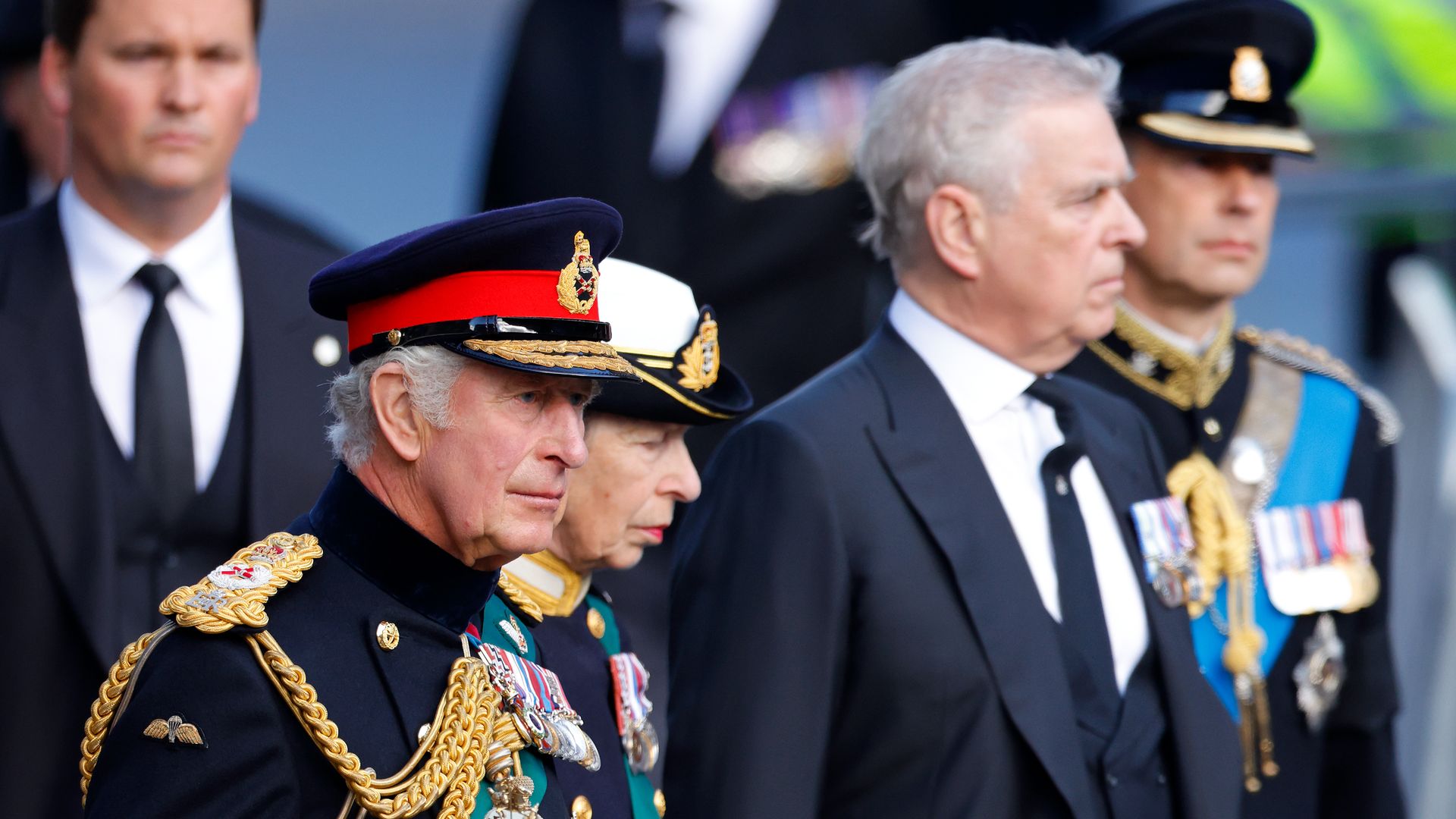

Andrew Mountbatten Windsor, formerly known as Prince Andrew, was granted a new surname on Thursday after being stripped of his style, titles and honours by his older brother the King. The dramatic decision came after mounting public pressure and renewed scrutiny into Andrew's ties with convicted paedophile Jeffrey Epstein, and following the release of his accuser Virginia Giuffre's posthumous memoir.
So why was Andrew given the surname Mountbatten Windsor, the surname that Prince Harry and Meghan Markle's children Archie and Lilibet also share? This decision is in keeping with royal tradition.
Mountbatten Windsor is the surname given to descendants of Queen Elizabeth II who do not already have the title of Prince or Princess or the style of Royal Highness – which is now Andrew's case following the removal of his style, titles and honours. As an aside, at the time of Archie and Lilibet's births, they had not been granted their Prince and Princess titles yet – this only happened when King Charles took the throne in 2022 because according to a 1917 Letters Patent, the children of the monarch's son are entitled to be princes or princesses. Therefore, they were known as Archie Harrison Mountbatten Windsor and Lilibet Diana Mountbatten Windsor at birth, until their grandfather became monarch.
The origins of Mountbatten Windsor
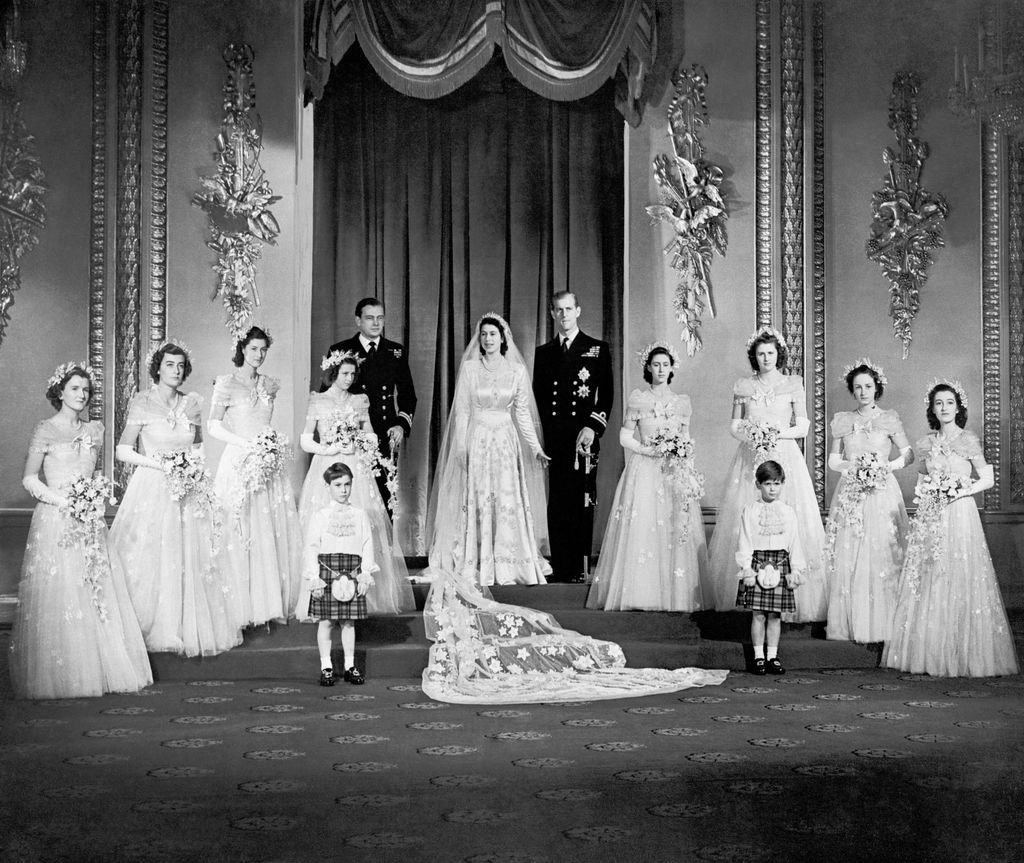
Mountbatten Windsor is a combination of Queen Elizabeth II's Windsor surname, and Prince Philip's adopted surname of Mountbatten. Philip, who was born Prince Philip of Greece and Denmark, assumed the name of Philip Mountbatten when he became naturalised. He used this name serving as a Lieutenant in the Royal Navy.
 © Getty
Buckingham Palace's website explains that the late Queen and Prince Philip "decided that they would like their own direct descendants to be distinguished from the rest of the Royal Family" by using the surname Mountbatten Windsor. The surname Windsor (and not Mountbatten Windsor), meanwhile, was used by all the male and unmarried female descendants of the late Queen's grandfather George V. Therefore, for her direct descendants, Queen Elizabeth II wanted a differentiation.
The use of Mountbatten Windsor
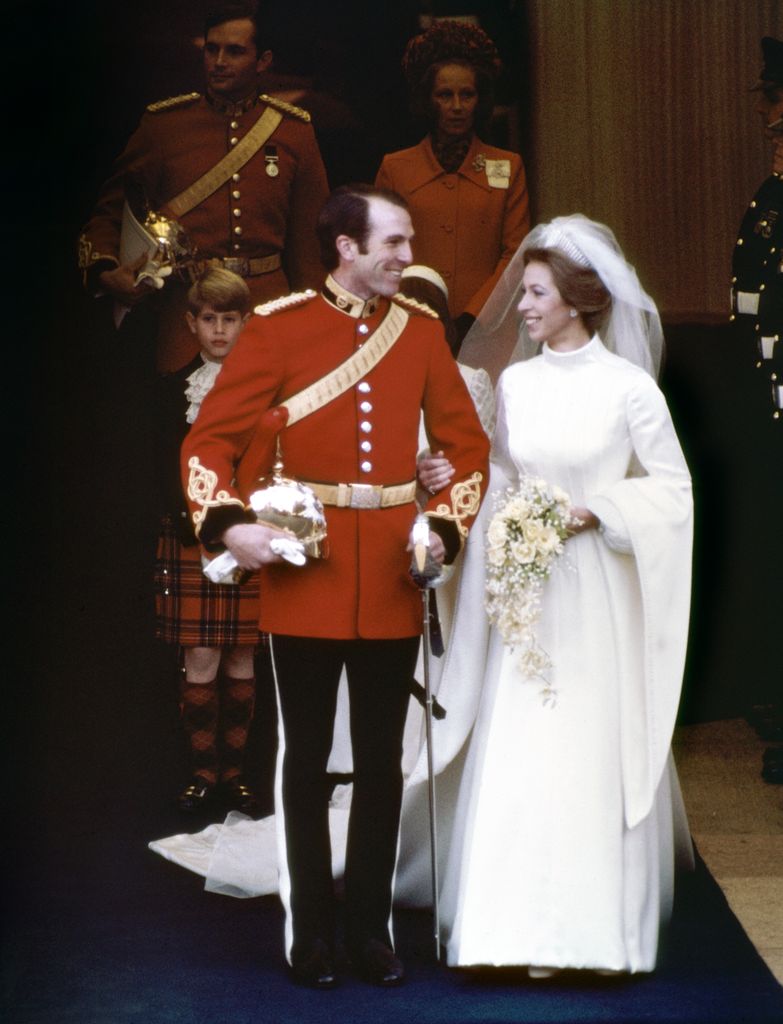
Its use was authorised by a 1960 Privy Council declaration, and since then, the surname Mountbatten Windsor has been used by the late Queen's children whenever they needed to, such as upon marriage. The surname Mountbatten Windsor first appeared on an official document on 14 November 1973, in the marriage register at Westminster Abbey for the marriage of Princess Anne and Captain Mark Phillips. And now Andrew finds himself needing to use it.
For the most part, members of the royal family who are entitled to the style of 'HRH Prince or Princess' do not need a surname, but if at any time any of them do need a surname, that surname is Mountbatten Windsor.
 © Getty
The King's statement
Buckingham Palace released a shocking statement on Thursday evening, revealing the change in Andrew's princely title and living arrangements. It read: "His Majesty has today initiated a formal process to remove the Style, Titles and Honours of Prince Andrew.
 © Getty
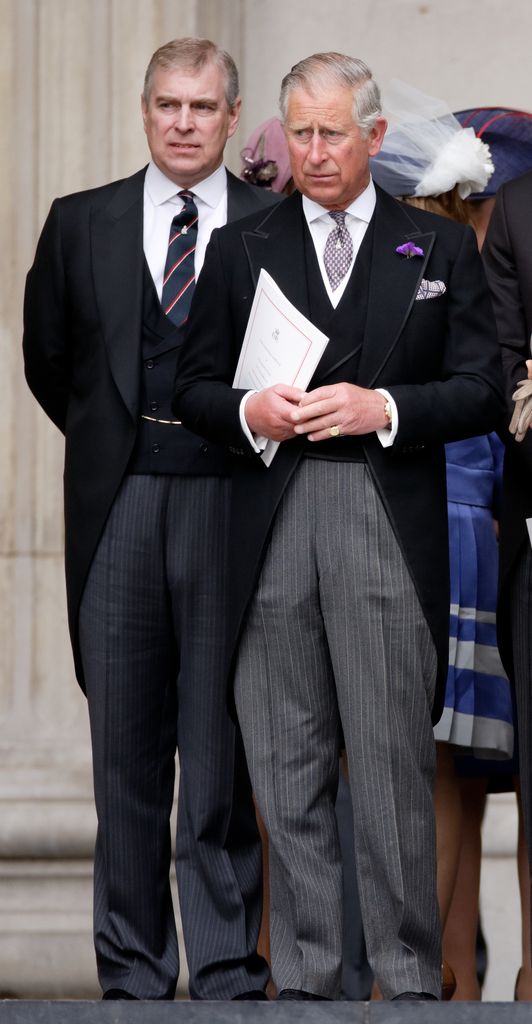
"Prince Andrew will now be known as Andrew Mountbatten Windsor. His lease on Royal Lodge has, to date, provided him with legal protection to continue in residence. Formal notice has now been served to surrender the lease and he will move to alternative private accommodation. These censures are deemed necessary, notwithstanding the fact that he continues to deny the allegations against him.
"Their Majesties wish to make clear that their thoughts and utmost sympathies have been, and will remain with, the victims and survivors of any and all forms of abuse."


