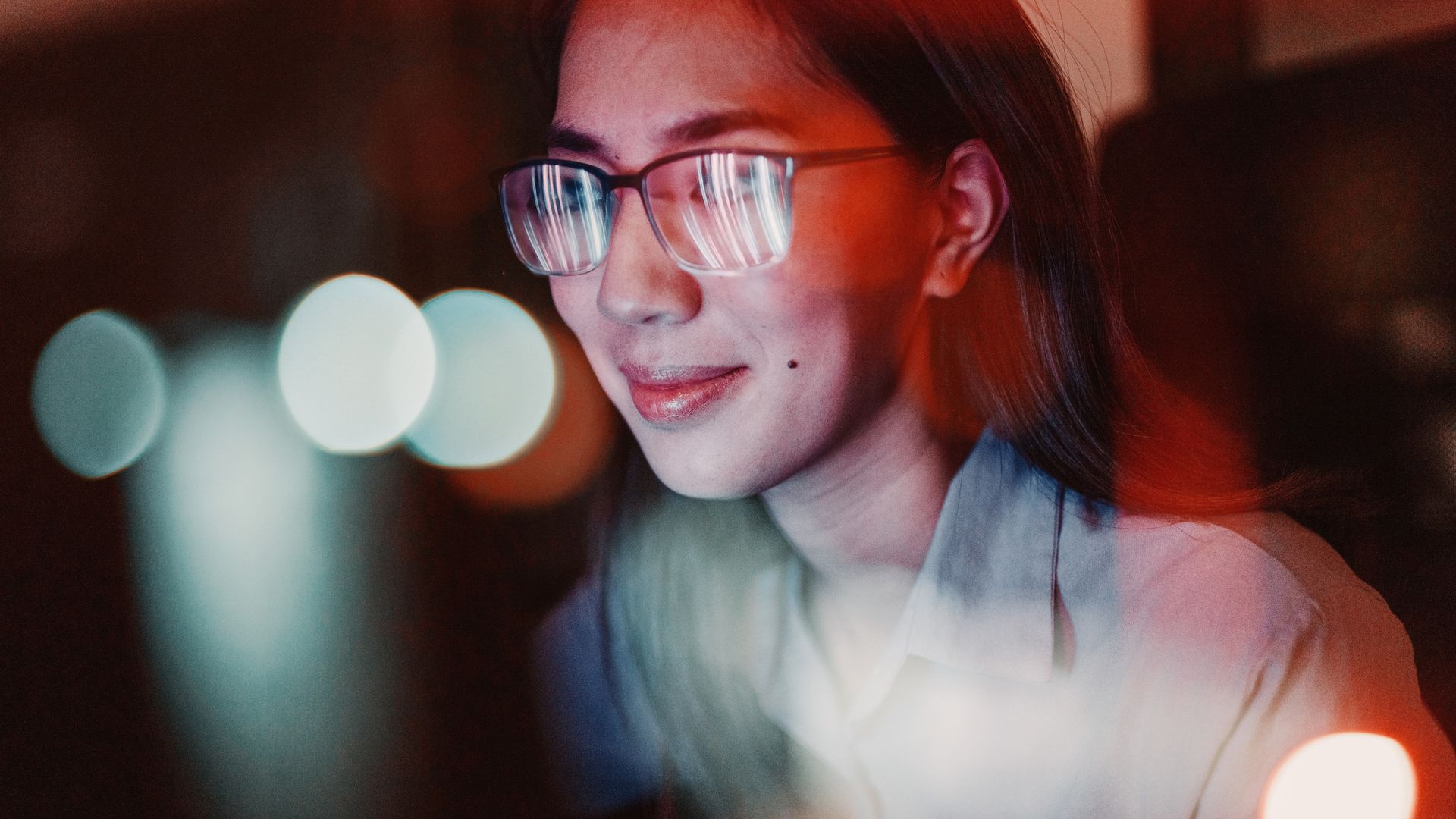
Blue light glasses have become an unlikely covetable accessory in 2025, and have even been trending on TikTok thanks to influencers sharing their love for the often oversized non-prescription glasses. While they were designed to reduce eye strain after hours of looking at screens, is there any evidence that they actually work? And should we all be using them? To weigh up the science and whether we should fall for the hype, we consulted an optometrist for an impartial view on whether blue light glasses really work.
What do blue light glasses do?
"Blue light glasses are lenses treated to reduce or filter a portion of high-energy visible (HEV) blue light emitted by screens and some LED lighting. Blue light glasses are made to filter out wavelengths of blue light that are associated with digital screen exposure. This is meant to help reduce screen glare and help with visual discomfort from using screens for a long time and promote better sleep," explains optometrist Dr. Martin (Mardee) O'Donnell, who says they are something he recommends to some of his patients.
"I always recommend that my patients use blue light glasses if they are using screens close to bedtime since blue light is known to suppress melatonin, the natural hormone that promotes sleep," he adds.
However, the optometrist says that they are not a substitute for healthy habits around screentime. "It’s important to remember that we are naturally exposed to blue light from the sun, which remains the largest source of blue light. The blue light we receive from our devices is a much lower intensity compared to the sun, but the exposure is closer and for longer periods of time. With that said, blue light glasses don’t block all blue light, and they don’t completely prevent visual fatigue, which is why it’s important to incorporate good screen habits in addition to blue light glasses."
Do blue light glasses help with headaches?
Some people swear by blue light glasses for helping with headaches caused by prolonged screen use, but evidence doesn't necessarily prove this to be true, according to Dr. O'Donnell. The optometrist says that while blue light glasses can sometimes help with headaches, there are a few caveats.
"The main causes of headaches when it comes to screen use are prolonged near-work, or focusing on close screens, reduced blinking, which leads to dry eyes and uncorrected refractive errors, or needing glasses or a prescription adjustment without realising it. Poor ergonomics and visual fatigue or discomfort are other leading causes, and I always tell my patients to make sure their screen isn’t positioned too close, is too bright or is positioned awkwardly, making their eyes strain," he says.
Instead, it may be that the blue light glasses reduce exposure to other headache triggers. "Current research does not definitively link digital-device blue light exposure to eye disease. So when we talk about headaches, the value of blue-light glasses may lie in reducing visual triggers (glare, high-energy wavelengths, screen contrast) rather than 'curing' headaches," Dr. O'Donnell explains.
"In practice: If a patient spends many hours a day at a computer, experiences eye strain or glare sensitivity, and finds themselves getting screen-related headaches, a pair of blue light-filtering lenses may reduce one piece of the puzzle. That said, if the headaches are chronic, frequent or unrelated to screen use, the first step is a full eye exam to rule out underlying vision issues or other causes."
What are blue light glasses recommended for?
While blue light glasses can be helpful for some people, there is no evidence to suggest they are much more beneficial than regular glasses. A public statement from the College of Optometrists says: "The best scientific evidence currently available does not support the use of blue-blocking lenses in the general population to improve visual performance, alleviate the symptoms of eye fatigue or visual discomfort, improve sleep quality or conserve macular health."
However, the optometrist does still recommend the glasses to some patients. "The people who will benefit the most from blue light glasses are going to be people who have high-screen time, meaning office workers, students, gamers, content creators, etc., night-time screen users, since blue light does influence sleep rhythms, which can turn into visual discomfort, and people who are noticing discomfort when they are using their screens. I always recommend blue-light glasses to patients who tell me their eyes feel tired after looking at their computer for a long time, they have an increased glare sensitivity or are experiencing dryness and finding themselves needing to blink often," Dr. O' Donnell says.
Do blue light glasses help with sleep?
While there currently isn't enough evidence to suggest that blue light glasses improve sleep quality, there are many people who swear by them when using screens in the evenings, to prevent excessive blue light exposure before bed. As a mum-of-two who often works late into the evening once my children have gone to sleep, they are something I've invested in myself in a bid to improve my sleep quality, and although it may be a placebo effect, I have found them helpful.
This may be because stimulation from blue light and screens in the evening can trick our bodies into feeling like it is still daytime and make us feel more alert. Our circadian rhythm naturally tells us when it's time to sleep and wake up, but the visual stimulation from blue light can override these messages, so in theory, blocking at least some of this blue light may prevent this from happening and allow you to fall asleep more easily.
Healthy screen habits to pair with blue light glasses
Blue light glasses are not a substitute for healthy screen use, so the eye health expert recommends the following practices to maximise visual comfort.
- Follow the 20-20-20 rule: Every 20 minutes, look away from the screen at something approx. 20 feet away for 20 seconds. This helps your eyes relax, focus and reduces fatigue.
- Blink more/use artificial tears: Screen work tends to reduce our blinking rate, which contributes to dryness and discomfort.
- Adjust ergonomics: Your screen should be positioned slightly below eye level, at a comfortable viewing distance, with ambient lighting that avoids glare or deep shadows.
- Limit late-night screen time: Especially in the two to three hours before bed, reducing screen brightness or switching to 'night mode' helps preserve your sleep rhythm.
- Ensure updated prescriptions: Undetected refractive or binocular vision issues (even small) can dramatically increase visual fatigue during screen use.