

Back pain is increasingly common in midlife, and while some causes are unpreventable, one thing that can help to alleviate discomfort is to maintain good posture. It may be hard to overcome bad habits such as slouching or spending too long sitting, but according to experts, it is possible to encourage better posture through simple at-home daily exercises.
David Koivuranta, Doctor of Chiropractic at Toronto Neck and Back Pain Clinic, recommends the following five moves to improve your posture. It is advised to contact a qualified healthcare provider before engaging in a new fitness routine to ensure the moves are right for you.
Cervical Retractions
 © Getty Images
"Sit or stand looking forward with good posture. Tuck your chin to create a double chin. Hold this position for 3-5 seconds. Return to the starting position. Focus your vision on a spot on the wall to avoid neck flexion or extension. To progress, place a finger on your chin and apply backwards pressure at the end range. Imagine that your head is on drawer slides. Keep your mouth closed. Perform one set of ten repetitions three to ten times per day. Alternatively, this exercise may be performed standing with your back against a wall. Your buttocks and shoulder blades should be in contact with the wall. Tuck your chin to make a 'double chin' until the base of your skull contacts the wall, relax and repeat as directed."
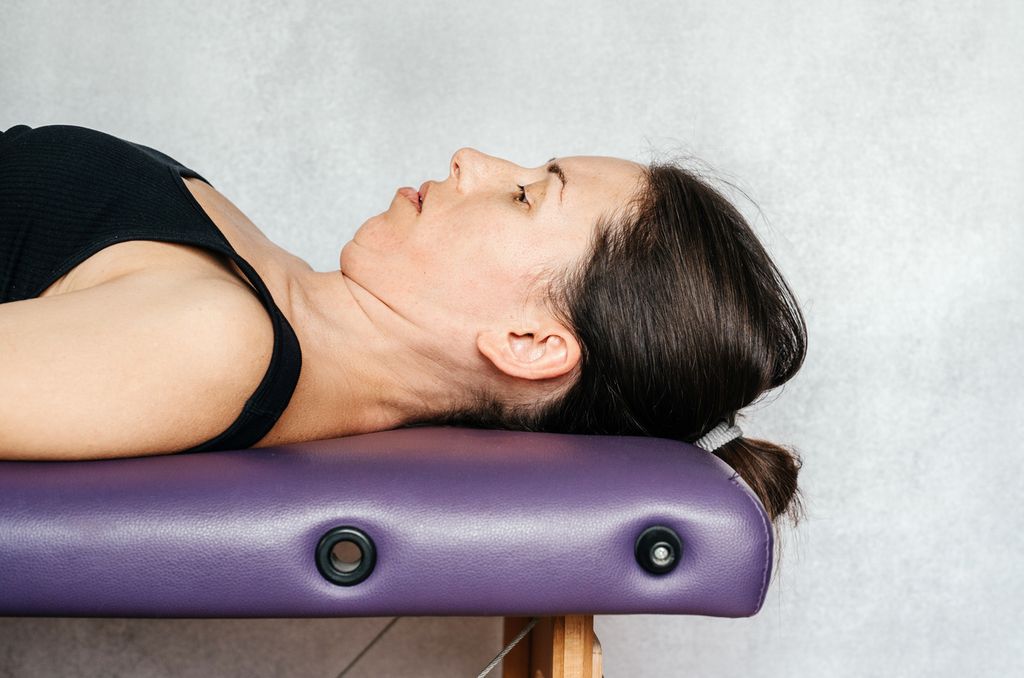
Deep Neck Flexion
"Lie on your back, with your head supported. Perform a 'chin tuck' by retracting your head to create a double chin. Lift your head, bringing your chin toward your chest without lifting your shoulders - as though you are looking at your toes. Hold this position for three to four seconds. Lower your head and relax. Keep your teeth apart during exercise to decrease straining at the jaw. Perform as directed."
Corner Pectoral Stretch
"Begin standing, facing a corner with your palms on the walls above head level. Step toward the corner and 'lean in' to stretch your chest muscles. Against the resistance of the wall, attempt to push your hands into the wall and toward each other for seven seconds. Relax and 'lean in' to increase the stretch. Lock into this new position and repeat three contract/ relax cycles, twice per day or as directed."
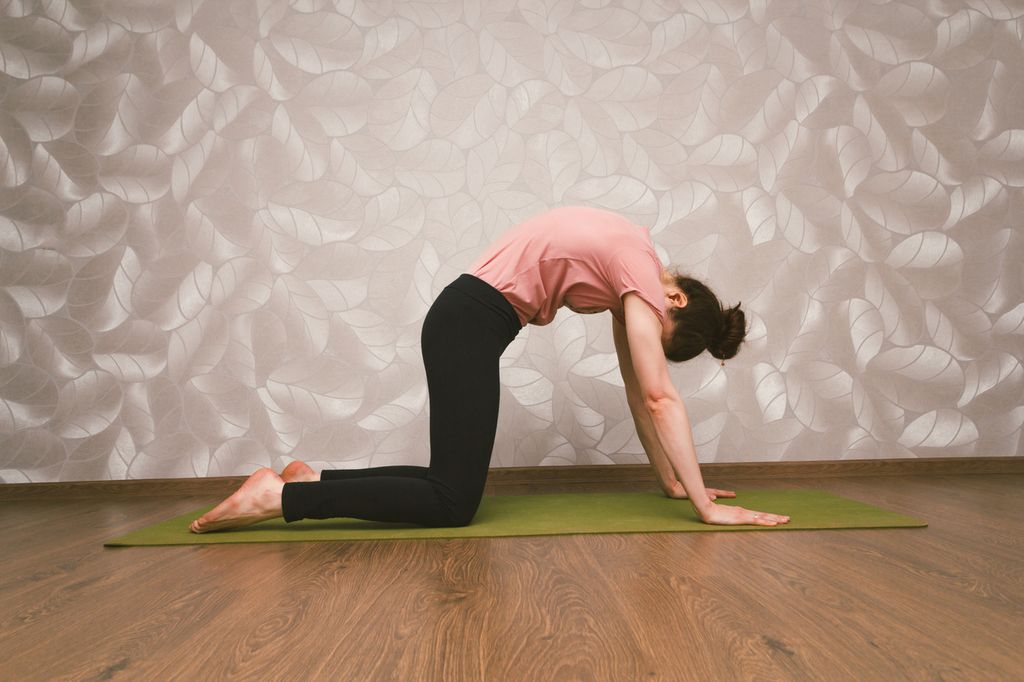
Mad Cat/Old Horse (also known as cat/cow)
 © Getty Images
"Begin on all fours with your hands under your shoulders and your knees under your hips. Extend your back upward into a 'mad cat' position. Next, flex your back downward to sag into an 'old horse' position. Slowly transition back and forth between these two positions. Repeat in a slow coordinated movement as directed."
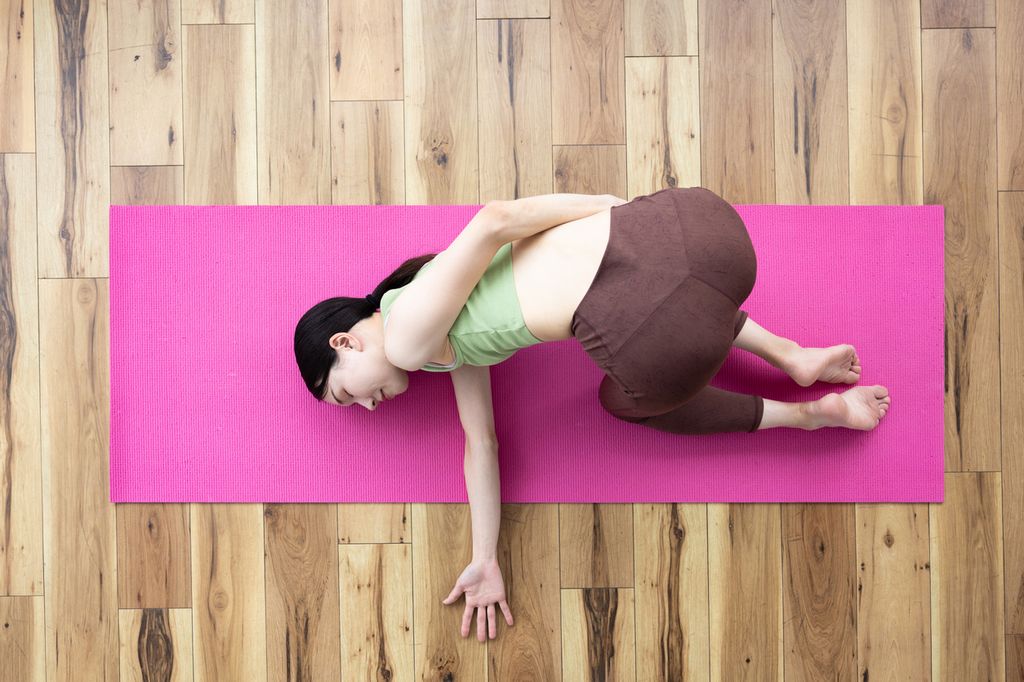
Thoracic Rotation
"Begin on your hands and knees and shift back so that your buttocks are on your heels. Place one hand behind your neck with your elbow pointing downward. Rotate your trunk to move your elbow towards your opposite knee. Rotate back, raising your elbow toward the ceiling. Perform as directed."
 © Getty Images
How to improve my posture with a chair?
If you spend lots of time sitting down, it may be worth investing in an ergonomic chair that can support your back and neck. "A good strategy would be to get a chair that goes as high as the head or neck so that when sitting at 90 degrees, a person can feel that neck or head rest behind them to ensure they are not slouching. This effort and awareness over time could help improve posture, and would certainly help to stop feeding into the bad posture habit," David says.
How long does it take to improve posture?
As effective as stretches and supporting your posture can be, you shouldn't expect to see results overnight. "There are many ways to try and improve posture, but it's not always as easy as it sounds, especially depending on who is trying to improve their posture, how good/bad is their posture, how healthy is their spine, and what are they willing to do in terms of effort, time, and expense to get it done," the chiropractor explains.
"Actual posture correcting, again depending on the variables as mentioned above, can take from months to years, and is better accomplished using specific spinal molding methods and exercises."